
Review · CAIRO SAFARIS
2 Days in Giza, Cairo and Safari in Faiyum
The best thing about this tour is the contrast. One day puts you face-to-face with the Great Pyramid and Sphinx, then sends you into Cairo’s old market. The next trades city traffic for lakes, waterfalls, desert tracks, and fossil beds in Faiyum. It is a lot of Egypt in two days, but the change of scene keeps the experience from feeling like one long monument checklist.
I like the private format, since your group can ask questions and set a sensible pace. I also like the mix of major sights and less familiar places, especially Wadi Hitan and Tunis Village. The main consideration is the amount of driving on day two, including a roughly 95-kilometer journey from Cairo into Faiyum.
Key points to know before booking
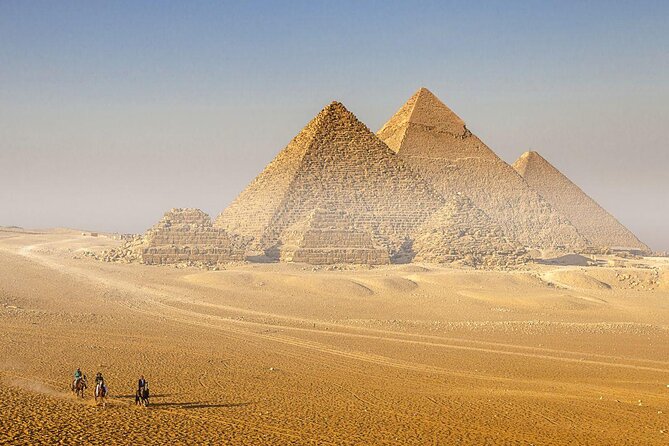
- Giza covers all four headline sights: the Great Pyramid, the pyramids of Chephren and Mycerinus, and the Great Sphinx.
- The Egyptian Museum gives you two hours with a large collection of more than 100,000 ancient objects.
- Khan el Khalili adds a human scale with old lanes, shops, mosques, and time to browse.
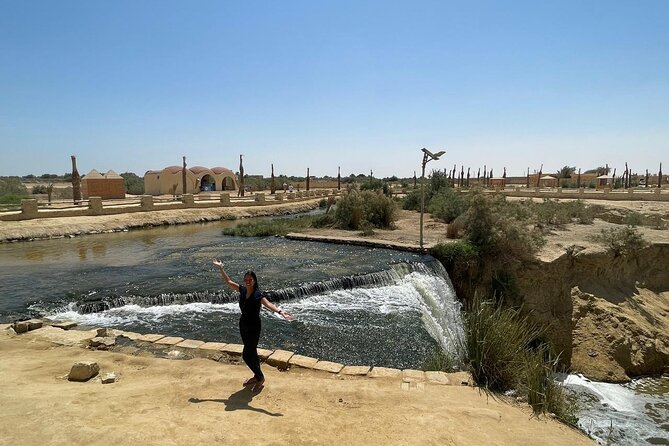
- Faiyum brings a sharp change of scenery: Lake Qarun, Wadi al Rayan, Wadi Hitan, and Mudawara Mountain.
- A private guide and driver are included, with air-conditioned transport in Cairo and a 4×4 Jeep for the safari.
- Extra fees apply inside the Giza pyramids, so budget separately if you want to enter one.
Why this two-day plan works
Cairo can overwhelm you. The roads are busy, the sights are spread out, and the scale of ancient Egypt is hard to grasp from a guidebook. This tour gives you a clear first day in the city, then a very different second day outside it.
The schedule also fixes a common problem with Cairo sightseeing: trying to squeeze the pyramids, museum, and market into one rushed day. Some visitors have managed the city portion in about eight hours, but the pace can be tight. Two days gives you more room to stop for photos, listen to explanations, and eat lunch without watching the clock every few minutes.
You are not joining a large coach group. The activity is private, so only your own party takes part. That matters at the pyramids, where you may want to linger at a viewpoint, ask about construction methods, or take several photos before moving on.
The tour starts at 8:00 am, with pickup offered. Exact pickup details are not provided, so confirm the meeting point with the operator before the morning of the tour.
More two-day safaris in Cairo:
- Private 2 Days Jeep Safari to White Desert and Bahariya Oasis
★ 5.0 · 46 reviews - 2 Days Safari Trip to Bahariya Oasis: An Egypt Western Desert
★ 5.0 · 10 reviews - From Marrakech: Zagora 2-Day Desert Safari with Food & Camp
★ 4.5 · 1,137 reviews
Day one at Giza, where the scale is hard to grasp
The Giza portion lasts about two hours and includes the three main pyramids:
- The Pyramid of Cheops, also called the Great Pyramid
- The Pyramid of Chephren
- The Pyramid of Mycerinus
- The Great Sphinx
Your Egyptologist guide explains why these monuments were built and how ancient builders may have organized such a huge project. That guidance is useful here. Without it, the pyramids can become three enormous stone shapes competing for the same photo.
The Great Pyramid is the headline attraction, and rightly so. It is the largest of the three and the one most visitors have pictured since childhood. Chephren often appears taller because it sits on higher ground and still retains some casing stone near its top. Mycerinus is smaller, but its place in the royal complex helps you understand that Giza was not a single building project. It was a planned funerary site with several monuments.
The Sphinx provides a different kind of encounter. Instead of looking at a pyramid built from blocks, you are looking at a carved guardian with a human head and a lion’s body. The guide’s explanation helps connect the statue to the wider royal complex and to the ideas of protection and kingship.
The included admission covers the listed Giza visit, but entering the interior of a pyramid costs extra. That is an important distinction. If you want the inside experience, ask about the current charge before you arrive and decide if it is worth adding. Interior passages can be narrow and physically demanding, so the tour’s moderate fitness recommendation applies here as well.
The Giza site is open and exposed. Bring water, wear practical shoes, and expect sun. The air-conditioned vehicle becomes more than simple transport after time outside, especially during hot weather.
Two hours with ancient objects at the Egyptian Museum
The second stop is the Museum of Egyptian Antiquities, with about two hours allotted. Its collection includes more than 100,000 pieces, from small amulets and household tools to huge statues.
Two hours is enough for a strong introduction, not enough to see everything. That is fine. A good guide can help you focus on objects that explain daily life, religious practice, burial customs, and royal power instead of wandering through room after room without a plan.
I would use this visit to ask questions raised at Giza. What did people place in tombs? How were rulers represented? What did ordinary tools and household objects reveal about daily life? The museum becomes much more useful when you connect small objects to the giant monuments you have just seen.
The collection’s range is part of its appeal. You are not seeing only gold and royal sculpture. Amulets, domestic tools, and other modest objects show how ancient Egypt worked at ground level. The colossal statues then pull your attention back to the state, the temples, and the power of the pharaohs.
The two-hour limit means you should not try to read every label. Let the guide select the main pieces, then save a little time for objects that catch your own eye. If museums tire you quickly, the air-conditioned vehicle and lunch break help keep the day manageable.
An hour in Khan el Khalili
Khan el Khalili is a roughly 1,000-year-old market district with old buildings, mosques, narrow lanes, and shops. The visit lasts about an hour and admission is free.
This stop changes the mood completely. Giza is monumental. The museum is quiet and object-focused. Khan el Khalili is about movement, bargaining, craft, and everyday Cairo. You can browse rather than follow a fixed route, though an hour passes quickly.
The market is a place to practice looking before buying. Compare items, ask prices, and remember that shop owners expect negotiation. The tour can include stops at additional shops, so decide in advance how much time you want to spend shopping. If you prefer to focus on the streets and old buildings, say so clearly.
Bring Egyptian pounds for small purchases and personal expenses. One useful tip from the experience is to carry extra water, especially when you are moving between outdoor sites and heated city streets.
A few more safaris around Cairo worth a look
- From Cairo: Desert Safari, Camel Ride, Magic Lake, & Lunch
★ 4.9 · 1,273 reviews - From Cairo 4×4 Safari, Camel Ride, Magic Lake, Waterfalls & Lunch
★ 5.0 · 390 reviews - Cairo: Giza Pyramids Tour with Quad Bike Safari & Camel Ride
★ 4.4 · 149 reviews - From Cairo: Desert Safari, Waterfalls, Sand boarding and Camel ride with Lunch
★ 5.0 · 116 reviews
Day two: leaving Cairo for Lake Qarun
The Faiyum day starts with hotel pickup in an air-conditioned vehicle, followed by a roughly 95-kilometer drive. A 4×4 Jeep is used for the safari portion.
The distance is not a small detail. This is a full excursion, not a quick side trip. Breaks for tea, coffee, and snacks are part of the journey, but you should still plan for a long day in the vehicle. If you dislike extended road time, the second day may feel demanding. If you like seeing how quickly Egypt changes beyond Cairo, the drive is part of the appeal.
Lake Qarun is the first stop and lasts about 30 minutes. The site connects to the ancient worship of Sobek, the crocodile god, whose cult center was believed to exist in the Faiyum area. Your guide can give this stop a useful historical frame, linking the lake and surrounding region to the beliefs that shaped ancient communities.
The lake also gives you a first taste of the area’s natural side. After the packed monuments of Cairo, the open water and wider views feel like a reset. Admission is listed as free here.
Wadi al Rayan and its waterfalls
Wadi al Rayan follows Lake Qarun, with about an hour allocated. The protected area is known for its lakes, waterfalls, and natural setting.
This is not the same kind of sightseeing as Giza. You are not moving from one carved object to another. You are walking, looking across the water, and taking a break from the city. The stop works best if you bring comfortable shoes and accept that the day includes outdoor activity, rather than treating it as a vehicle-only tour.
The supplied schedule mentions waterfalls but does not give a specific walking distance or trail length. Ask your guide what the walk involves on the day. That is especially sensible if anyone in your group has limited mobility or wants to know how much time will be spent on foot.
The natural setting is valuable because it gives the itinerary breathing room. You get a chance to stop studying dates and dynasties and simply look around. Still, do not expect a long hike or a detailed nature program based on the information provided. It is a one-hour visit within a larger safari day.
Wadi Hitan, the Valley of the Whales
The most unusual stop is Wadi Hitan, or the Valley of the Whales. The visit lasts about two hours and admission is included.
This protected area is a UNESCO World Heritage Site, designated in 2005, because of its fossil remains from ancient whale species. The key idea is simple and memorable: this desert was once covered by water. Fossilized bones help you picture a time when the region looked nothing like the dry setting you see today.
That change gives the stop real power. At the pyramids, you look at what people built. At Wadi Hitan, you look at evidence of a much older natural world. The tour description also refers to other large ancient creatures associated with the fossil beds, but the whale remains are the central reason for the visit.
Two hours gives you more time here than at Lake Qarun or the waterfalls. Use it to ask your guide how the fossils were found, what they reveal, and how the protected area is managed. The site is remote, so your guide’s explanation matters more than it would at a crowded city museum.
You should also expect heat, sun, and uneven outdoor conditions. The moderate fitness requirement is not just for climbing around Giza. It applies to a day that includes desert stops and walking away from the vehicle.
Tunis Village, pottery, and a slower finish
The last listed stop is Tunis Village, with about an hour to explore. The village is known for pottery workshops, local artisans, gardens, and a welcoming atmosphere.
This is a gentle way to end the Faiyum day. After monuments and fossils, you get a closer look at present-day creative work. You can watch young artisans, browse pottery, walk through the village, and try pottery yourself if the opportunity is available.
The village is also described through its plant life, including bottle brush trees, silk cotton trees, rose bushes, pomegranate, olive, orange, and lemon trees. These details make the stop more than a quick shopping call. You get a glimpse of how a small community has developed around craft, gardens, and visitors.
There are several pottery shops, so keep your expectations clear. If you want to buy something, check prices and packing arrangements before committing. If shopping is not your main interest, ask for time to walk and look at the village instead.
Guides, drivers, and the private format
The tour includes a qualified Egyptologist guide, an air-conditioned vehicle, and a 4×4 Jeep for the safari. Guides named in past bookings include Mimo, while drivers have included Hossam, Haroun, Yaser, Ayman, Redar, Mohamed, Oss, Belal, and Abdolghany. Staff assignments can change, so do not book solely around one name unless the operator confirms availability.
Mimo receives especially strong praise for clear explanations, patience, photography help, and the ability to answer many questions. The drivers are also described as careful with Cairo traffic and good at getting groups between sites. The practical benefit is simple: you can focus on the sights instead of worrying about navigation or negotiating every transfer.
The private setup also helps with language needs. Some past guides have spoken Italian, and the operator may assign a guide based on language availability. Confirm your preferred language before booking.
What the $239 price includes
At $239 per person, the tour is not the cheapest way to see Cairo. But price alone gives the wrong picture. You are paying for two days, private transport, a qualified Egyptologist, Giza and museum entrance fees, a 4×4 Jeep, Faiyum admission fees, and lunch.
The value is strongest for a first visit when you want the major Cairo sights handled along with an unusual day outside the city. Private transport matters in Cairo, where moving between Giza, the museum, and Khan el Khalili can otherwise take time and effort.
Lunch is included, with the supplied details listing lunch for the tour. Bring extra water and Egyptian pounds for personal purchases, drinks, tips, or optional expenses. Pyramid interior admission is specifically excluded, so add that cost only if you want to go inside.
Group discounts are offered, which may improve the per-person value for families or friends traveling together. The tour is also suitable for a short Cairo stay or a long layover, but the full two-day plan is better if your schedule allows it.
Who should book this experience
I would recommend it most strongly to first-time visitors who want both famous sights and a less expected side of Egypt. You get the images everyone comes for, then move into fossils, lakes, waterfalls, and pottery.
It also suits small families and private groups that want control over questions, photo stops, and pace. People who enjoy guided context will get more from the monuments and museum than those who prefer to wander alone.
Think twice if you want a relaxed holiday with little time on the road. Faiyum involves a long drive and several outdoor stops. Also think twice if you need a fully accessible itinerary, since the tour calls for moderate fitness and includes walking at open-air archaeological and desert sites.
Free cancellation is available when you cancel at least 24 hours before the local start time. Changes made within 24 hours are not accepted, and poor weather may lead to another date or a full refund.
Should you book the Cairo and Faiyum tour?
Book it if you want a high-value introduction to Egypt in two days, with a guide handling the complicated parts and a private vehicle linking the sights. The combination of Giza, the museum, Khan el Khalili, Wadi Hitan, and Tunis Village gives you far more range than a Cairo-only sightseeing day.
Skip it if you want to spend a full day at each major site, avoid long drives, or plan to explore every museum room at leisure. For most first visits, though, this is a smart pairing: ancient monuments on day one, and Egypt’s changing natural world on day two.
FAQ
How long does the experience last?
The experience lasts approximately two days. Day one covers Giza, the Egyptian Museum, and Khan el Khalili. Day two covers Faiyum and its listed natural and cultural sites.
What time does the tour start?
The stated start time is 8:00 am.
Is hotel pickup offered?
Yes. Pickup is offered, and the Faiyum day specifically describes pickup from your hotel in Cairo. Confirm the exact meeting point with the operator.
Is this a private tour?
Yes. Only your group participates in the private activity.
Is an Egyptologist guide included?
Yes. A qualified Egyptologist tour guide is included.
Is transportation included?
Yes. An air-conditioned vehicle is included, along with a 4×4 Jeep for the safari portion in Faiyum.
Are entrance fees included?
Entrance fees are included for the listed visits. Extra entrance fees for going inside the Giza pyramids are not included.
Is lunch included?
Yes. Lunch is included in the tour arrangements.
How physically demanding is the tour?
A moderate physical fitness level is recommended. The schedule includes outdoor sightseeing and walking at Giza, Wadi al Rayan, Wadi Hitan, and Tunis Village.
Can I cancel for a refund?
You can cancel at least 24 hours before the experience start time for a full refund. Cancellations or changes made less than 24 hours before the start time are not accepted, and poor weather may result in a different date or a full refund.
Newest safaris around Cairo
- Overnight White Desert Safari Camping from Cairo★ 4.5 · 87 reviews
- Unusual Desert Safari Tour Around Giza Pyramids During Sunset With Barbecue.★ 5.0 · 31 reviews
- Overnight Safari Trip To Bahariya & White Desert★ 5.0 · 27 reviews
- Fayoum 4×4 Safari Adventure, Sandboarding, Lunch, Felucca★ 5.0 · 71 reviews
- Bahariya Oasis Journey into Tranquility Exploring Safari Desert★ 5.0 · 14 reviews
- Top Tour Giza Pyramids ,Sphinx ,camel ride and ATV safari★ 5.0 · 12 reviews
- Private 2 Days Jeep Safari to White Desert and Bahariya Oasis★ 5.0 · 46 reviews
- Fayoum Oasis Adventure 4WD Desert Safari with Traditional Lunch★ 5.0 · 25 reviews
Cairo Safaris, side by side.
Desert Safari, Camel Ride, Magic Lake, & Lunch
Read our review →
From Cairo 4×4 Safari, Camel Ride, Magic Lake, Waterfalls & Lunch
Read our review →
Giza Pyramids Tour with Quad Bike Safari & Camel Ride
Read our review →
Desert Safari, Waterfalls, Sand boarding and Camel ride with Lunch
Read our review →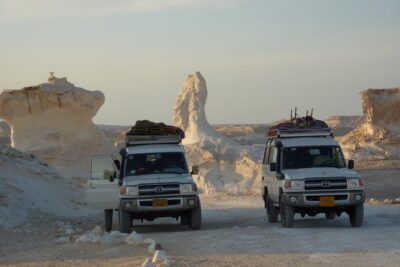
Overnight White Desert Safari Camping from Cairo
Read our review →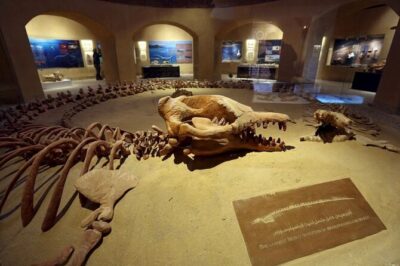
Fayoum 4×4 Safari Adventure, Sandboarding, Lunch, Felucca
Read our review →
Private 2 Days Jeep Safari to White Desert and Bahariya Oasis
Read our review →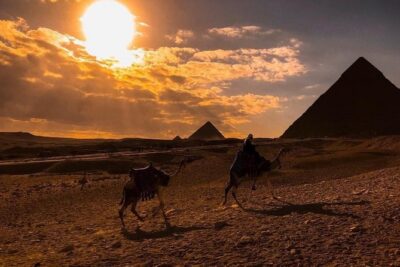
Unusual Desert Safari Tour Around Giza Pyramids During Sunset With Barbecue.
Read our review →Lists this safari turns up in