Review · NATIONAL PARK SAFARIS
From Johannesburg: Pilanesberg Nature Reserve Game Safari
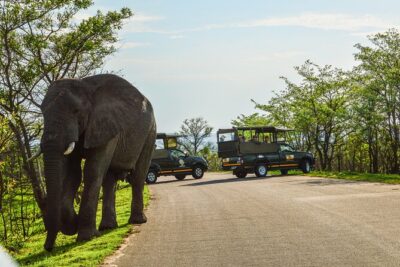
Pilanesberg gives you a proper taste of wild South Africa without requiring a multi-day safari lodge stay. After the early pickup, you trade Johannesburg’s traffic and towers for open bush, volcanic hills, water holes, and animals moving freely through a protected reserve. The open Jeep is the star of the day, putting you close to the sights and sounds without glass between you and the bush.
I like two things especially: the tour gives you 4.5 to 5 hours of game driving, and it handles the awkward parts with hotel pickup, transport, lunch, and a return before evening. Guides such as Petrus, Martin, Desmond, and Wisdom are praised for spotting animals and explaining what you see. The catch is simple: this is a long day, with roughly four hours on the road, and lions and leopards are never guaranteed.
Key points to know before booking
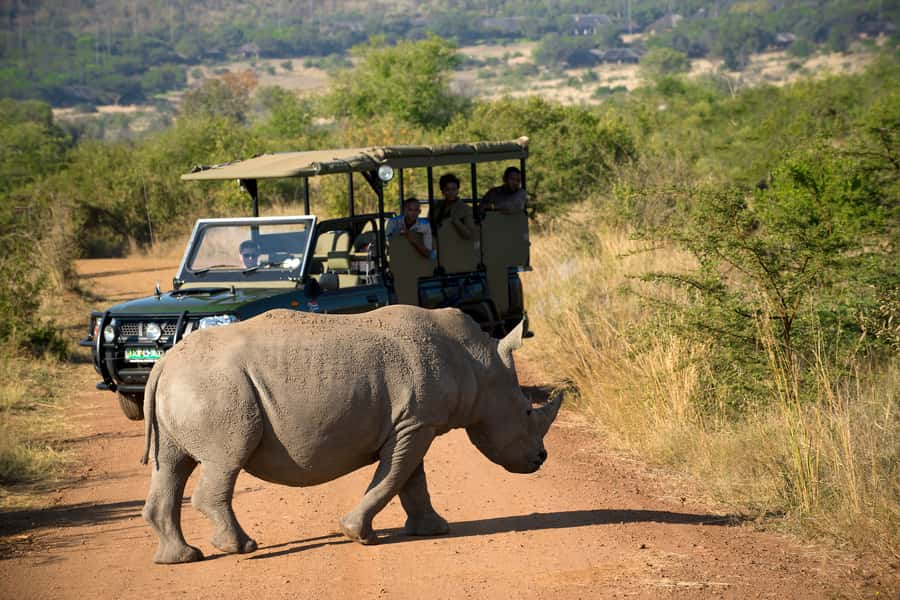
- Two open-vehicle drives: A morning drive of about 2.5 hours and an afternoon drive of about 2 hours give you two chances to find wildlife.
- Big Five potential: Elephants, rhinos, buffalo, lions, and leopards live in the reserve, but sightings depend on luck, timing, and animal movements.
- A long Johannesburg day: Pickup is early, the drive takes about two hours each way, and the full outing lasts around 12 hours.
- Lunch with a view: You stop at a rest camp for about an hour, usually near a water hole, though the meal is practical rather than gourmet.
- Strong guide element: Guides including Petrus, Martin, Desmond, Solly, and Thabo are praised for animal tracking, humor, and clear explanations.
- Extra park fee: International visitors pay a R500 conservation fee at the gate, in addition to the tour price.
Why Pilanesberg works as a Johannesburg safari
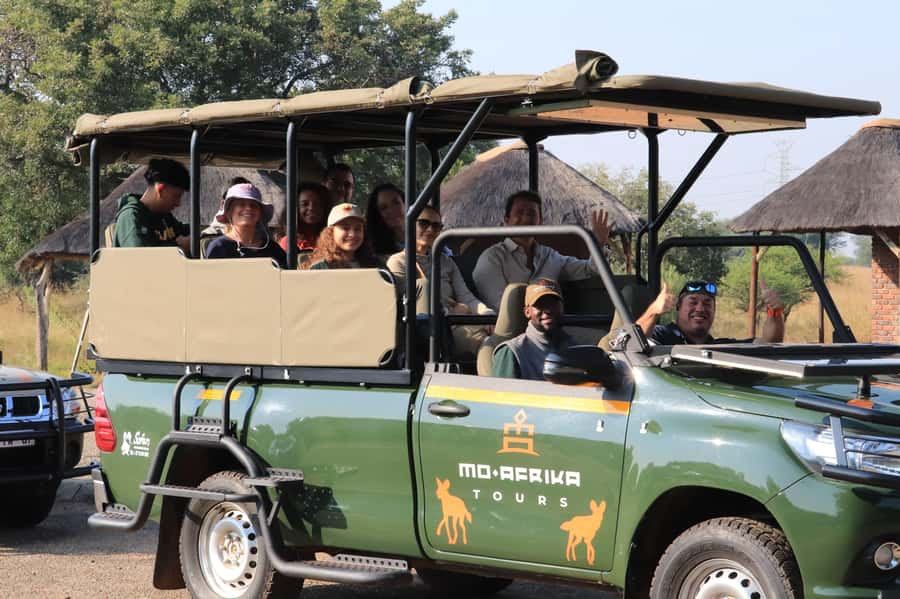
If you have only one free day in Johannesburg, Pilanesberg is one of the most sensible ways to see African wildlife. It is close enough for a day trip, yet far enough from the city to feel like a real change of world.
The reserve covers a large area where more than 7,000 animals roam. You are not visiting a small animal park or watching a staged show. The animals live in a protected natural setting, and your guide follows roads and sightings rather than a fixed script.
Pilanesberg is also unusual in its setting. The reserve sits in a transition zone between dry Kalahari-style vegetation and the greener plant life associated with South Africa’s Lowveld. That mix helps explain the range of animals and birds you may see in one day. Expect open grass, thicker bush, rocky rises, and dams that draw hippos, crocodiles, water birds, and mammals.
The reserve is home to the Big Five: elephant, rhino, leopard, buffalo, and lion. Seeing all five is possible, but it should not be your minimum requirement. You may see three or four and still have an excellent safari, especially if you get close views of elephants, rhinos, giraffes, or zebra.
More National Park Safaris in Johannesburg
- Full Day Ultimate Pilanesberg National Park Safari from Johannesburg or Pretoria
★ 4.5 · 718 reviews - Full Day Safari Tour of Pilanesberg National Park, Open Jeep experience
★ 5.0 · 139 reviews - 3-Day Kruger National Park Open Vehicle Safari
★ 5.0 · 61 reviews
The early Johannesburg pickup and road journey
Your day begins early, often around 5:45 or 6 a.m., with pickup at your Johannesburg hotel. The exact starting time depends on availability and your location, but you should be ready for a pre-breakfast departure.
The drive to Pilanesberg takes about two hours, sometimes closer to 2.5 hours depending on the route and traffic. A driver such as Thomas, Nikki, Simon, Sunny, or Mdu may handle the transfer, and the best part of this section is that you are not responsible for navigating or arranging a car.
The transfer vehicle has been described as comfortable, with Wi-Fi noted on some departures. There may be a short stop for coffee, snacks, or a bathroom break. Bring a neck pillow if you want to sleep, and carry snacks because the road portion is long.
This is the main cost of choosing Pilanesberg as a day trip. You can spend around four hours going to and from the reserve. I would not choose this outing if you dislike long road days, but the transport makes it far easier than hiring a car, finding the gate, and arranging your own game drives.
The first 2.5-hour game drive
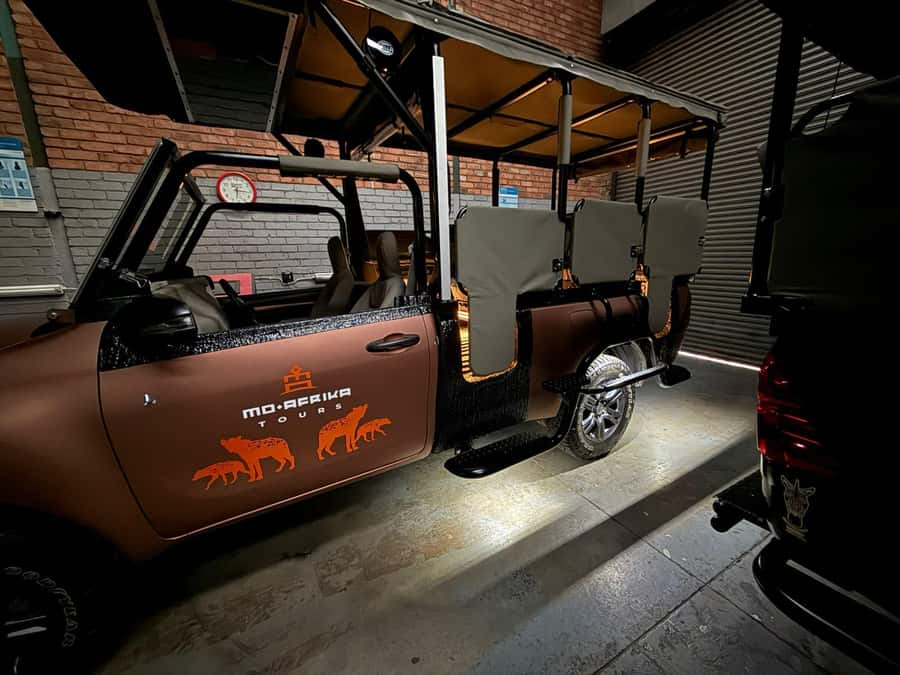
Once inside Pilanesberg, you change into an open safari vehicle and begin the first drive. This is when the day becomes much more than a long transfer.
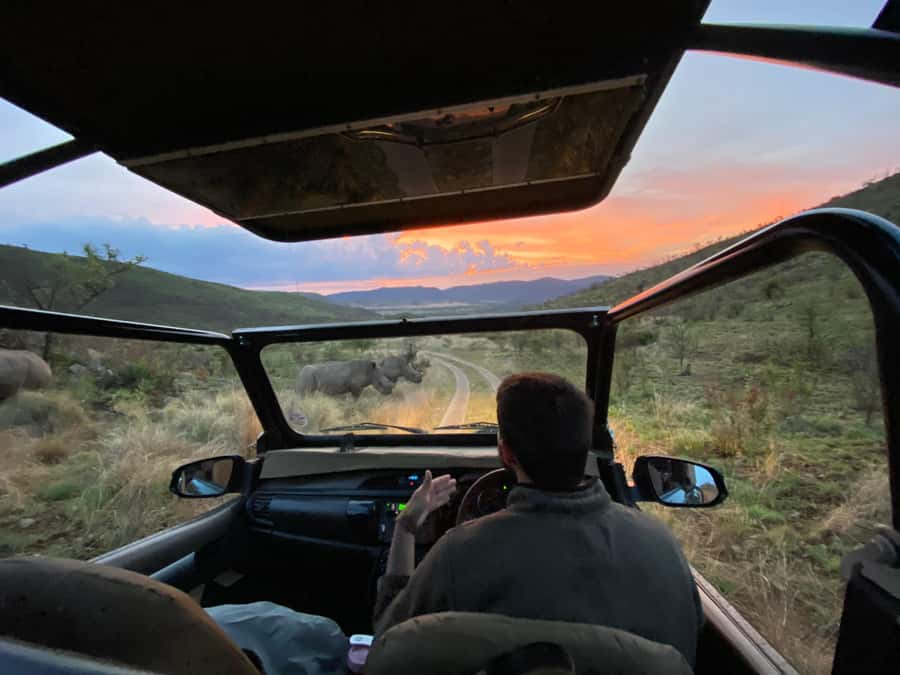
The open sides give you wide views and a better sense of the bush. You hear birds, feel the morning air, and have a clear view when the vehicle stops. That openness also means you need layers. Winter mornings can be cold, especially at the back of the Jeep, while the same vehicle can feel hot under the midday sun.
Your guide is there to find animals and explain their behavior. Guides such as Martin, Petrus, Desmond, Solly, and Wisdom have been praised for positioning the vehicle safely, answering questions, and keeping the group engaged between sightings.
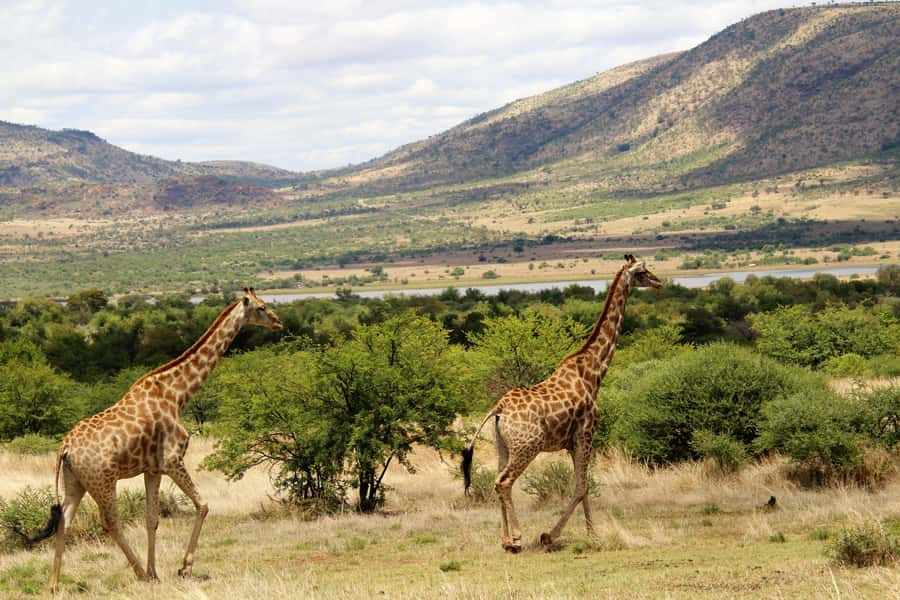
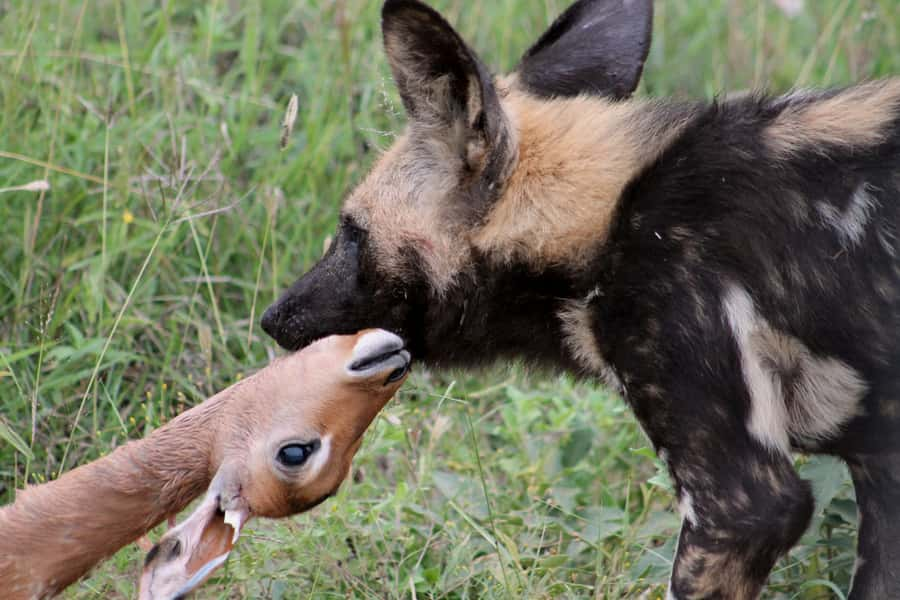
You might see zebra, giraffe, impala, kudu, wildebeest, warthog, baboon, jackal, hyena, hippo, crocodile, elephant, and rhino. Several people have had close elephant and rhino encounters, and some groups have seen cheetahs, lionesses, or even leopards. Other groups have missed the big cats entirely. That uneven result is normal for a real safari.
A guide may spend time looking for tracks, watching a water hole, or following reports from other vehicles. That patience matters. A safari is not a parade where every animal appears on schedule.
Lunch at a rest camp and water hole
Around the middle of the day, you stop for about an hour at one of the reserve’s rest camps. This gives you time to stretch your legs, use facilities, eat, and escape the sun for a while.
The lunch is included, which makes the day easier and improves the value of the tour. The food has been described as good by some people, while others found the portion small or the menu too basic. Expect a straightforward meal such as wraps or burgers rather than a traditional South African braai or a grand buffet.
The setting is the real benefit. Rest stops near water holes can offer more animal watching, and the break prevents the day from becoming five straight hours of sitting in a vehicle. Bring extra snacks if you tend to eat often, since additional food and drinks are not included.
More National Park Safaris in South Africa
- Johannesburg: 4-Day Classic Kruger National Park Safari
★ 4.8 · 52 reviews - Johannesburg: 3-Day Classic Kruger National Park Safari Tour
★ 4.7 · 45 reviews - 4 Day Lodge and Treehouse Kruger National Park Safari
★ 4.5 · 33 reviews - 5 Day Katekani Lodge Kruger National Park Safari
★ 5.0 · 31 reviews
The afternoon two-hour drive
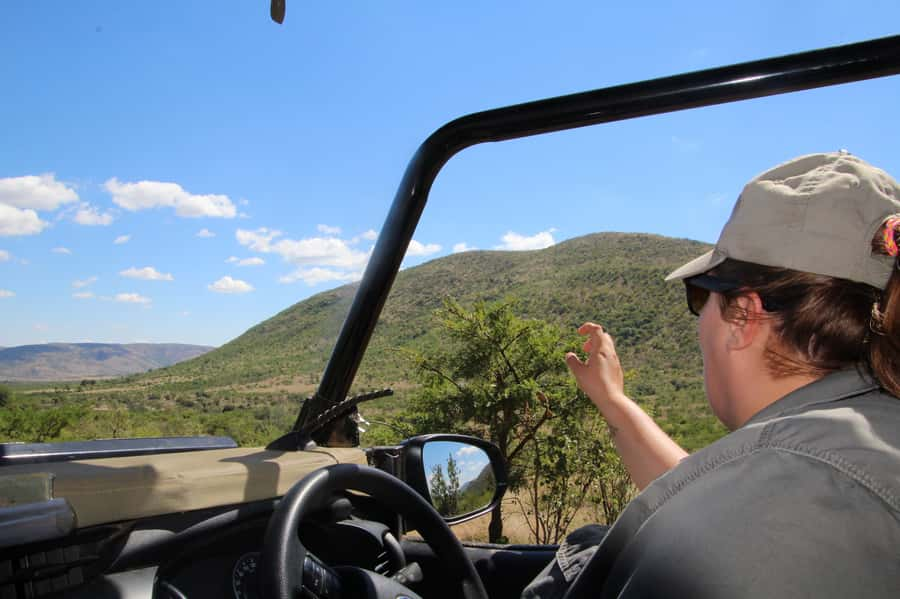
After lunch, you return to the open vehicle for a second drive of about two hours. The afternoon section is useful because animal activity can change as the heat eases, and you get another chance at anything missed in the morning.
This is also when the guide may focus on species you have not yet seen. If elephants appeared early, the group may spend time looking for rhinos, buffalo, or cats. Guides work with what the reserve offers that day, so the order and route can vary.
Birdwatchers have plenty to look for. The reserve has more than 300 bird species, including fish eagles, kingfishers, and cormorants around the dams. Even if the lions stay hidden, the birdlife, hippos, crocodiles, antelope, and changing bush keep the drive worthwhile.
The afternoon heat can be strong. Wear light clothing, use sunscreen, and bring a hat and sunglasses. Covering your shoulders and arms is sensible. At the same time, keep a jumper or windproof jacket within reach because the vehicle can turn chilly when it moves.
What the Big Five promise really means
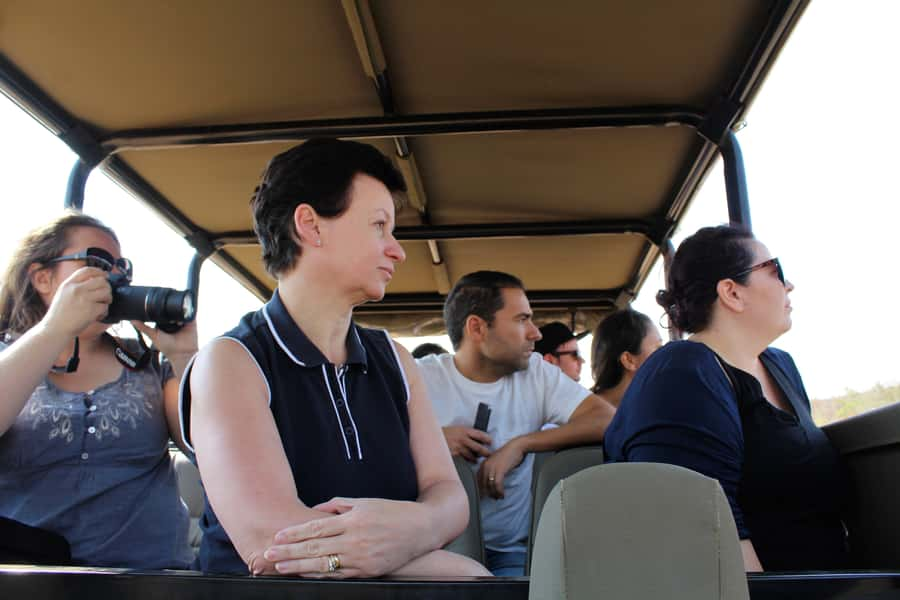
The phrase Big Five is useful shorthand, but it can set the wrong expectation. It does not mean you will see five large animals neatly lined up. It refers to elephant, rhino, buffalo, lion, and leopard, with the last two often the hardest to find.
This tour gives you a fair amount of time to look, but it cannot control wildlife. Some outings have included three of the five. Others have seen four, and one particularly lucky day produced all five, although the lion was only partly visible through grass. Another group saw a leopard at a distance.
Elephants and rhinos are the more reliable highlights. You may see herds of elephants near water or rhinos grazing in open areas. Giraffes, zebra, impala, hippos, and warthogs are also common enough to make the drive rewarding even when predators stay out of sight.
I would book this for the chance to see wildlife, not for a guaranteed lion photograph. If lions are your main goal, you may prefer a longer safari with sunrise and sunset drives. A day trip cannot match the timing or flexibility of staying inside the reserve.
The guide can make or break the day
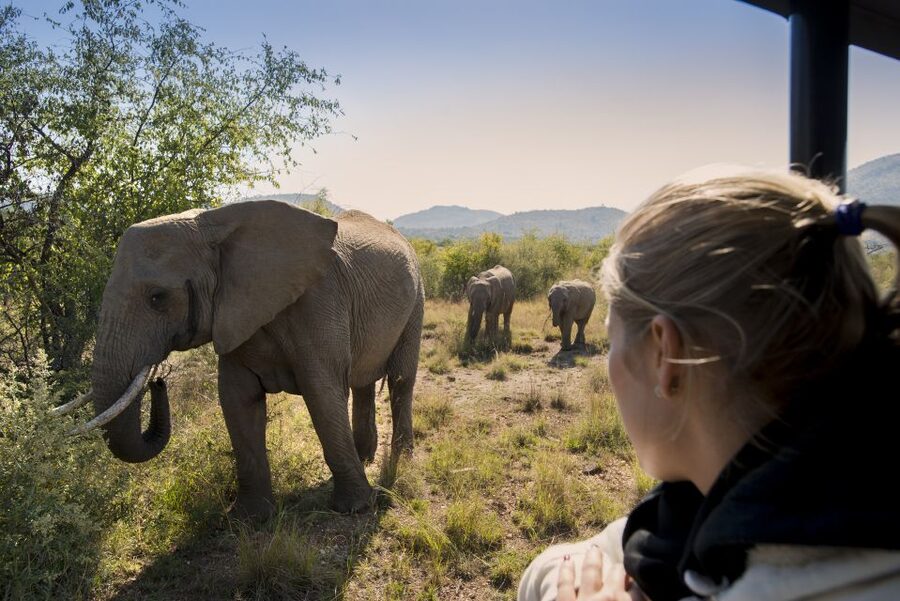
The guide is central to this experience. A good guide does more than point at an animal. They help you understand why it is there, what it is doing, and where to look next.
Petrus is repeatedly described as funny, energetic, and committed to finding the Big Five. Martin is praised for animal facts and a calm, friendly manner. Desmond has been singled out for positioning the vehicle well and helping people take photographs. Solly, Thabo, Wisdom, Michael, Doreen, and others have also received strong praise for their care and bush skills.
Your exact guide is not guaranteed, so do not book based on one person’s name. The broader pattern is encouraging: the guide is expected to keep searching, explain the natural environment, and help the group make the most of each sighting.
The Johannesburg transfer driver matters too. People have appreciated punctual pickups, careful driving, useful commentary, and easy communication through WhatsApp. That support is valuable when you are leaving before sunrise and returning tired.
Price, park fee, and overall value
The listed tour price is $186 per person. International visitors also pay a separate Pilanesberg conservation fee of R500 at the gate. SADC nationals pay R275, and South African residents pay R168.
At first glance, the price may seem high for one day. Look at what it covers: hotel pickup and drop-off, the return road journey, two open safari drives, a total of 4.5 to 5 hours in the reserve, a guide, and lunch. You also avoid the work and risk of arranging transport and finding a safari vehicle yourself.
The value is strongest if you are staying in Johannesburg, have only one open day, and want a simple all-in package. It is less compelling if you are already staying near Pilanesberg or plan to spend several days in a safari area, since a longer stay gives you more early and late drives.
The lunch is the weakest part for some people, but it is included and functional. I would budget for extra snacks and drinks rather than expect a special dining experience.
Who should book this day trip
This outing suits first-time safari visitors, solo travelers, couples, and anyone using Johannesburg as a base. Solo travelers are able to join the shared tour, and the included pickup removes a common problem for people traveling without a car.
It also works well for visitors who want a national park experience rather than a private reserve. You are seeing animals in a protected public reserve, with the limits and unpredictability that come with that choice.
Families need to check the age rules carefully. The activity is not suitable for children under four, and a child aged from zero to five requires a private tour according to the booking information. The tour is wheelchair accessible, but confirm the practical arrangements when booking.
You should also be comfortable with a full 12-hour day. The early start, open vehicle, heat, cold, and long road transfer are part of the deal. If you want a slow, luxurious safari with plenty of rest, choose an overnight stay instead.
What to pack for the open Jeep
Pack light, but do not arrive unprepared. Your needs change sharply between the cold morning transfer and the hot afternoon drive.
- Passport or ID card
- Sun hat, sunscreen, and sunglasses
- Camera and, if you have them, binoculars
- Jumper or windproof jacket
- Extra snacks and water
- A neck pillow for the road journey
- Power bank if you plan to use your phone heavily
Smoking and pets are not allowed. Keep your camera ready, but give yourself time to watch without photographing every sighting. The best moments may be a rhino moving through grass, a fish eagle over the dam, or elephants gathering near water.
Should you book the Pilanesberg safari?
Book it if you want the easiest route from Johannesburg to a genuine one-day safari. The combination of hotel pickup, two long game drives, strong guide support, and lunch makes the tour practical and good value for a visitor with limited time.
Skip it if you cannot handle a long road day or if your only goal is a guaranteed lion or leopard sighting. For everyone else, Pilanesberg offers a solid introduction to South African wildlife, with enough time in the reserve to make the early alarm worthwhile. Bring warm layers, accept that nature sets the schedule, and judge the day by the whole bush experience, not by a checklist of five animals.
FAQ
How long does the Pilanesberg safari from Johannesburg last?
The full experience lasts about 12 hours, including hotel pickup, the drive to and from Pilanesberg, two game drives, and lunch.
How long is the drive from Johannesburg to Pilanesberg?
The road journey takes roughly two hours each way, though the provided schedule lists about two hours and the general description allows up to 2.5 hours.
How much time do I spend on game drives?
You spend about 4.5 to 5 hours on game drives, split between a morning drive of about 2.5 hours and an afternoon drive of about two hours.
Is lunch included?
Yes. Lunch is included and lasts about one hour at a rest camp in the reserve. Additional food and drinks are not included.
Is the conservation fee included in the tour price?
No. International visitors pay R500 per person at the gate. The fee is R275 for SADC nationals and R168 for South African residents.
Will I see the Big Five?
The reserve has elephants, rhinos, leopards, buffalo, and lions, but sightings are not guaranteed. You may see several Big Five species, while lions and leopards can be harder to find.
What should I wear?
Wear light clothing for the heat, but bring a jumper because the open vehicle can be chilly, especially in the morning. A sun hat, sunscreen, and camera are also recommended.
Can children join the safari?
Children under four are not suitable for this activity. If you have a child aged from zero to five, you need to book a private tour.
Can I cancel or pay later?
You can cancel up to 24 hours before departure for a full refund. The reserve and pay later option lets you book without paying immediately.
Newest safaris around Johannesburg
- Pilanesberg Full-Day Shared Safari with Sun City Visit★ 4.9 · 27 reviews
- Pilanesberg: 2 Day 3-Star Pilanesberg Safari★ 4.1 · 15 reviews
- Kruger National Park – 4 Day Safari Tour★ 4.8 · 19 reviews
- From Johannesburg: 2-Day Safari into Kruger National Park★ 4.3 · 29 reviews
- Johannesburg: Rhino and Lion Nature Reserve Safari★ 5.0 · 18 reviews
- Private Rhino and Lion Park, Cradle Caves or Maropeng Museum★ 4.6 · 25 reviews
- Johannesburg: 4-Day Classic Kruger National Park Safari★ 4.8 · 52 reviews
- Johannesburg: Lion Park Safari and Cultural Village Tour★ 4.8 · 12 reviews
National Park Safaris, side by side.
Teide National Park Sunset & Stargazing with Dinner (Star Safari)
Read our review →
Teide National Park: Sunset & Stargazing Safari with Dinner
Read our review →Udawalawe National Park | Private Safari Tour
Read our review →
East Coast National Park: Half-Day Caves Jeep Safari
Read our review →
Addo Elephant National Park All Inclusive Full-Day Safari
Read our review →
Yala National Park Safari Tours: Morning/Evening/Full Day
Read our review →