
Review · OVERNIGHT & CAMPING SAFARIS
Uluru, Kata Tjuta and Kings Canyon Camping Safari from Alice Springs
Uluru glows at sunset, but this three-day trip earns its keep by adding Kata Tjuta and Kings Canyon, two places that can easily be missed on a short Red Centre visit. You’ll walk through Kata Tjuta’s domes, circle the base of Uluru at sunrise, and tackle the Kings Canyon Rim Walk before returning to Alice Springs.
I especially like the early starts, since they put you on the trails before the worst heat and often before the biggest crowds. I also like the mix of scenery and culture, including a Maruku Arts walk with an Aboriginal and Torres Strait Islander guide. The catch is the pace: long drives, hot walks, basic camping, and very early mornings make this a real outback trip, not a soft hotel holiday.
Key points to know before booking
- Three major Red Centre sights in three days: Uluru, Kata Tjuta and Kings Canyon all make the cut.
- Sunrise and sunset at Uluru: The changing light gives you two very different views of the rock.
- Serious walking included: The Uluru base walk can take several hours, and the Kings Canyon Rim Walk is the day’s main physical challenge.
- Camping varies by night: Tent cabins with beds may be provided, but some sites are much more basic, with swags, cots or limited facilities.
- Meals are part of the camp routine: Food is supplied, and you may help prepare meals and clean up.
- Small group transport: The maximum group size is 23, with round-trip coach transport from Alice Springs.
Why this Red Centre trip works so well
At $713.66 per person, this is not a cheap sightseeing bus. It is a compact outback expedition with transport, park access, guided walks, meals, camping, and a guide handling the route. The value depends on how much you want to see in a short time.
If you tried to arrange Uluru, Kata Tjuta and Kings Canyon yourself, you would still need a vehicle, fuel, camping equipment, park access, food, and a plan for the huge distances. Here, you hand over the driving and camp work. That matters in a remote region where a wrong turn or poor heat planning can spoil a day quickly.
The strongest part is the range of experiences. You are not simply driven to Uluru for a photo stop. You walk among Kata Tjuta’s rounded domes, see Uluru in the soft light of morning and evening, hear Aboriginal cultural information, and finish with the towering walls of Kings Canyon.
The tradeoff is that the schedule is tight. Alice Springs sits more than 400 kilometres from Uluru, so plenty of time goes into the coach. You may spend several hours on the road between walks, meals and camp. For me, that is a fair price for seeing all three major sites, but you should know what you are buying.
More Overnight Safaris in Australia:
- Top End Safari Camp Overnight Tour
★ 5.0 · 254 reviews - Dubai: Overnight Safari, Dinner, Stargazing & Al Khayma Camp
★ 4.8 · 2,562 reviews - Dubai Overnight Desert Safari, BBQ & Stargazing at Al Khayma Camp
★ 5.0 · 2,327 reviews
Day one: Kata Tjuta before Uluru sunset
The day begins at about 5:40 a.m. at the Stay at Alice Springs Hotel on Leichhardt Terrace. Confirm the exact pickup details before setting off, since one booking mix-up has caused confusion over the pickup time. The early departure is part of the deal, and the first day includes a substantial amount of driving.
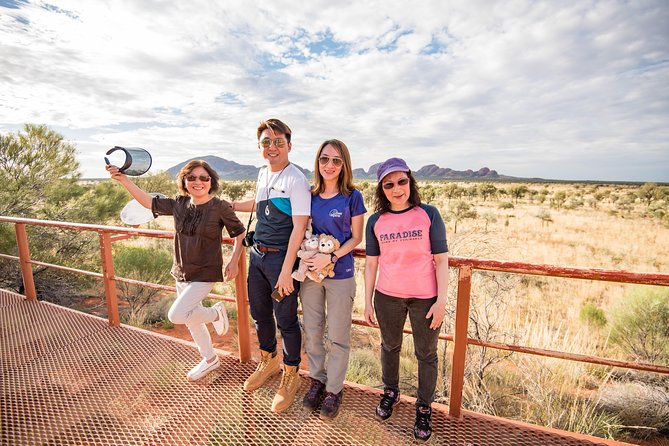
The first major stop is Kata Tjuta, also called the Olgas. Its 36 domes rise from the desert in a tightly packed group. The shapes feel different from Uluru: less like one great monolith and more like a broken cluster of rounded red-rock peaks.
The afternoon walk lasts about two hours. That may sound modest, but the heat can make every exposed section feel longer. Wear sturdy shoes, carry water, and take the guide’s instructions seriously. Guides such as Ty, Asha, Mishka, Lorrie and others have been praised for keeping the group together, explaining the plants and animals, and adjusting their tone to the conditions.
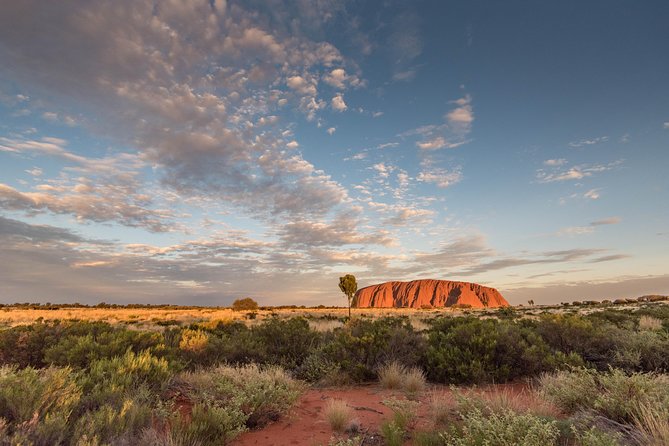
Later, you reach Uluru for sunset. This is one of the tour’s best-planned moments. The rock shifts through red, orange and purple tones as the light drops, while the surrounding desert darkens. Snacks are intended to be part of this stop, though one account reported that refreshments were not provided, so do not book this expecting a champagne-style sunset gathering.
Uluru is often treated as a single postcard view, but sunset gives you time to notice its folds, caves and changing surfaces. The rock is not just a smooth red shape. From close by, its weathered face is full of texture.
Day two: Uluru at sunrise, then a long move west
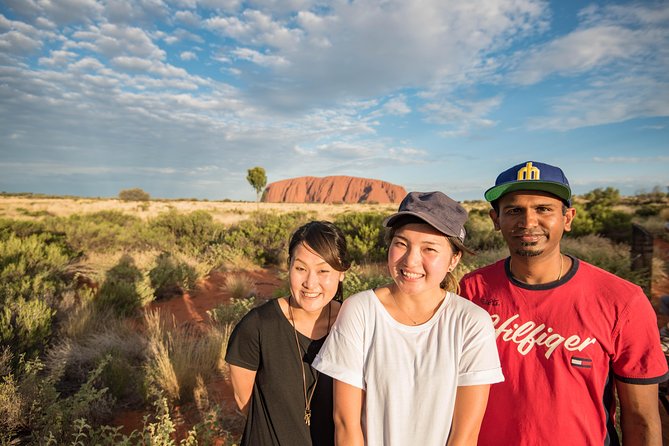
Day two starts before dawn. You may not love the alarm, but you will appreciate the timing once the first light reaches the desert. At sunrise, Uluru is often still dark while the ground around it begins to brighten. The rock gradually catches the glow, creating a much subtler view than the fiery colors of sunset.
The morning includes a walk around the base of Uluru, with up to four hours allowed for the visit. This is where the trip becomes a proper walking holiday rather than a coach tour. The base gives you close views of rock walls, waterholes, caves and Aboriginal cultural sites, though the exact walking route can depend on heat, conditions and park rules.
Your guide’s interpretation adds meaning to the walk. The better guides do not simply recite facts about height and age. They explain cultural connections, local plants and animals, and why certain places should be treated with care. Respect for Anangu culture and the land is a central strength of this experience.
After lunch, you visit the Uluru-Kata Tjuta Cultural Centre. The scheduled time is only about 30 minutes, which is enough for a quick introduction but not enough for a slow look through every display or a relaxed art purchase. If you want Aboriginal art or craft, keep your visit focused.
The Maruku Arts stop adds a more personal cultural element. An Aboriginal and Torres Strait Islander guide leads an interpretive walk, giving you a chance to learn through place rather than only through exhibition panels. This is a valuable part of the day, but it depends on the scheduled program. One account reported that the walk did not happen, so treat it as an important planned feature rather than an absolute guarantee.
The afternoon and evening take you toward Watarrka National Park and Kings Canyon. You sleep at a campsite within or associated with the park. This is a long day, and you may arrive tired. Camp life usually includes dinner preparation, setting up, and tidying rather than simply arriving at a ready-made lodge.
Camping: call it comfortable adventure, not luxury
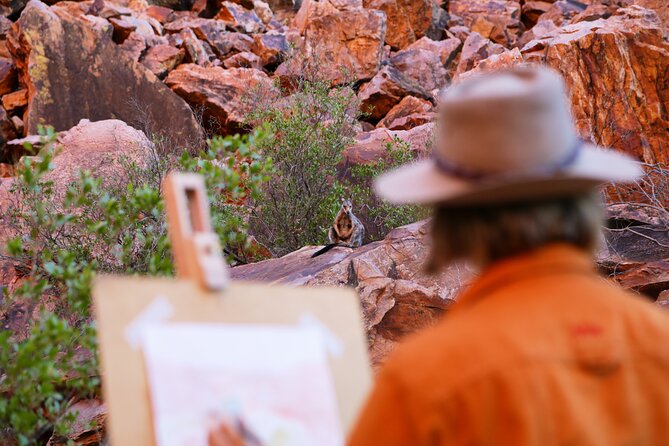
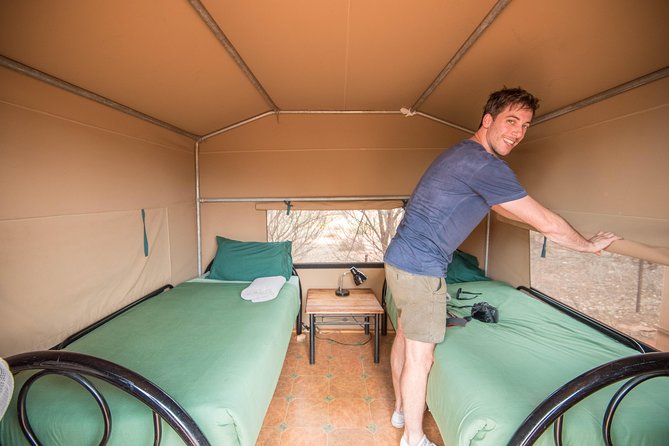
The word glamping needs a little translation here. Some accommodation is in tent cabins with steel-frame beds, lights, fans, tables and enough room to feel comfortable. Other arrangements can be much more basic, with old-style cots or swags under the stars.
The first camp has been described as the more comfortable one. The second can be hotter and rougher, with fewer power points, limited lighting, and simple toilets or showers. Facilities may include outdoor showers, solar lighting and ordinary toilets, but conditions vary enough that you should be prepared for a proper camping experience.
If you sleep in a tent cabin, you may not need a sleeping bag. If you sleep in a swag, you may need one. Booking messages have caused confusion on this point, so check your accommodation type directly before departure. A battery light is useful for moving around camp after dark.
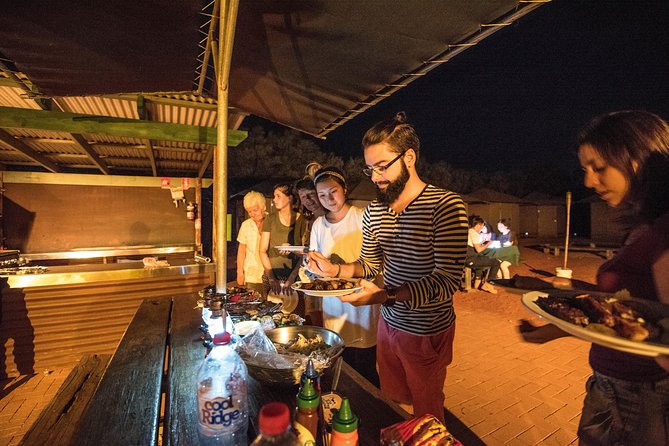
The campfire is one of the social high points. People often come from many countries and age groups, and shared cooking creates a friendly rhythm. You may chop vegetables, prepare food, wash dishes or help with camp tasks. That is part of the experience, not an unwanted extra.
Food has generally been a strong feature, with fresh-cooked and plentiful meals praised by many people. At the same time, one particularly negative account reported meals that felt too small and little to drink beyond tap water. Bring personal snacks if you eat often, and carry electrolyte supplies for hot weather. The outback is not the place to wait until you feel thirsty.
A few more safaris around Australia worth a look
- ABC Reef Safaris
★ 5.0 · 1,443 reviews - Ocean Safari Great Barrier Reef Experience in Cape Tribulation
★ 5.0 · 902 reviews - Kangaroo Island 75-Minute Coastal Safari
★ 5.0 · 607 reviews - Marine Eco Safari – Swim with Manta Rays
★ 5.0 · 493 reviews
Day three: Kings Canyon and the Rim Walk
Kings Canyon is often the surprise of the trip. Uluru has the name recognition, but Watarrka National Park brings steep walls, narrow gorges, layered rock and a sense of scale that is hard to grasp from a roadside lookout.
The main walk can take about four hours. The Kings Canyon Rim Walk is the route to choose if your fitness and the conditions allow. It begins with a steep section, then opens to broad views along the canyon edge. The Garden of Eden, with its sheltered waterhole, is one of the memorable sections.
This is the most demanding hike of the three-day program. People with knee trouble or limited walking ability may find the steps and uneven ground difficult. A moderate fitness level is required, and heat can change the effort dramatically. Sturdy shoes, a hat and plenty of water are essential.
Do not underestimate the reward. The canyon walls drop away in great slabs, and the changing rock layers create a striking contrast with the dry country around them. The walk has enough variety to justify the effort, rather than being a long route to one viewpoint.
After Kings Canyon, the group begins the return toward Alice Springs. The trip ends back at the original meeting point. Expect another long period on the coach, so bring something to read, a charged phone, and patience.
The guides make or break the trip
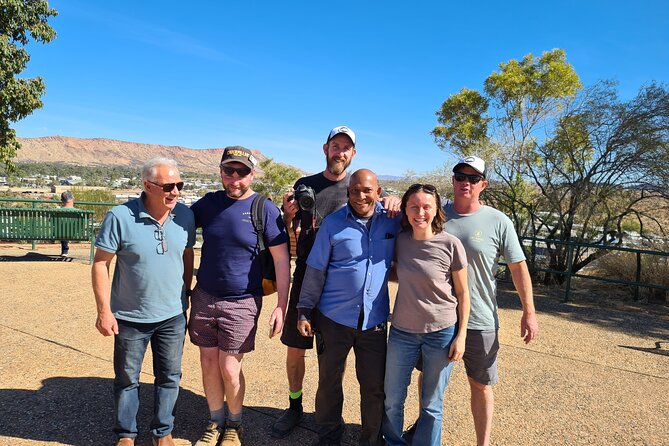
The strongest personal praise has gone to guides including Ty, Asha, Mishka, Lorrie, Renée, Lachie, Troy and Ryan. Their jobs are wide-ranging: driving, explaining Aboriginal culture and natural history, managing heat and timing, cooking, checking on the group, and keeping camp moving.
A good guide is especially important here because conditions can shift quickly. The best guides keep people hydrated, set a sensible walking pace, explain what you are seeing, and make early mornings feel worthwhile. Ty has been singled out for his humor, organization and care, while Lorrie was praised for making the trip feel safe and inclusive.
There is a practical weakness in the setup: on some departures, one guide may handle almost everything. That can make camp organization slower and leave people unsure what to do. You should expect to help rather than assume the guide will provide full-service camping.
The maximum group size is 23. That is small enough for a shared camp atmosphere, but not so small that you can expect a private tour. Your experience will also depend on the mix of ages, fitness levels and personalities in the group.
Heat, timing and what to pack
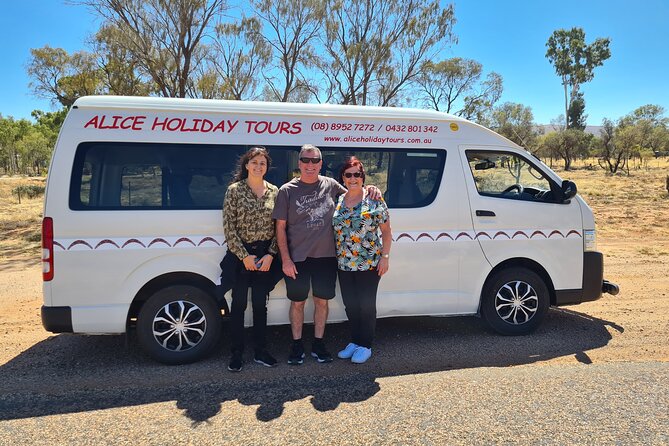
The Red Centre can be brutally hot. One departure faced temperatures of 41 to 43 degrees Celsius, making the walking unsuitable for some older participants. Even outside the hottest months, do not assume the desert will be mild.
Pack:
- A wide-brimmed hat
- Sturdy walking shoes
- A refillable or insulated water bottle
- Electrolyte tablets or drinks
- Sunscreen
- A torch or battery light
- Snacks
- Light clothing for the day and warm layers for cool nights
- A sleeping bag if you are assigned a swag
The schedule is built around heat avoidance, which is why sunrise walks matter. You may be awake before 5 a.m., but you will often be walking earlier than you would on an afternoon-only program.
The tour requires moderate physical fitness. You do not need to be an elite hiker, but you should be comfortable walking for several hours, handling uneven ground, and managing steps or slopes. If you have knee problems, ask about the walking options before paying.
Is $713.66 good value?
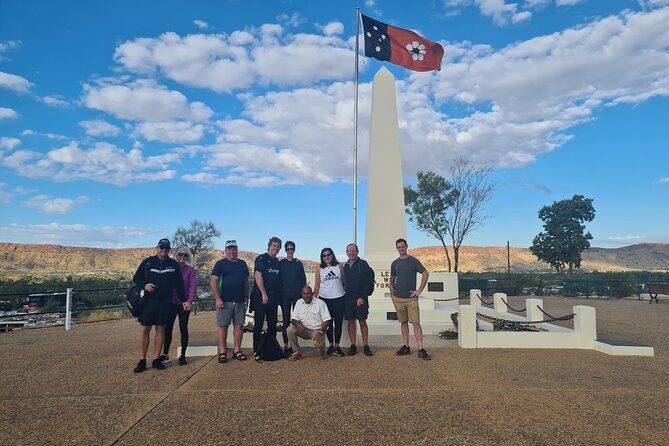
I consider the price reasonable for someone who wants a guided, all-in-one Red Centre trip. You receive round-trip transport from Alice Springs, meals, camping, park access, guided walks, sunrise and sunset visits, and three major destinations in three days.
The price is harder to justify if you expect polished accommodation, restaurant-style meals, private attention or a relaxed pace. Facilities are basic, one camp can be much rougher than another, and long road sections take up a large part of the schedule.
The value improves if you would otherwise need to hire a car and buy camping gear. It also improves if you care about having someone else manage the route, heat, park timing and cultural interpretation. It drops if you already have a vehicle and prefer to choose your own walking times.
The cancellation terms are strict close to departure. Cancel at least six full days ahead for a full refund, while cancellations two to six days ahead receive 50 percent. Cancellations within two days are not refunded. The operator also requires a minimum number of people and may offer another date or a full refund if that minimum is not reached.
Should you book this Uluru camping safari?
Book it if you want Uluru, Kata Tjuta and Kings Canyon in one tightly planned trip, and if you are happy to trade comfort for access. The sunrise base walk, the Kata Tjuta hike and the Kings Canyon Rim Walk are the main reasons to go.
This trip suits active couples, solo visitors, families with older children, and anyone who enjoys shared camping and long days outside. It also works well as an introduction to the Red Centre, especially if you do not want to drive hundreds of kilometres yourself.
Think twice if you need air-conditioned accommodation, regular showers, a slow schedule or guaranteed luxury camping. Older people can certainly enjoy the trip, but the heat and long walks need honest consideration.
My advice is simple: book it for the walking, cultural insight and three-site coverage, not for the word glamping. Bring water, electrolytes, sturdy shoes and a good attitude toward camp chores. If you do, this can be a powerful and efficient way to meet the heart of Central Australia.
FAQ
Where does the tour start?
The tour starts at Stay at Alice Springs Hotel, 11 Leichhardt Terrace, Alice Springs, NT 0870.
What time does pickup begin?
The stated start time is 5:40 a.m.
Where does the tour finish?
The activity ends back at the original meeting point in Alice Springs.
How long is the tour?
The advertised duration is approximately three days.
How many people can join the tour?
The group can include a maximum of 23 people.
Does the tour include Uluru sunrise and sunset visits?
Yes. The schedule includes an Uluru sunset visit on day one and an Uluru sunrise visit with a base walk on day two.
Are meals included?
Meals are included as part of the camping program. You may also help prepare food and clean up at camp.
Is camping accommodation included?
Yes. The tour includes camping accommodation, described as glamping-style. Conditions can range from tent cabins with beds to more basic swag or cot arrangements.
Do I need a high level of fitness?
You need a moderate level of physical fitness. The program includes guided walks at Kata Tjuta, Uluru and Kings Canyon, with the Kings Canyon Rim Walk being the main challenge.
What is the cancellation policy?
Cancel at least six full days before the start time for a full refund. Cancel two to six full days ahead for a 50 percent refund. Cancellations less than two full days before departure are not refunded.
Newest safaris around Australia
- Whale Shark Safari★ 4.5 · 132 reviews
- Humpback Whale Safari★ 5.0 · 65 reviews
- Cairns Trinity Inlet Sightseeing Safari★ 5.0 · 30 reviews
- Byron Bay Wildlife Safari★ 5.0 · 81 reviews
- Swan Valley: Golf Cart Kangaroo Safari w/ Mini Golf & Drink★ 4.6 · 27 reviews
- From Alice Springs: Palm Valley 4WD Outback Safari + Picnic★ 4.5 · 64 reviews
- Noosa: Ocean Adventure & Dolphin Safari★ 4.9 · 91 reviews
- Noosa Ocean adventure & Dolphin Safari.★ 4.6 · 28 reviews
Overnight & Camping Safaris, side by side.
Overnight Safari, Dinner, Stargazing & Al Khayma Camp
Read our review →
Dubai Overnight Desert Safari, BBQ & Stargazing at Al Khayma Camp
Read our review →

Desert Safari with Camp, Dinner, & Optional Overnight
Read our review →
3 Days Serengeti & Ngorongoro Group Camping Safari
Read our review →Lists this safari turns up in