
Review · WHALE WATCHING
Auckland Dolphin and Whale Watching Eco-Safari Cruise
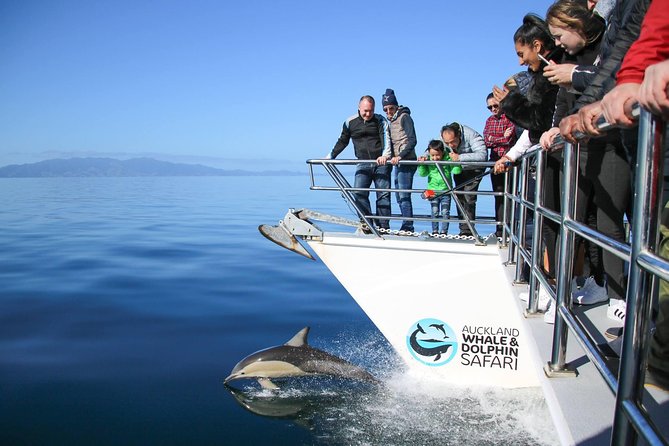
The best part of this cruise is that it is more than a hunt for a whale’s back breaking the water. You spend 4.5 hours in the Hauraki Gulf Marine Park with marine research scientists explaining what you are seeing, how the crew gathers data, and why careful boat handling matters. Dolphins often provide the main event, while whales, penguins, seals, sharks, and seabirds add welcome surprises.
I like two things especially. First, the 65-foot catamaran gives you indoor and outdoor viewing areas, toilets, and a small shop for snacks. Second, your ticket supports marine mammal conservation, so the outing has a clear purpose beyond taking photographs. The island views around Rangitoto, Motuihe, Motutapu, and Tiritiri Matangi make the ride worthwhile even on a quiet wildlife day.
The catch is simple: wild animals do not follow a schedule. Some trips bring dolphins swimming beside the boat, whales, penguins, and seals. Others produce only a few dolphins or none at all. The vessel can also feel crowded at its maximum of 99 people, and wind or rain can make the open decks chilly.
Key points to know before booking
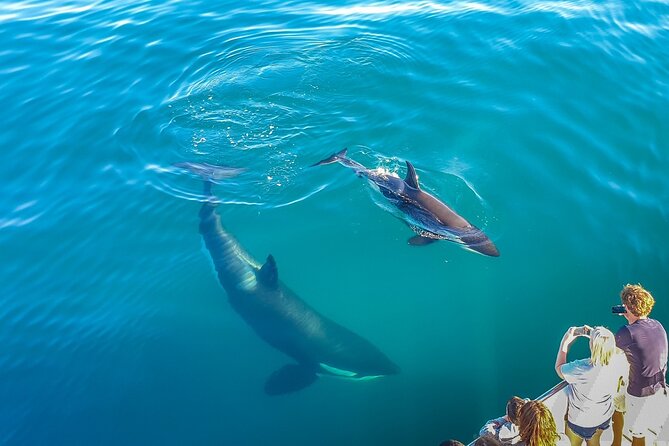
- Dolphins are often the most reliable sighting: Pods may play near the bow for long stretches, sometimes with young dolphins.
- Whales remain a bonus, not a promise: The crew searches hard for Bryde’s whales and other species, but sightings can be brief or absent.
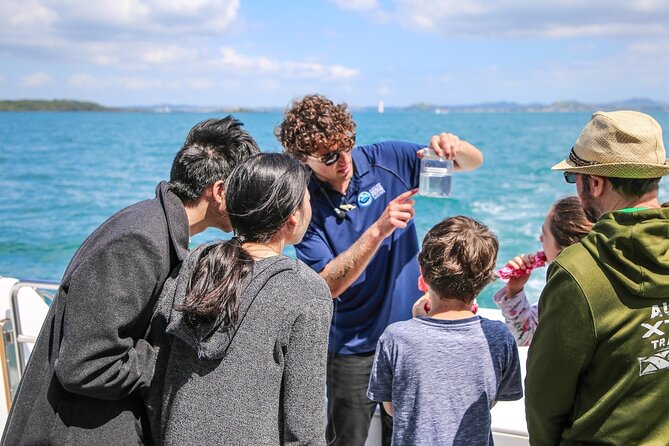
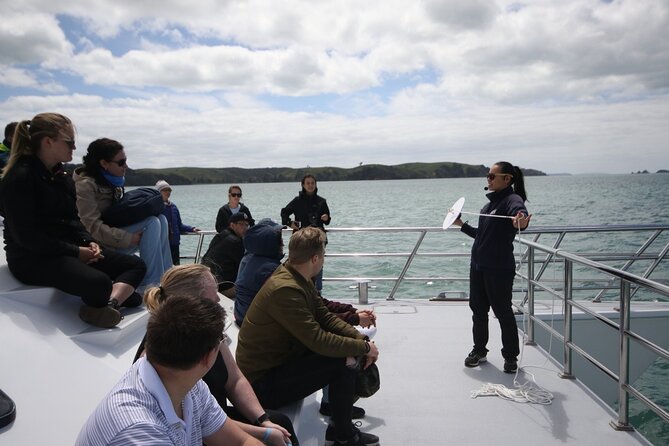
- Marine scientists lead the commentary: You learn about local research, conservation, seabirds, and the Hauraki Gulf ecosystem while the crew searches.
- The route is scenic even without wildlife: Rangitoto, Motuihe, Motutapu, Tiritiri Matangi, North Head, and the Auckland Harbour Bridge frame the cruise.
- Dress for changing conditions: Bring warm layers, weatherproof clothing, sunscreen, sunglasses, a hat with a chin strap, and flat-soled shoes.
- A no-mammal guarantee helps: If you see no marine mammals, the operator offers a free return trip, though that has limited value if you are visiting from overseas.
Why this Auckland cruise feels different
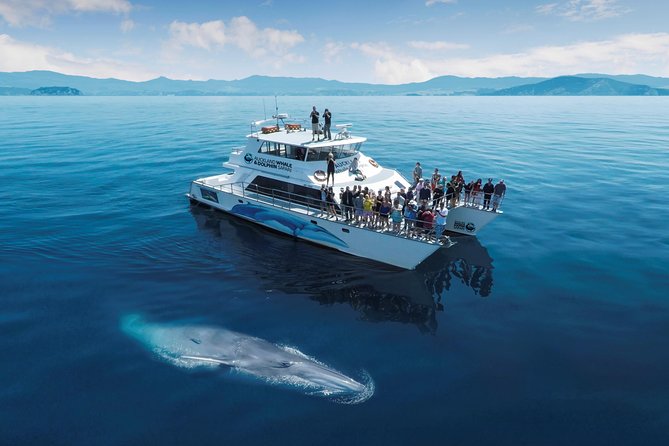
Auckland’s Whale and Dolphin Safari uses a purpose-built 65-foot, or 20-meter, catamaran to explore the Hauraki Gulf Marine Park. The boat is designed for viewing, with space to move between indoor and outdoor areas. I like that the trip combines a proper wildlife search with a broad look at Auckland’s coastal setting.
The Hauraki Gulf is home to five marine preserves and around 23 marine species. That variety explains the flexible nature of the trip. The crew may look for whales in one area, pause for a dolphin pod in another, then point out gannets, petrels, shearwaters, or white-fronted terns overhead.
The staff also explain research carried out with local marine scientists. That gives the cruise more substance than a simple sightseeing ride. You hear which whales the crew tracks and how the team works around wild animals without forcing an encounter.
The operator follows a conservation-minded approach. Each ticket contributes directly to marine mammal conservation, and the guides stress giving animals room to choose whether to approach. That matters when a dolphin pod swims near the boat. Good wildlife watching is not about chasing animals until they perform.
More Whale Watching in the world:
- Tromsø Whale Safari with MS Gabriele
★ 4.3 · 1,937 reviews - From Tromsø: All-Inclusive Whale & Orca Safari
★ 4.5 · 1,221 reviews - Húsavík: Original Big Whale Safari & Puffins by Speedboat
★ 4.7 · 1,221 reviews
Starting at Viaduct Harbour
You meet the crew at the New Zealand Maritime Museum area on Eastern Viaduct in Auckland Central. The boat returns to this same point at the end, so you do not need to arrange a separate ride back into town.
The departure point is useful if you are staying near central Auckland. It sits by Viaduct Harbour, with the city, waterfront, and Auckland Harbour Bridge close by. The cruise begins with harbor views before the catamaran reaches more open water.
Check-in closes 15 minutes before departure. Take that seriously. Late arrivals risk losing their allocated seats, and the crew cannot hold the boat for stragglers.
You receive a mobile ticket, which keeps the arrival process simple. Hotel pickup and drop-off are not included, so plan your own way to the waterfront. The meeting point is near public transportation, but the supplied details do not specify a particular bus or train connection.
From Waitematā Harbour to the Auckland Harbour Bridge
The first section takes you through Waitematā Harbour, where Auckland’s waterfront gives way to wider views. The Auckland Harbour Bridge becomes one of the early visual markers, linking the city with the North Shore.
This opening stretch is useful for settling into the boat and learning how the viewing areas work. If the water is calm, it feels relaxed. If wind has picked up, you will notice the conditions before the cruise heads farther into the gulf.
The catamaran offers shelter inside, but the best wildlife views require time outside. I would begin with a warm layer even on a sunny day. Wind over open water can make the temperature feel much lower than it does at the dock.
Rangitoto Island and the first gulf views
Rangitoto Island is one of the route’s most recognizable sights. Its volcanic form gives the cruise a strong sense of place as Auckland recedes behind you.
The island is not a walking stop on this outing. You view it from the water while the guide explains the marine park and the islands scattered across the gulf. This is an important distinction for anyone expecting an island visit. The route provides scenery and commentary, not a shore excursion.
Rangitoto also helps you understand the scale of the Hauraki Gulf. You are not on a short harbor loop. The boat travels through a large marine area, and the crew may need time to locate animals.
More Dolphin Watching in the world:
- Lisbon: Dolphin Watching with a Marine Biologist – Ocean Safari
★ 5.0 · 812 reviews - Wild Dolphin Watching and Snorkel Safari Off West Coast of Oahu
★ 5.0 · 795 reviews - Fazana: dolphin safari and sightseeing in Brijuni at sunset
★ 4.5 · 763 reviews - All-Inclusive Sandbar Safari with Dolphin Playground Encounter
★ 4.5 · 451 reviews
Hauraki Gulf Marine Park and the wildlife search
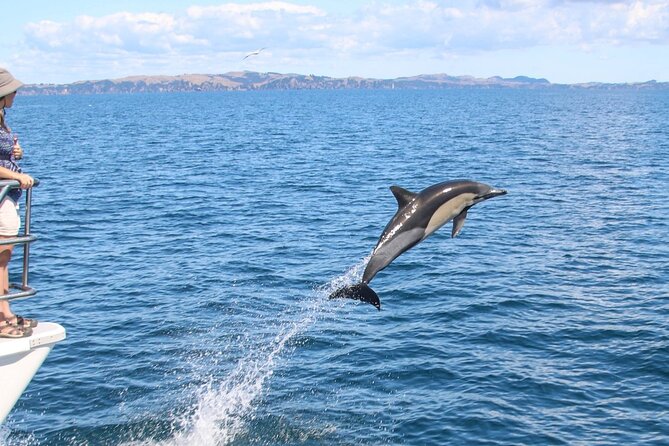
The main search takes place in the Hauraki Gulf Marine Park. The crew watches for up to six types of whales, dolphins, seals, rare seabirds, and other marine life. Bryde’s whales are native to New Zealand and are among the species the crew tracks.
Dolphins are often the most rewarding sighting. Several trips have produced large pods, including nursery groups with young dolphins. A pod may appear in repeated bursts near the bow, giving you chances to watch behavior rather than simply snap one distant photograph.
The boat’s front deck can be a good viewing spot when underway, but it can also be windy. You may want to move around instead of claiming one location for the entire trip. On full departures, finding a clear place at the rail can be difficult when wildlife appears.
The crew asks people to rotate during sightings so everyone gets a look. That is fair, especially when the boat is close to its 99-person limit. You will get better chances if you keep your camera ready but also stay willing to step back for someone else.
Whales are harder to predict. Some outings produce two whale sightings along with several dolphin pods. Others find no whales despite a determined search. A whale may surface only briefly, so patience matters more than expecting a guaranteed close encounter.
Motuihe and Motutapu: island scenery between sightings
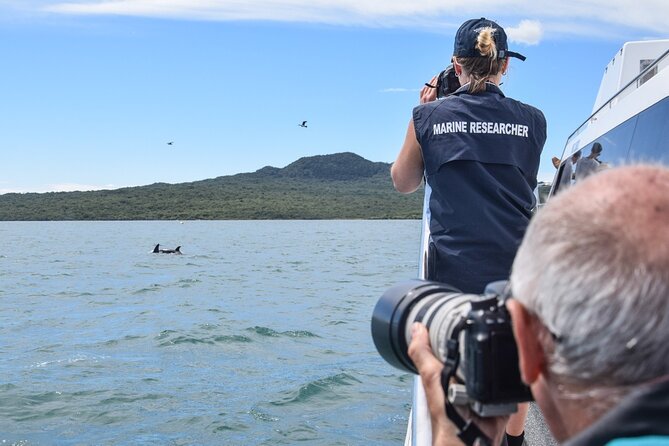
Motuihe Island and Motutapu Island add scenic variety to the cruise. You pass them from the water, with the islands forming a quieter backdrop than central Auckland.
These sections also show why the trip is not simply a whale-watching dash. Wildlife may take time to locate, and the route gives you changing views while the crew continues searching. You can watch island shorelines, seabirds, and open water while listening to the commentary.
The pace can feel slow if you arrive expecting constant animal activity. That is part of the tradeoff with a real marine safari. You are looking for free-ranging animals across a large area, not visiting an aquarium with scheduled demonstrations.
Tiritiri Matangi and the seabird watch
Tiritiri Matangi Island appears as another important point on the route. The island is associated with native bird conservation, while the water around it may bring a different set of sightings.
Keep binoculars ready for Australasian gannets, petrels, shearwaters, and white-fronted terns. Gannets can be especially dramatic when they plunge toward the water, while smaller seabirds may be harder to identify from a moving boat.
Blue penguins are another possibility. They are not guaranteed, and sightings may be quick, but they add a special New Zealand touch to the day. A seal, shark, or penguin can turn a trip that produced no whale into a memorable wildlife outing.
The guides help make these moments more meaningful by explaining what you are looking at. Bring binoculars if you have them, though the supplied information does not say that binoculars are provided onboard.
North Head and the return toward Auckland
North Head Historic Reserve is one of the final route points. Seen from the water, it adds a historic and coastal dimension to the cruise before the catamaran heads back toward the city.
The return journey gives you another chance to watch for animals. Conditions may change during the afternoon, and the crew can adjust the search as sightings or weather develop. One reported outing ran about 10 minutes late because the crew continued looking, though you should not count on a delayed return.
Back in Viaduct Harbour, the activity ends at the original meeting point. That makes it easy to continue with an Auckland waterfront meal or another central activity, but remember that food and drinks are not included in the cruise price.
What the boat is like with up to 99 people
The catamaran is stable and comfortable for a boat of this type, with room to sit inside or outside. A shop sells snacks, and toilets are available onboard. Those practical details matter during a 4.5-hour trip.
The maximum group size is 99. On a quiet day, that may feel manageable. At full capacity, the boat can feel crowded, especially when rain drives everyone under cover or when a dolphin pod appears on one side.
You may need to hold your place if you want a particular viewing position. The crew encourages people to share the rail, and most people do, but moving away from your seat can mean losing it. I would bring only what you need and keep your camera, sunscreen, and extra layer within reach.
Commentary quality can vary by position and conditions. Some people have had trouble hearing guides when the boat was noisy or the microphone was too quiet. Sitting closer to the main commentary area may help, and it is reasonable to ask the crew to repeat information if wind or engine noise gets in the way.
Weather, comfort, and seasickness
Weather on the Hauraki Gulf can shift quickly. Pack warm layers and weatherproof gear, even if Auckland looks sunny when you leave the hotel. A hat with a chin strap is useful because wind can turn an ordinary cap into floating litter.
Sunscreen, sunglasses, and sturdy flat-soled shoes are practical choices. You can burn on the water even when the air feels cool. Avoid loose footwear, since moving around the boat is part of getting good views.
Some departures encounter choppy water. If you are prone to seasickness, the 4.5-hour duration deserves careful thought. The supplied information does not list a seasickness policy or medication service, so plan according to your own needs.
Calm water can make the trip feel wonderfully easy. Rough water changes the experience into a serious boat ride, even if the crew handles the vessel well. I would avoid scheduling this as the only important activity on a tight Auckland day, since you may want flexibility afterward.
Is the $135.91 price good value?
At $135.91 per person, this is not a cheap harbor cruise. You are paying for 4.5 hours on the water, a purpose-built catamaran, a local guide, marine science commentary, conservation support, and the chance to see a wide range of wildlife.
The value depends on what you want. If you only want a guaranteed whale photograph, the price carries risk because no sightings are promised. If you value time in the Hauraki Gulf, island scenery, expert interpretation, and responsible wildlife watching, the price is easier to justify.
The strongest value comes on a day with dolphins, whales, or several kinds of wildlife. A particularly successful outing may include whales, large dolphin groups, a shark, blue penguins, seals, and seabirds. A quieter trip still provides the full boat ride and scenery, but you may feel the cost more sharply.
The free return-trip offer provides some protection if no marine mammals are seen. That is useful for people staying in Auckland for several days. It is less helpful if you are visiting from the United States or another distant country and will not return to New Zealand soon.
Who should book this safari?
I would choose this cruise if you care about marine life and want the chance to see animals in their natural setting. It suits families, photographers, bird watchers, and anyone who enjoys a long scenic boat ride with useful commentary.
It also works well for people who prefer a conservation-minded experience. The research connection gives the outing a clear educational purpose, and the crew aims to avoid stressing the animals.
You should think twice if you need a guaranteed result, dislike open-water motion, or have only a short window in Auckland. A 4.5-hour cruise takes a large part of the day, and conditions can be windy, wet, or choppy.
The experience is also better for people willing to share viewing space. If you expect a private rail position or an uncrowded deck, the maximum group size may frustrate you during peak periods.
Booking, cancellation, and practical details
Free cancellation is available when you cancel at least 24 hours before the local start time. Changes or cancellations made less than 24 hours ahead are not accepted for a refund.
The operator may cancel for poor weather or because the minimum number of participants is not reached. In those cases, you are offered another date or a full refund.
Service animals are allowed, and most people can participate. The supplied information does not give detailed accessibility specifications for the catamaran, so contact the operator before booking if you need particular assistance.
Confirmation arrives at booking. Bring your mobile ticket, arrive before the 15-minute check-in cutoff, and plan to buy food and drinks onboard if needed.
Should you book the Auckland Whale and Dolphin Safari?
Book it if you can accept uncertainty and want more than a quick wildlife photo. The best days bring dolphins close to the boat, whale sightings, blue penguins, seals, seabirds, and broad views across Auckland’s islands. The crew’s marine research work adds real value.
Do not book it expecting whales on demand. You may spend 4.5 hours on open water and see only a few dolphins, or no marine mammals at all. Still, the conservation focus, scenic route, return-trip promise, and strong dolphin potential make this one of Auckland’s better choices for a full day on the gulf.
FAQ
Where does the Auckland Dolphin and Whale Watching Eco-Safari Cruise depart?
The cruise departs from Eastern Viaduct near the New Zealand Maritime Museum in Auckland Central, at Viaduct Harbour.
How long does the cruise last?
The experience lasts approximately 4 hours and 30 minutes.
What animals might I see?
Possible sightings include up to six types of whales, dolphins, seals, blue penguins, sharks, Australasian gannets, petrels, shearwaters, and white-fronted terns.
Are whale and dolphin sightings guaranteed?
No. Wildlife sightings cannot be guaranteed because the animals remain in their natural environment.
What happens if no marine mammals are seen?
If you do not see any marine mammals, you can take the cruise again on another day at no extra charge.
How many people can join the cruise?
The maximum capacity is 99 participants.
Is food included?
No. Food and drinks are not included, but they are available to purchase onboard.
What should I bring?
Bring warm layers, weatherproof clothing, a sun hat with a chin strap, sunscreen, sunglasses, a camera, binoculars, and flat-soled shoes.
How early should I arrive?
Check-in closes 15 minutes before the stated departure time. Late arrivals risk losing their allocated seats.
Newest safaris around the world
- Dubai Desert Safari with Dune Bashing, Camel Rides & BBQ★ 5.0 · 51 reviews
- Morning Desert Safari with Buggy Ride & Sandboarding – Shared Car★ 5.0 · 10 reviews
- Afternoon Dune Drive Safari with SunSet Photo & Sand Boarding★ 5.0 · 43 reviews
- Morning Dubai desert safari – camel rides, quad bikes, dune buggies,dune bashing★ 4.0 · 43 reviews
- Dune Safari with 4X4 Car and BBQ Dinner★ 4.5 · 12 reviews
- Desert Safari, Open Desert Quad Bike Experience with BBQ Dinner★ 5.0 · 16 reviews
- Abu Dhabi city tour & desert safari from Dubai★ 5.0 · 87 reviews
- Adventure Quad Bike Safari, Camel Ride & Sandboarding★ 4.5 · 13 reviews
Whale Watching, side by side.
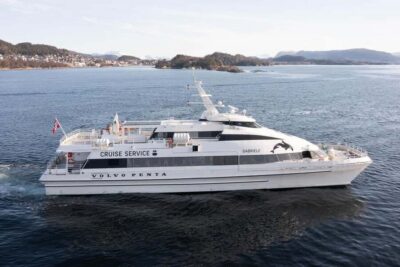
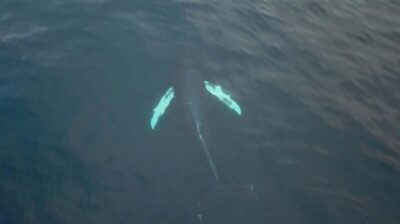
From Tromsø: All-Inclusive Whale & Orca Safari
Read our review →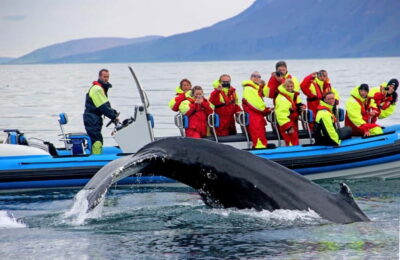
Húsavík: Original Big Whale Safari & Puffins by Speedboat
Read our review →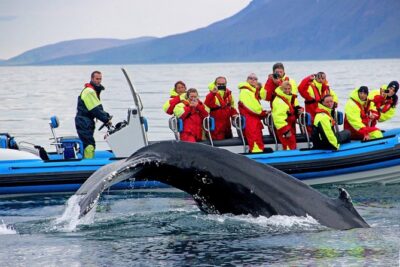
Original Big Whale Safari & Puffins Speedboat Tour from Húsavík
Read our review →
Ocean Safari: Sea Lions, Mobula Rays, Dolphins, Orcas & Whales
Read our review →Lists this safari turns up in