
Review · HORSES
Half day Horse back safari
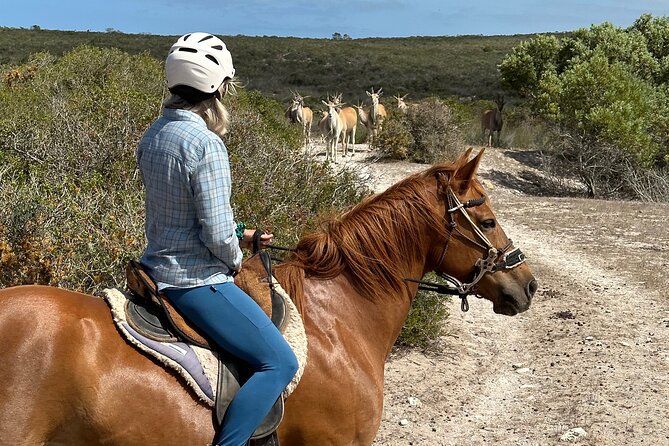
The unusual part comes first: you explore the West Coast on horseback, not from a safari vehicle. At Rondeberg Farms, the slow pace lets you notice tortoises, ostriches, antelope, and shifting Atlantic views while your horse carries you across working farm country. I like the close-up wildlife viewing and the chance to reach !Khwa ttu San Heritage Centre for lunch and a cultural visit.
I also like that the ride suits mixed ability levels. Guides can pair beginners with calm horses, while several guides may assist groups with different riding skills. The main drawback is practical: you need the gate code before arrival, and there may be no cell reception at the entrance. Spring is the best time for flowers, but animal sightings and weather can never be guaranteed.
Key points at a glance
- Horseback safari near Cape Town: Rondeberg Farms is described as the closest venue to Cape Town offering this type of horse safari.
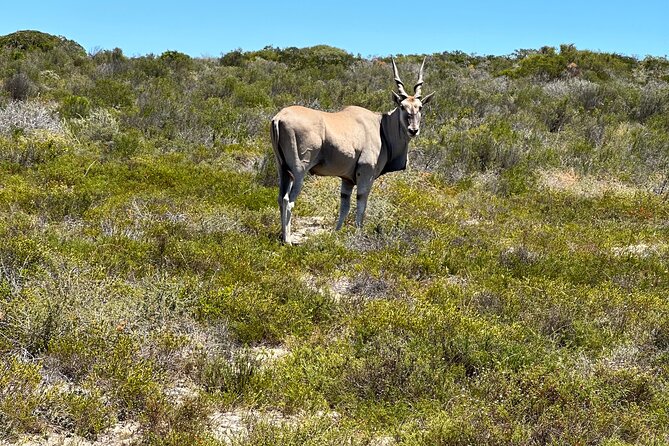
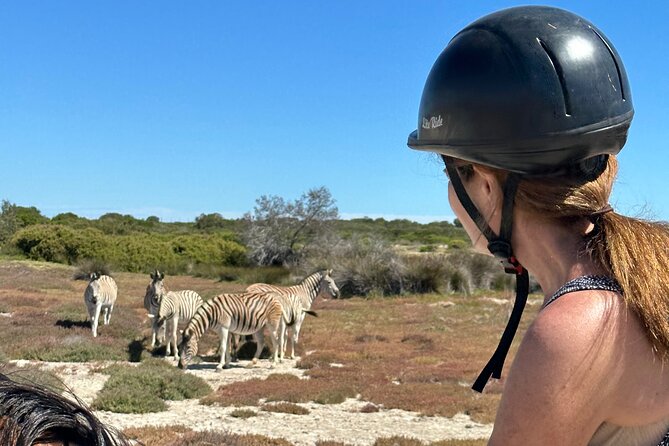
- Wildlife from the saddle: Look for zebra, eland, wildebeest, springbok, bontebok, steenbok, duiker, ostrich, and tortoises.
- A second stop with cultural value: The route reaches !Khwa ttu San Heritage Centre, where lunch and a cultural tour are included.
- Spring flower season: From August to October, the West Coast may be covered in wildflowers, with August and September highlighted as especially good months.
- Private four-hour activity: Only your group participates, and the experience returns to Rondeberg Farms.
- Useful preparation: Bottled water, a helmet, saddle, bridle, and lunch are included. Alcohol is not.
Why horseback changes the West Coast safari
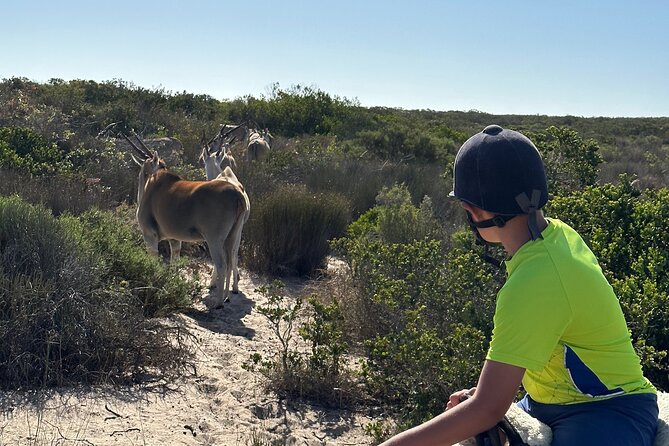
A vehicle can cover more ground, but a horse gives you a slower, quieter way to see the farm. You are sitting at animal height, moving at the pace of the herd, and spending more time looking at the ground, scrub, flowers, and small creatures nearby.
That matters on this stretch of the West Coast. The advertised wildlife includes zebra, eland, wildebeest, springbok, bontebok, steenbok, duiker, ostrich, and tortoises. You might see several of these on one ride, or only a few. The setting is open and natural, so sightings depend on weather, season, and animal movements.
I would choose this trip for the feeling of being outdoors rather than for a guaranteed checklist. The horse ride is the main event. Wildlife adds excitement, but it should not be treated like a promise of a certain animal at a certain time.
The Atlantic views add another layer. As you ride through the farms, you can look toward the coast and take in a broad view that feels very different from Cape Town’s city beaches and busy waterfront. It is a chance to see the West Coast as open farm and nature country, not simply as a road to somewhere else.
More Horse Riding in Cape Town:
- Antalya: Lara Beach & Forrest Horse Riding Safari
★ 4.0 · 279 reviews - Marmaris: Horse Riding & Safari with Hotel Transfer
★ 4.7 · 159 reviews - Punta Cana: Jungle Safari Zipline, Buggies and Horse Riding
★ 4.7 · 83 reviews
Rondeberg Farms sets the tone
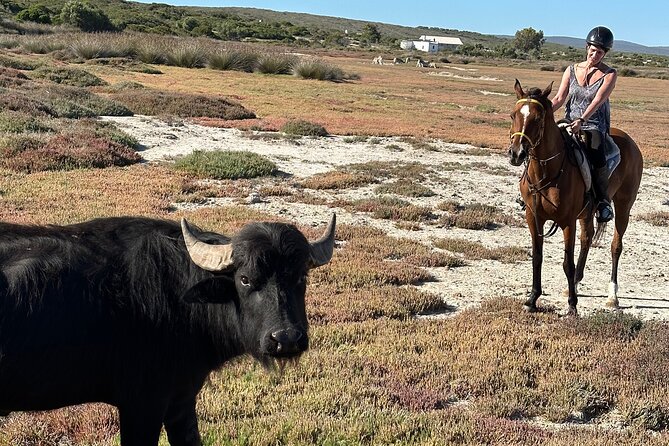
The meeting point is Rondeberg Farms on West Coast Road near Darling. The activity lasts about four hours and ends back at the same place, so you do not need to arrange a separate pickup point at the end.
The farm is both a guest farm and a nature setting. That combination gives the ride a more personal feel than a large commercial safari operation. You are not being rushed through a long circuit. Instead, the route focuses on the connection between rider, horse, and surroundings.
Your horse is fitted with a saddle and bridle, and a riding helmet is supplied. Bottled still water is also included. These are small details, but they make the price easier to assess because you do not need to bring basic riding equipment or buy water during the outing.
The horses are an important part of the experience. This is not simply transport with a view. You are expected to spend time getting comfortable with your horse, and the ride is presented as a chance to bond with it. First-time riders are not automatically excluded. One group had a complete beginner, and the guides selected a laid-back horse to help that rider feel at ease.
That said, you should still expect a physical activity. The stated requirement is a moderate level of fitness. You will spend much of the four-hour experience on horseback, so this is not the right choice if you want a short photo stop with minimal movement.
What the ride through the farms is like
The route takes you across the farm and toward the adjoining property. The appeal is not a single dramatic viewpoint. It is the steady change in what you notice as the horse moves along.
You may pass open areas where larger animals are easier to spot. Elsewhere, you might need to watch for smaller antelope, tortoises, or birds. A guide provides commentary along the way, helping you understand what you are seeing and keeping the ride moving at a comfortable pace.
The horses are described as calm and lovely, and the guides have experience handling people with different riding levels. Groups with a mix of beginners and experienced riders may receive help from several guides. That is useful because a first-time rider may need more attention than someone who already knows how to control a horse.
The pace also allows you to use more than your eyes. The activity description makes a point of smelling, seeing, and feeling nature. That is a good description of why this ride works. You are outside for long enough to notice the air, the plants, the sound of the horse’s movement, and the way the scenery opens toward the Atlantic.
Do not expect a fast gallop or an action-heavy safari unless the guide specifically decides conditions allow it. The information provided emphasizes nature, animal viewing, and comfort. The experience is best understood as a guided ride through a wildlife farm, not as a high-speed equestrian excursion.
Wildlife from the saddle
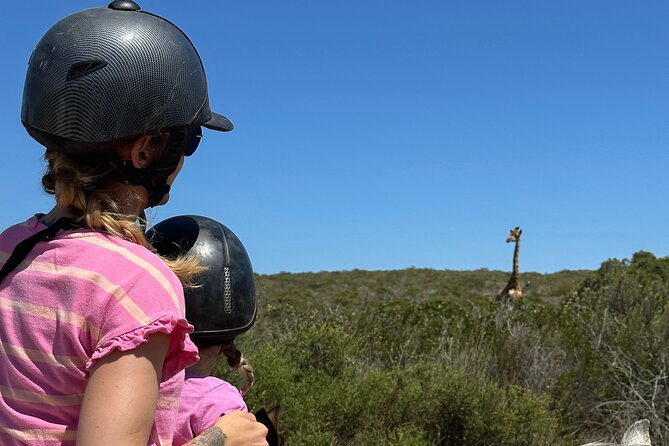
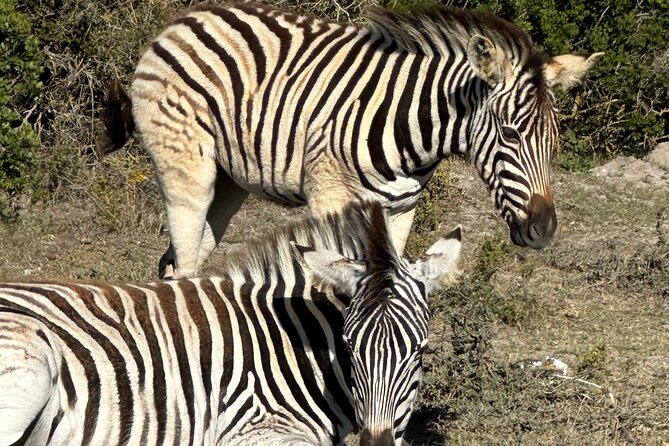
Seeing a zebra or antelope from horseback has a different feel from seeing one through a vehicle window. Your profile is closer to the animal’s level, and your movement can be less abrupt. That does not mean wildlife will ignore you, but the setting can feel more natural and less separated.
The listed species give you a useful sense of what lives on the property. Zebra and ostrich are the larger, easier-to-recognize possibilities. Springbok, bontebok, steenbok, duiker, and other antelope may require more patient looking. Eland and wildebeest add the chance of seeing larger grazing animals.
Tortoises are easy to miss if you are only scanning the horizon. A horseback ride encourages you to look down as well as out. The guide’s commentary can help you notice the smaller details of the farm’s fauna and flora.
Expectations matter here. Even a good safari does not produce every animal on every ride. One person specifically noted not seeing eland, while still considering the ride worthwhile. I would make the same calculation: if you need a guaranteed sighting, this may frustrate you; if you enjoy being outside and accept some uncertainty, it offers a stronger experience.
A few more safaris around Cape Town worth a look
- From Cape Town: 2-Day Safari at Garden Route Game Lodge
★ 4.8 · 928 reviews - Big Five Game Reserve Wildlife Safari from Cape Town
★ 4.0 · 576 reviews - Big Five Safari and Breede River Valley Guided Day Trip
★ 5.0 · 526 reviews - From Cape Town: South African Wildlife and Safari 2-Day Tour
★ 4.7 · 411 reviews
!Khwa ttu San Heritage Centre and lunch
The adjoining !Khwa ttu San Heritage Centre gives the half-day outing a second focus. You do not simply ride back to the starting point after looking for animals. The route includes time for lunch and a cultural tour connected with South Africa’s oldest inhabitants.
The centre is described as the only San heritage centre in the world. That makes the stop especially valuable for anyone who wants more context about South Africa beyond scenery and wildlife. The ride introduces you to the West Coast through nature. !Khwa ttu adds human history and culture.
Lunch is included and is prepared with ingredients from the farm. This is one of the strongest value points in the package. You get a meal as part of the outing, and the food is tied to the place rather than being an unrelated restaurant stop.
Alcoholic drinks are not included, so plan on water or other nonalcoholic options unless you choose to purchase something separately. Bottled still water is supplied during the ride.
The available information does not give a detailed menu or a fixed length for the cultural tour. I would therefore treat the centre visit as an included part of the day, but not plan your schedule around a particular dish or exact museum timing.
August to October is the flower season
The West Coast is known for its seasonal wildflowers, and the timing matters here. From August to October, the farms can turn into wide carpets of blooms. August and September are singled out as especially strong months.
This could be the best reason to choose a date carefully. Wildlife is appealing in every season, but spring changes the visual character of the ride. You may see flowers spreading between grazing areas, adding color to an already open setting.
The trade-off is that the experience requires good weather. If conditions are poor, the activity may be canceled and you will be offered a different date or a full refund. That policy is reassuring, but it also tells you to keep some flexibility in your schedule.
Bring sun protection on a warm day. Sunscreen is especially useful because the ride takes place outdoors for several hours, and the open West Coast setting may offer limited shade. Wear clothing suitable for riding and weather changes, though the supplied information does not specify a required dress code.
Is $60.60 a fair price?
At $60.60 per person, this is not priced like a simple one-hour trail ride. The roughly four-hour duration gives you time on the horse, wildlife viewing, Atlantic scenery, lunch, bottled water, riding equipment, and the visit to !Khwa ttu San Heritage Centre.
That combination gives the tour good value if you want several activities in one half-day. You are not paying only for a horse rental. You are also paying for guides, equipment, a farm meal, and access to a cultural stop.
The private format improves the value for couples, families, or small groups. Only your group participates, so the pace can be more comfortable for beginners and riders with different abilities. It also means you are not sharing the outing with a large bus group.
The value is weaker if your only goal is to see a long list of animals. Sightings are not guaranteed, and the tour is not presented as a substitute for a dedicated big-game safari. It works best as a West Coast nature and culture experience with wildlife along the way.
The activity is booked about 20 days in advance on average. That is a useful planning signal, especially for spring dates or a particular day during a Cape Town stay. Confirmation arrives within 48 hours, subject to availability, so do not assume a booking is final until you receive it.
The small logistical detail that can ruin the start
The gate code is important. It was not sent to one participant, and the entrance had no cell reception. Another person happened to provide the code, but you should not count on that solution.
Ask for the gate code before setting out and save it somewhere you can access offline. This is one of those minor details that can turn into a major nuisance when you are standing outside a farm entrance with no signal.
The meeting point is Rondeberg Farms, West Coast Road, Darling, 7345, South Africa. The activity ends there as well. The information provided does not include hotel pickup, so plan to reach the farm independently.
The mobile ticket is convenient, but it does not replace checking the practical details before departure. Confirm the meeting instructions, have the gate code ready, and allow enough time to arrive before the riding start time.
Who will enjoy this ride most?
I would recommend it to animal lovers who want a more active way to see the West Coast. It suits couples, families, and small private groups, especially when the group includes both experienced riders and people who have never been on a horse.
Beginners have a reasonable entry point because the guides can match them with calm horses and provide extra support. Still, a moderate fitness level is required, and you should be comfortable spending several hours seated on a horse.
The trip also suits anyone who wants culture included in a nature outing. The !Khwa ttu stop keeps the day from being only about animal sightings. It gives you a chance to learn about San heritage and eat food prepared from farm ingredients.
I would be more cautious about booking if you dislike uncertainty, have limited riding stamina, or are visiting during a tight schedule with no flexibility for weather. The four-hour duration is substantial, and a spring flower ride is best planned around conditions rather than forced into a fixed itinerary.
Service animals are allowed, according to the activity information. The experience is private, but the supplied details do not state a maximum group size, so ask the provider if your party is large.
Should you book the Half Day Horseback Safari?
Book it if you want a relaxed, personal ride with a real sense of place. The strongest combination is the quiet wildlife viewing, the farm lunch, and the cultural stop at !Khwa ttu San Heritage Centre. Spring, especially August and September, adds the possibility of flower-filled scenery.
Skip it if your priority is a guaranteed big-game encounter or a fast, technical horse ride. Animal sightings vary, the weather can affect the schedule, and the ride still requires moderate fitness.
For most visitors with half a day to spare near Cape Town, the $60.60 price is reasonable because it combines horseback riding, wildlife, lunch, equipment, water, and a cultural visit. Just secure the gate code in advance, check the forecast, and arrive ready for an outdoor activity rather than a quick sightseeing stop.
FAQ
Where does the horseback safari start?
It starts at Rondeberg Farms on West Coast Road, Darling, 7345, South Africa. The activity also ends back at the meeting point.
How long does the experience last?
The activity lasts approximately four hours.
What wildlife might I see?
Possible sightings include zebra, eland, wildebeest, springbok, bontebok, steenbok, duiker, ostrich, and tortoises. Sightings are not guaranteed.
Is lunch included?
Yes. Lunch is included and features meals prepared with ingredients from the farm. Alcoholic beverages are not included.
What equipment is supplied?
The tour supplies bottled still water, a riding helmet, saddle, and bridle.
What happens if the weather is poor?
The experience requires good weather. If it is canceled because of poor conditions, you can choose a different date or receive a full refund. You can also cancel for a full refund if you do so at least 24 hours before the start time.
Newest safaris around Cape Town
- V&A Waterfront Marine Big 5 Ocean Safari★ 4.5 · 30 reviews
- Sunset Safari Big 5 Aquila with Snacks and Wine Tasting★ 5.0 · 12 reviews
- Full-Day Safari Aquila Game Reserve from Cape Town★ 4.5 · 15 reviews
- Wine Beer and Biltong Safari – Stellenbosch★ 5.0 · 17 reviews
- Urban Safari in Cape Town★ 5.0 · 21 reviews
- Aquilla BIG5 private Safari Cape Town★ 4.5 · 10 reviews
- Safari Game Drive – Yzerfontein★ 5.0 · 13 reviews
- Marine Big 5 Safari with transport from Cape Town★ 4.5 · 158 reviews
Horses, side by side.
Santorini: Extreme Horse Safari with Beach Gallop
Read our review →
Kemer Horse Safari, pick up from Kiris, Beldibi, Goynuk
Read our review →
Doha Desert Safari Horse Riding, Camel Ride, ATVs & Inland Sea
Read our review →Lists this safari turns up in