Review · SAFARIS
Wellington: Half Day Seal Coast Safari
Wellington’s fur seals are the star of this half-day outing, but getting to them is much of the fun. You cross private farmland, climb above the Cook Strait, pass wind turbines and sheep stations, then drop to a rough coastal track near Tongue Point. The seals lounge, swim, and squabble on the rocks while ferries move across the water.
I like the unusual mix of native forest and working farm country, plus the small group size of no more than 10 people. I also like that the tour reaches parts of the coast that are difficult to visit without a car. The catch is the price, $116 per person, and the ride can be quite bumpy on farm roads. Still, for a short nature outing with transport included, it offers more than a simple seal-spotting trip.
Key points to know before you book

- The seals are reached by private farmland: Terawhiti Station gives you access to remote coastal country that is not part of an ordinary city sightseeing loop.
- Otari-Wilton’s Bush adds real substance: You begin among native plants and may see tūī, kākā, kākāriki, kererū, or even a kārearea.
- The views depend on the weather: On a clear day, you can see across Cook Strait to the South Island and the Kaikōura Ranges. Rain and fog can hide much of it.
- The 4WD ride is part of the experience: Expect rough, winding tracks, especially near the coast.
- Guides shape the outing: Sarah, Grant, Andy, Chewy, Blue, Marc, Gina, and others are praised for their local stories, careful driving, and easy manner.
- It suits active sightseers who want variety: Walking is limited, but you still get forest, farmland, ocean, wildlife, and conservation in one 210-minute trip.
From native forest to Wellington’s wild south coast

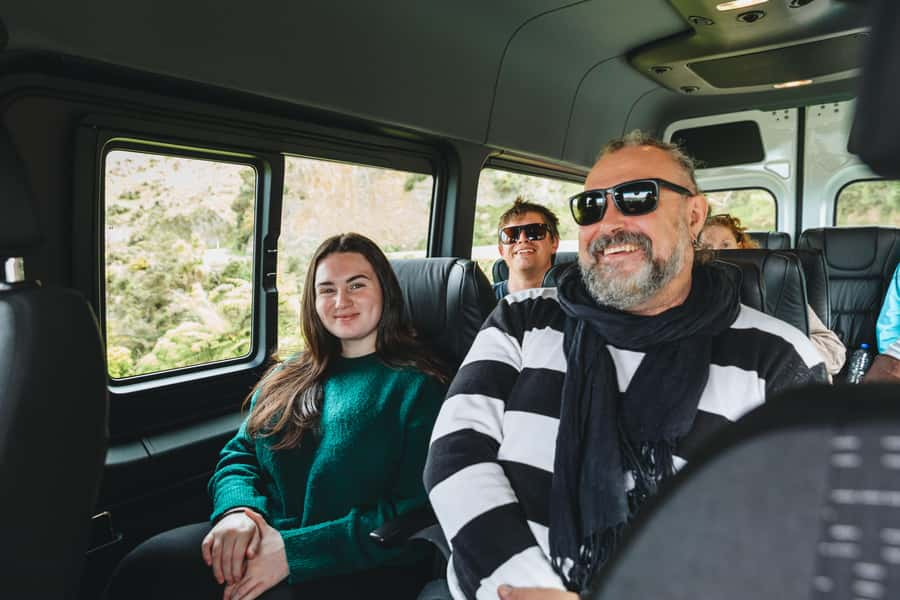
This tour starts in central Wellington, usually with pickup from a city meeting point or the cruise terminal. Transport is in a Mercedes 4WD van, a sensible choice for the rough farm tracks ahead. The group is limited to 10 people, so the guide can answer questions and adjust the pace more easily than on a large coach tour.
The first stop is Otari-Wilton’s Bush, a 100-hectare reserve and botanical garden devoted entirely to New Zealand native plants. It is not just a quick photo stop. You cross a skybridge above the forest canopy while your guide explains how the bush looked before large-scale European settlement and how native plants and birds have adapted to life on these islands.
This is a useful introduction because the rest of the trip is about the relationship between nature and people. You hear about native flora, Māori uses of plants, introduced animals, and the work needed to restore birdlife around Wellington. The reserve is also linked to a notable conservation change: birds such as tūī, kākā, kākāriki, kererū, and sometimes kārearea have returned to parts of the region after being absent or under threat.
I would not book this tour only for the botanical garden. The stop is fairly short compared with the full outing, and anyone wanting a serious garden visit should allow separate time for Otari-Wilton’s Bush. But as an opening chapter, it works well. You begin with living forest before moving into open hills and the coast.
A few more safaris around the world worth a look
- Dubai: Desert Safari, Quad Bike, Camel Ride & Al Khayma Camp
★ 4.9 · 68,962 reviews - Dubai: Desert Safari, Quad Bike, Camel Ride and Sandboarding
★ 4.9 · 43,505 reviews - Dubai: Safari, Quad Bike, Camel Ride, and Buffet Dinner
★ 4.9 · 33,424 reviews
Crossing Terawhiti Station by 4WD
From the bush, the van heads toward Wellington’s south coast. The route turns away from the main road and enters Terawhiti Station, one of New Zealand’s oldest and largest stations. This private access is a major reason to choose the safari instead of trying to reach the coast on your own.
The drive across the farm gives you a look at a working rural property rather than a polished park attraction. You might see sheep, cattle, and goats along the hills. The road is rough in places, and the van will shake. That is not a flaw in the vehicle. It is the nature of the route, and the 4WD is there because ordinary city transport would not manage it comfortably.
At the high points, the views open across Cook Strait toward the South Island and the Kaikōura Ranges. Snow on the distant mountains can make this one of the finest viewpoints near Wellington. On a clear day, the combination of steep hills, open sea, and distant peaks gives the ride real drama.
Weather matters here. Wellington is famous for strong wind, and low cloud, rain, or fog can cover the South Island views. The safari operates in all weather, so you should arrive ready for changeable conditions. Several outings have still been enjoyable in heavy rain or fog because the guide kept the commentary going, but you should not pay for this trip expecting a guaranteed panorama.
The farm section is also the part most likely to feel less essential if your main goal is seals. It is a route to the coast, not a separate farm attraction with a long visit. I see its value in the access and the scenery, but the appeal depends on your interest in remote country and working farmland.
Wind turbines, kiwi restoration, and the leaning lighthouse
The road follows a ridgeline built for Project West Wind, a major wind farm supplying enough electricity to power homes across the Wellington region. With Wellington’s reputation for strong winds, the turbines feel very much at home here. Your guide explains how wind power and farming operate alongside one another in a difficult environment.
This is one of the better details of the trip because it adds a practical layer to the scenery. You are not just looking at giant turbines on a hill. You learn how energy production, private land, and farming can share the same rough ground.
The area is also connected with the Capital Kiwi project, which has brought wild kiwi back to the hills after roughly 100 years away. Kiwi are not guaranteed sightings on this tour, and you should not book it as a kiwi-spotting trip. The important point is the wider conservation story: the same region now supports efforts to restore native wildlife while retaining farming and energy use.
As the van descends toward sea level, look for Karori Rock Lighthouse, often called the leaning lighthouse. It was one of New Zealand’s first automated lighthouses and, as the nickname suggests, it really does lean. You see it more clearly once you reach the coast.
The guide commentary is a major part of this stretch. Names vary by departure, but guides such as Grant, Sarah, Andy, Chewy, Marc, Gina, Blue, and Hamish have been singled out for their local stories, humor, Māori cultural information, and careful driving. That matters because the road itself can be quiet. Without good commentary, the long transfer over the hills would feel like a simple vehicle ride.
Watching fur seals at Tongue Point

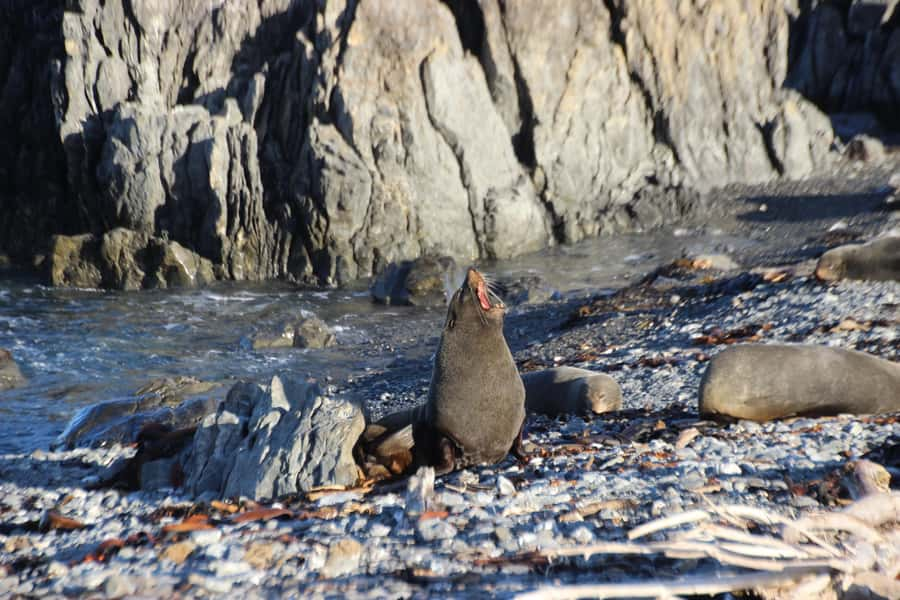
The final approach follows a rocky and sandy track toward Tongue Point. This is the payoff: a coastal colony of New Zealand fur seals in their natural setting. You walk along the beach and watch them sunbathe, swim, play, and rest on the rocks.
The animals are wild, not performing for visitors. Some may be active, while others appear to be doing very little at all. That is part of the charm. Give them time, watch their behavior, and resist the urge to move closer for a better photograph.
You stay at a safe distance, reported by one outing as around 10 to 15 meters. Your guide explains the seals’ history, ecology, and conservation, including why their numbers have recovered. The colony is the clear highlight for most people, but the setting makes it better than a quick roadside wildlife stop. You are on a remote beach with the sea, cliffs, ferries, and the leaning lighthouse nearby.
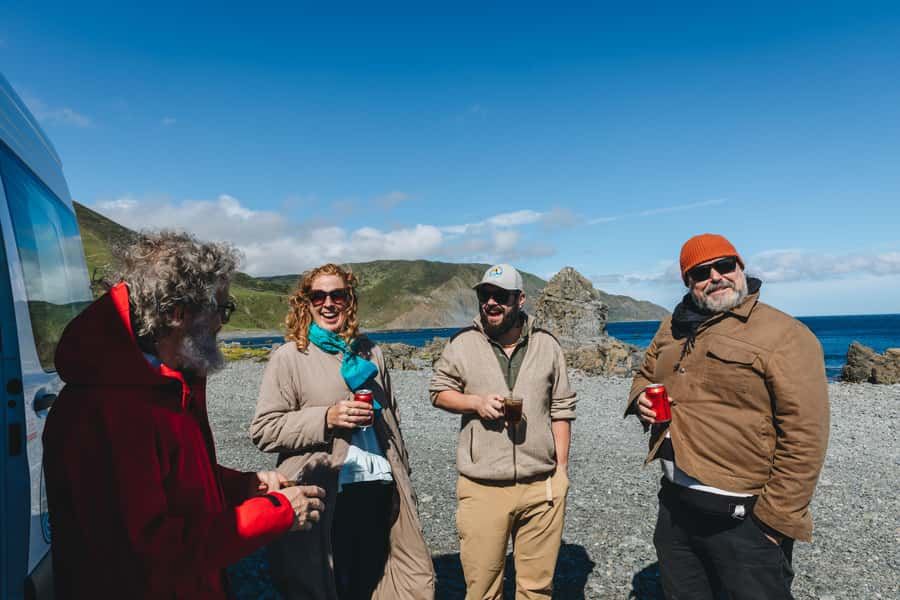
Light refreshments are served at the coast. Depending on the day and the guide, this may be a hot drink and a small snack. It is a simple touch, but welcome in the wind. One guide even made coffee during a weather delay, which gives you an idea of the practical, friendly tone these outings can have.
Bring a camera, but also bring patience. The seals may be spread along the shore, and the best view can depend on where they choose to rest. Your guide helps you spot them and keeps the group at a respectful distance. You may also see coastal birds on the way.
Same region, a very different drive:
- Dubai: Red Dune Safari, Quad Bike, Camel Ride, BBQ Dinner
★ 4.9 · 32,185 reviews - Dubai: Premium Safari, Camel Ride & Al Khayma Camp 3-Buffets
★ 4.9 · 30,335 reviews - Dubai: Desert Safari with BBQ Dinner & Quad Biking Options
★ 4.9 · 20,485 reviews - Dubai: Half-Day Desert Safari, Camel Ride, ATV & Dune Buggy
★ 4.9 · 19,221 reviews
What the ride is really like

The Mercedes 4WD vans are described as comfortable and safe, but comfort has limits on farm tracks. The roads are winding, uneven, and sometimes rough enough to shake you in your seat. If you suffer from motion sickness, consider sitting where the ride feels most stable and bring whatever usual remedy works for you.
The walking is minimal. You cross the skybridge and walk around the bush stop, then walk along the beach near the seals. This is not a strenuous hike, but the beach can be uneven, and the coastal weather can change quickly.
Wear comfortable shoes with a good sole. Warm clothing is essential even in summer, and sunscreen and sunglasses are useful when the clouds clear. A waterproof outer layer is sensible because the safari runs in rain as well as sunshine.
Large bags and luggage are not allowed. If you are coming straight from a cruise ship, arrange the pickup at Wellington Cruise Ship Port and leave your main luggage elsewhere. Cruise passengers should also keep a close eye on the return timing. The tour is designed around a 210-minute schedule, and the operator has experience getting people back in time for ships, but you should still confirm your pickup details when booking.
Is $116 good value?

At $116 per person, this is not Wellington’s cheapest half-day activity. You are paying for a small group, a 4WD vehicle, city pickup, private farm access, a guide, refreshments, and a route that combines several different settings.
The value is strongest if you do not have a car or if you want access to the remote coast without managing rough roads yourself. A self-drive plan would still need to solve the private-land access problem, and the guide adds context about plants, Māori culture, farming, wind power, and wildlife.
The value is weaker if you want only a brief seal sighting or a long walk in nature. The farm drive takes a fair share of the 210 minutes, and the weather can reduce the big views. One fair criticism is that the farm section can feel incidental when compared with the advertised forest and seal stops.
I think the price is reasonable for a visitor who values access and interpretation more than constant activity. It is a personal, varied outing rather than a basic transfer to a beach.
Who should book this Wellington safari?

I would choose this tour if you want to see a side of Wellington that is difficult to reach independently. It suits nature lovers, first-time visitors, cruise passengers, couples, and anyone who likes a bit of adventure without committing to a full-day hike.
It is also a good choice for people who enjoy learning as they go. The best guides explain native plants, local history, Māori culture, farming, energy production, and conservation without turning the ride into a lecture. Past outings with Natalie, Emily, Hamish, Grant, and others have been especially strong on storytelling and local detail.
You may want something else if you dislike bumpy roads, need guaranteed clear views, or want an activity built around a long walk. It is not suitable for wheelchair users, and the supplier does not allow large bags.
The tour can run in poor weather, and route changes are possible if conditions require them. If the forecast looks rough, ask about transferring your confirmed booking to another day. Changes can be made without charge when the supplier receives at least 24 hours notice.
Practical pickup details in central Wellington

Several city pickup points are available, including Bunny Street outside McDonald’s near Hotel Waterloo, Wakefield Street opposite the former Amora Hotel, the Cuba Street entrance at Naumi Studio, Te Papa near the three large boulders, and TRYP by Wyndham for people staying around Courtenay Place.
Other hotel areas use nearby meeting points. For example, people near the InterContinental, DoubleTree by Hilton, Ibis, and several Lambton or Johnston Street properties may meet at Grey Street and Featherston Street near Aye! Empanadas. If you are driving into the city, Barnett Street beside Te Papa is suggested for parking and meeting at the museum entrance.
The exact pickup time depends on your location, so provide that information when booking. The tour offers free cancellation up to 24 hours before departure and a reserve-now, pay-later option, which is useful when your Wellington plans depend on a cruise schedule or changing weather.
Should you book the Seal Coast Safari?
Book it if you want wildlife, private access, and varied scenery in one compact outing. The seals are the main reward, but the forest canopy, Terawhiti farm roads, wind turbines, distant mountains, and Māori and conservation stories give the trip its character.
Skip it if $116 feels too high for a weather-dependent activity or if rough roads are likely to spoil your day. For most visitors without a car, though, this is a smart way to reach Wellington’s remote south coast, and the small group format gives you a far more personal experience than a standard sightseeing bus.
FAQ
How long does the Seal Coast Safari last?
The tour lasts 210 minutes, or three and a half hours.
How much does the tour cost?
The listed price is $116 per person.
Where does the tour go?
It begins in central Wellington, visits Otari-Wilton’s Bush, crosses Terawhiti Station, follows the Project West Wind ridgeline, and continues to Tongue Point on the south coast.
Will I definitely see fur seals?
The tour is designed to visit a colony of New Zealand fur seals in their natural environment. Wildlife is not controlled, but the coastal stop is specifically included for seal viewing.
How close can I get to the seals?
You are asked to keep a safe distance. One recorded visit described viewing the seals from about 10 to 15 meters away.
Is walking required?
Only minimal walking is required, including walking across the skybridge and along the beach near the seals.
What should I bring?
Bring comfortable shoes, a camera, sunscreen, sunglasses, and warm clothing.
Does the safari operate in bad weather?
Yes. The safari runs in all weather, although weather and other conditions may lead to route changes.
Can cruise ship passengers join the tour?
Yes. Cruise passengers should select Wellington Cruise Ship Port as their pickup location and confirm the correct details when booking.
Newest safaris around the world
- Dubai Desert Safari with Dune Bashing, Camel Rides & BBQ★ 5.0 · 51 reviews
- Morning Desert Safari with Buggy Ride & Sandboarding – Shared Car★ 5.0 · 10 reviews
- Afternoon Dune Drive Safari with SunSet Photo & Sand Boarding★ 5.0 · 43 reviews
- Morning Dubai desert safari – camel rides, quad bikes, dune buggies,dune bashing★ 4.0 · 43 reviews
- Dune Safari with 4X4 Car and BBQ Dinner★ 4.5 · 12 reviews
- Desert Safari, Open Desert Quad Bike Experience with BBQ Dinner★ 5.0 · 16 reviews
- Abu Dhabi city tour & desert safari from Dubai★ 5.0 · 87 reviews
- Adventure Quad Bike Safari, Camel Ride & Sandboarding★ 4.5 · 13 reviews
Safaris, side by side.

Desert Safari, Quad Bike, Camel Ride & Al Khayma Camp
Read our review →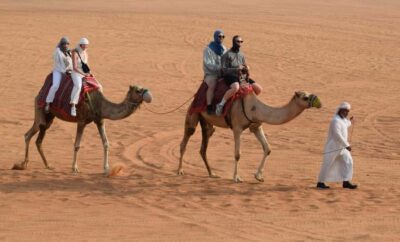
Desert Safari, Quad Bike, Camel Ride and Sandboarding
Read our review →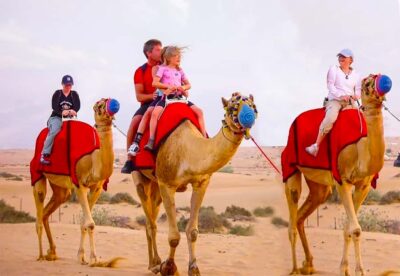
Safari, Quad Bike, Camel Ride, and Buffet Dinner
Read our review →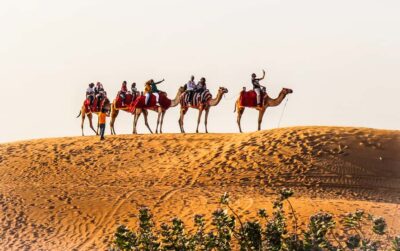
Red Dune Safari, Quad Bike, Camel Ride, BBQ Dinner
Read our review →
Premium Safari, Camel Ride & Al Khayma Camp 3-Buffets
Read our review →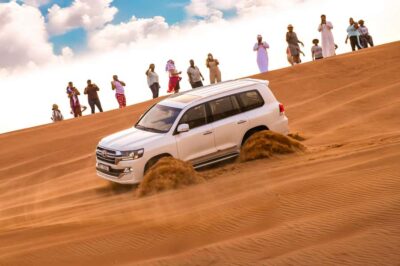
Desert Safari with BBQ Dinner & Quad Biking Options
Read our review →
Half-Day Desert Safari, Camel Ride, ATV & Dune Buggy
Read our review →