
Review · 2-DAY EXPERIENCES
2 Days Tarangire and Ngorongoro Mid-Range Group Safari
Tarangire’s elephant herds and Ngorongoro’s crater wildlife make this two-day safari a smart short introduction to northern Tanzania. In a tight schedule, you get baobab country, open grassland, a picnic lunch, and a crater floor that can produce lions, hippos, buffalo, zebra, and much more.
I like the small group limit of seven, which should make it easier to hear your guide and get a clear view from the vehicle. I also like the guide team: Max, Shabani, Elias, and Melita are singled out for sharp animal spotting, clear explanations, patience, and good photo positioning.
The trade-off is time. You cover two major wildlife areas in roughly 48 hours, so the days are long and the schedule leaves little room for delays. The experience is best for you if you want a concentrated safari, not a slow trip with long stays in each park.
Key things to know before booking
- Tarangire brings the elephants: Baobab trees and large elephant groups are the main draw on day one.
- Ngorongoro is a crater safari: You descend more than 600 meters to a wildlife area with year-round water and fodder.
- The group is capped at seven: That is a useful balance between shared cost and a more personal guide experience.
- Meals are included: You receive dinner, breakfast, and two lunches.
- Your overnight stop is Suricata Boma Lodge: The stay is presented as a comfortable camping-style experience, with a modern lodge setting described in the trip details.
- The price is $550 per person: For a short safari with guiding, park visits, meals, and lodging, the value depends mainly on how much you value seeing both areas quickly.
Why this two-day route works
Northern Tanzania offers several famous wildlife areas, but Tarangire and Ngorongoro give you very different scenes in a short time. Tarangire is known for its elephants and baobabs. Ngorongoro gives you a compact crater floor where many animals gather around water and grazing areas.
That contrast is the real strength of the trip. You are not spending two days repeating the same type of game drive. The first day has a broad, dry-country feel, while the second places you inside one of Africa’s best-known wildlife settings.
I would think of this as a highlights safari. It gives you a taste of the region rather than a leisurely study of animal behavior. You may see a strong range of wildlife, but you should not expect unlimited time at every sighting. Your guide has to balance animal viewing, driving time, meals, and the return schedule.
The maximum group size of seven matters here. A packed vehicle can make a long game drive tiring, especially when several people want photos at once. A smaller shared group gives you a better chance to hear the guide’s explanations and follow an animal when it moves out of sight.
More two-day safaris in Arusha:
- 2 Days Tarangire and Ngorongoro Group Camping Safari
★ 5.0 · 146 reviews - 2 Days Group Joining Camping Safari Tarangire Park and Ngorongoro Crater
★ 4.5 · 28 reviews - 2 days Mid Range Safari in Ngorongoro and Tarangire Big 5 Parks
★ 5.0 · 27 reviews
Day one: elephants and baobabs in Tarangire
The first morning begins after breakfast, with departure toward Tarangire National Park. The supplied timing gives about six hours for this stop, including the game drive and picnic lunch. Exact pickup time is not stated, so you should confirm it after booking.
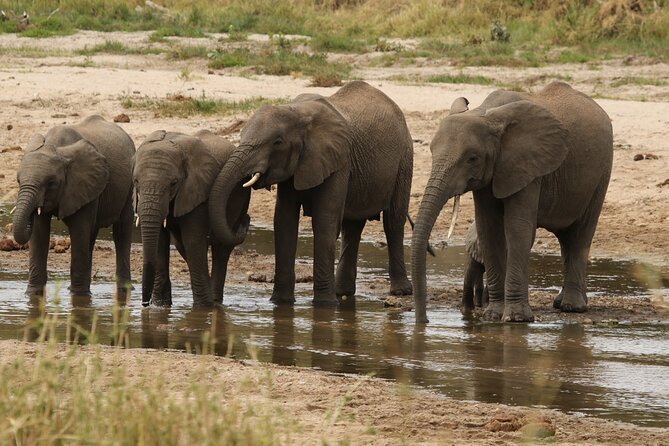
Tarangire is the star of the first day. The park is especially known for its large elephant population and its dramatic baobab trees. These trees give the area a distinct look and make a welcome change from the open crater floor you see on day two.
The park sits at the center of an annual animal movement that can include up to 3,000 elephants, 25,000 wildebeest, and 30,000 zebras. Those figures describe the broader cycle, not a guarantee for your particular visit. Still, they explain why Tarangire is more than a quick stop on the way to Ngorongoro.
You will have a game drive with a picnic lunch in the park. A picnic keeps the day moving, which is important on a two-day schedule. It also means you should be ready for a simple outdoor meal rather than a long restaurant break. The listed inclusions cover two lunches, so lunch is provided on both safari days.
The best part of Tarangire is its sense of scale. Elephants can appear beside the road, while baobabs give you a strong reference point for photographs. Your guide’s skill can make a real difference here. Elias is praised for spotting animals at a distance, while Max is noted for explaining animal behavior and helping with photo angles. Those details matter because wildlife is not always sitting in an obvious place.
After the afternoon game drive, you head to Suricata Boma Lodge for the evening. The information describes the stay as comfortable camping and also names the lodge as the overnight stop. You should clarify the exact accommodation setup before departure if a tent, lodge room, or hybrid camp matters to you.
The evening appears to be more than a basic place to sleep. The accommodation has been described as modern, with helpful staff and a small dinner performance. Dinner is included, so you can finish the first safari day without arranging another meal.
This overnight stop also breaks up the route sensibly. Instead of trying to push through both parks in one exhausting day, you get a night between the Tarangire drive and the early start for Ngorongoro.
Day two: descending into Ngorongoro Crater
Day two begins with an early breakfast. That early start is practical. Ngorongoro is the kind of place where the morning hours can be especially valuable, and you need enough time for the descent, wildlife viewing, and the drive back out.
The route takes you into the Ngorongoro Conservation Area, where you descend more than 600 meters into the crater. This change in elevation is not just a scenic moment. It brings you into a natural basin with water and grazing areas that support animals throughout the year.
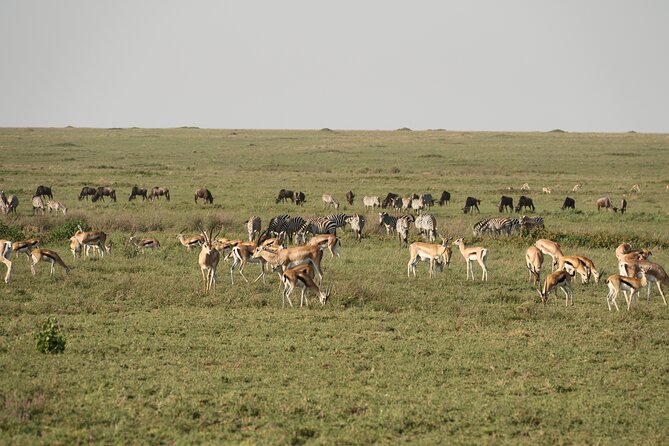
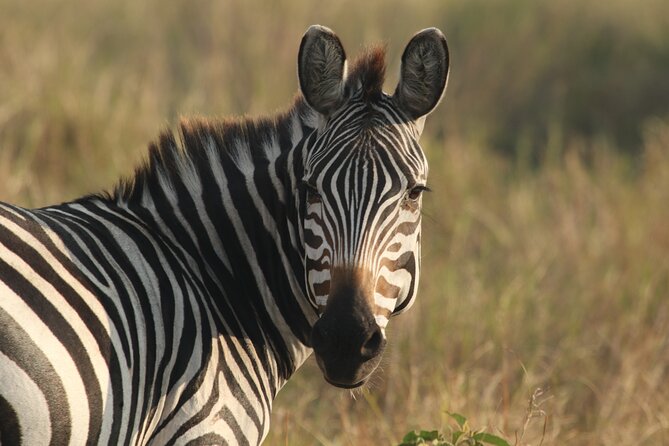
The crater floor can hold herds of wildebeest, zebra, buffalo, eland, warthog, hippo, and giant African elephants. The list is broad, but the real appeal is how many kinds of animals may be seen during one game drive. You could move from grazing herds to wallowing hippos, then search the grass for predators.
Predators are a major reason to include Ngorongoro. Lions, hyenas, jackals, cheetahs, and leopards are all listed among the possible sightings. A leopard remains difficult to spot, and even a trained guide may need time to find one. You should treat it as a possibility, not a promise.
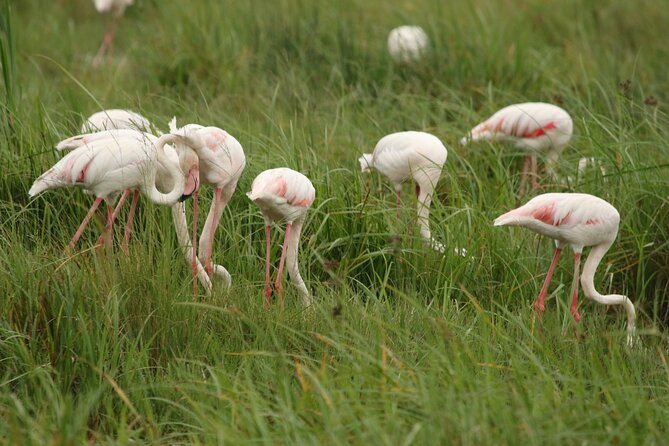
The trip includes a visit to Lake Magadi, a large, shallow alkaline lake in the southwestern part of the crater. The lake adds another setting to the drive and may attract animals, but the provided details do not specify exactly how long you stop there. Your guide will set the pace based on conditions and sightings.
This is where Shabani’s patience and animal knowledge become useful. He is praised for keeping people comfortable while helping them see a wide range of animals, even when rain affects the day. That is a good reminder to bring practical clothing and protect your camera equipment.
Max is another guide named in connection with this route. He is described as accommodating, full of useful animal facts, and attentive to good picture angles. Joan handles the pre-trip briefing and explains what to expect and what to bring. Elias and Melita are also named as guides associated with well-run safari days.
You will spend about six hours at Ngorongoro, according to the itinerary. That gives you a substantial crater visit, but it is still a fixed window. If you stop for every animal, the day can feel rushed later. If you move often, you may cover more ground but spend less time watching one sighting develop.
Guides, vehicles, and the value of a small group
A safari guide is not just a driver. The guide decides when to stop, where to look, how long to wait, and how much detail to add. On this trip, the named guides receive strong praise for those exact skills.
Elias is associated with sharp long-distance spotting. Max is noted for wildlife explanations, patience, and photography help. Shabani is praised for a pleasant manner and for finding many animals despite rain. Melita is described as a strong guide, while Joan provides a clear briefing before the trip begins.
You should still remember that the guide assigned to you may be different. The operator lists a certified English-speaking guide, but it does not promise a particular person. The named guides give you an idea of the team’s style, not a guaranteed assignment.
The group maximum of seven is one of the strongest practical features. You are sharing the vehicle and the wildlife sightings, but the group is small enough that guide access should be manageable. This can be especially useful when the guide is pointing out a distant animal or explaining why a herd is moving.
The trade-off is that this is still a group safari. You do not control every stop, and other people’s interests may differ from yours. A private departure would offer more control, but no private option is stated here, so you should judge the $550 price on the basis of a shared trip.
A few more safaris around Arusha worth a look
- Balloon Safari & Bush Breakfast in Serengeti – Miracle Experience
★ 5.0 · 1,646 reviews - 4 Days Group Camping Safari
★ 5.0 · 1,101 reviews - 5 Days Group Camping Safari
★ 5.0 · 730 reviews - 3 Days Serengeti & Ngorongoro Group Camping Safari
★ 5.0 · 574 reviews
What the $550 price gives you
At $550 per person, this is not a cheap day trip, but a two-day northern Tanzania safari includes costs that quickly add up. The package includes a certified English-speaking guide, dinner, breakfast, two lunches, and the overnight accommodation at Suricata Boma Lodge.
The price also buys access to two major wildlife areas in a compact format. Tarangire and Ngorongoro are not interchangeable stops, so the route gives you a more varied experience than spending both days in one park.
The value is strongest if you are already in Arusha and have limited time. You get a planned route, a guide, park access, meals, and an overnight stop without having to arrange each piece yourself. It is also useful if this is your first safari and you want a short introduction before deciding on a longer trip.
The value is weaker if you dislike early starts, long driving periods, or shared schedules. You also need to budget separately for international flights, departure taxes, and medical, travel, or luggage insurance. Those items are not included.
The park admission is shown as included in the itinerary details, but the package summary does not provide a separate breakdown of fees. If you need a precise cost list, ask the operator what the $550 covers before paying.
Comfort, meals, and what to bring
The trip is described as comfortable camping, with the overnight stop at Suricata Boma Lodge. The lodge is also described as modern, and dinner includes a small performance according to the accommodation details. Because the wording combines camping and lodge language, I would ask for the exact sleeping arrangement if comfort is a deciding factor.
Breakfast is included before the Ngorongoro visit. Dinner is included after the first day, and two lunches cover both game-drive days. This keeps the trip simple and saves you from searching for food during a schedule built around wildlife viewing.
The pre-trip briefing explains what to expect and what to bring. You should pay attention to that briefing, especially because the safari can involve changing weather and long hours outside the vehicle. Rain affected at least one reported safari without ruining the experience, so a light waterproof layer is sensible.
A camera with extra memory and batteries is useful, but do not let photography take over the day. A guide such as Max may help you find better angles, while a guide such as Elias may spot an animal before you do. Keep looking beyond the obvious large animals.
Who should book this safari
I would recommend this trip to you if you have only two days, want both Tarangire and Ngorongoro, and prefer a planned package with meals and accommodation included. It also suits first-time safari visitors who want a strong sample of northern Tanzania without committing to a longer route.
It is a good fit for people who care about elephants, big herds, crater scenery, and predator sightings. The range of possible animals is impressive for such a short trip, and the change from Tarangire’s baobabs to Ngorongoro’s crater floor keeps the experience varied.
I would hesitate if you want quiet, unhurried wildlife watching or full control over the daily schedule. Two days is enough for an introduction, but not enough to remove every compromise. You may spend a large part of each day moving between locations, and a short delay can affect the rest of the plan.
Most people can participate, and the group can include up to seven people. Pickup is offered, and confirmation is received at booking. The cancellation policy is flexible if you change plans early: cancel at least 24 hours before the start time for a full refund. Within 24 hours, the payment is not refunded, and late changes are not accepted.
Should you book the two-day Tarangire and Ngorongoro safari?
Book it if you want the biggest wildlife return from a short stay in Arusha. Tarangire gives you elephants and baobabs, Ngorongoro adds dense wildlife viewing and Lake Magadi, and the small group keeps the shared format reasonably personal.
Before paying, confirm the pickup time, the exact overnight setup at Suricata Boma Lodge, and what is included in the $550 cost breakdown. If those details suit you, this is a practical, well-planned first safari with enough variety to feel like more than a quick taste.
FAQ
Where does the safari begin?
The experience is based in Arusha, Tanzania, and pickup is offered.
How long does the safari last?
The safari lasts approximately two days.
Which parks and protected areas are included?
The route includes Tarangire National Park on day one and the Ngorongoro Conservation Area on day two.
How large can the group be?
The maximum group size is seven people.
Is food included?
Yes. The package includes dinner, breakfast, and two lunches.
Is a guide included?
Yes. A certified English-speaking guide is included.
What is the cancellation policy?
You can cancel at least 24 hours before the start time for a full refund. Cancellations or changes made within 24 hours are not refunded or accepted.
Newest safaris around Arusha
- 7 days great migration safari★ 5.0 · 77 reviews
- 4 days safari★ 5.0 · 34 reviews
- 6 days Tanzania budget safari★ 5.0 · 65 reviews
- Amazing 4 Days Tanzania Budget Camping Group Joining Safari★ 5.0 · 15 reviews
- 5 days safari, hiking & culture (Serengeti & kilimanjaro)★ 5.0 · 27 reviews
- Best 5 Days Tanzania Private Luxury Safari with luxury Lodges★ 5.0 · 12 reviews
- Serengeti & Ngorongoro fly in safari★ 5.0 · 76 reviews
- 8 Days 7 Nights Tanzania Wildlife & Culture Lodge Safari★ 5.0 · 17 reviews
2-Day Experiences, side by side.
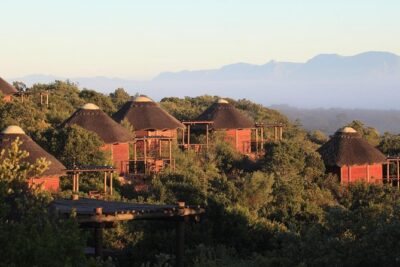
2 Day South African Wildlife Tour with 4×4 Safari from Cape Town
Read our review →
Bora Bora: 1/2 day lagoon safari – Shared tour
Read our review →
2 Days Tarangire and Ngorongoro Group Camping Safari
Read our review →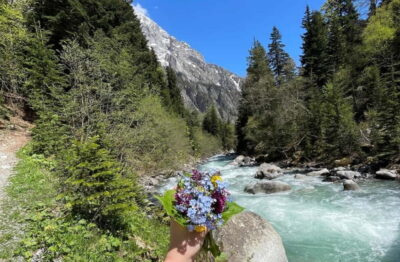
From Kutaisi: Svaneti Mountain Villages 2-Day 4×4 Safari
Read our review →Lists this safari turns up in