
Review · BIG FIVE & WILDLIFE SAFARIS
Big Five Classic Safari in Tanzania **Sustainable Travel approach
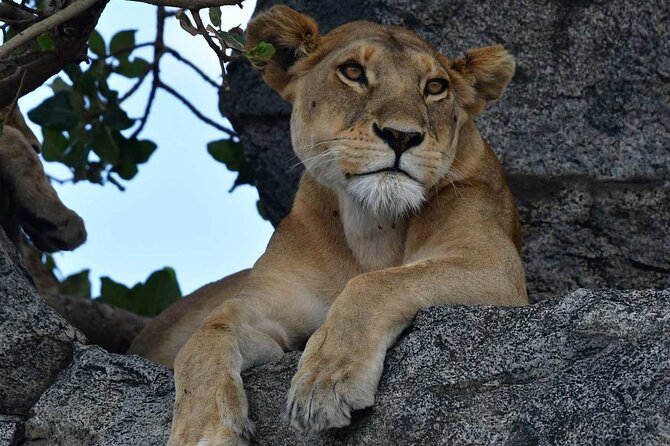
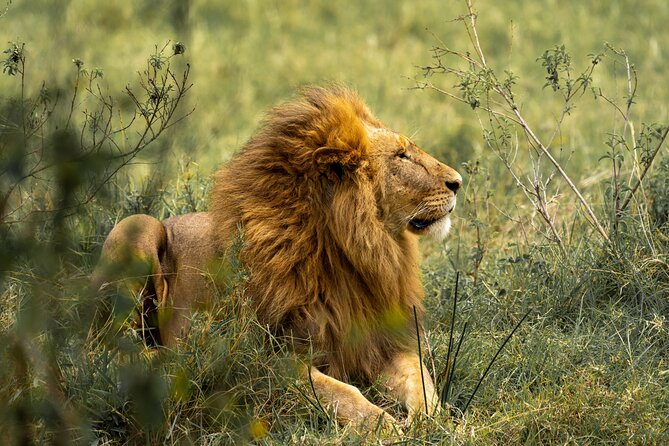
The real draw here is the chance to see Tanzania’s Big Five across four famous Northern Circuit parks in one well-packed week. Lions, elephants, buffalo, leopards, and black rhinos are all possible, and one detailed account describes seeing all five, along with many other animals, under mostly sunny daytime skies.
I like the maximum of six people per vehicle, since everyone gets a window seat, and I like the route itself: Tarangire’s baobabs, the Serengeti’s open plains, Ngorongoro’s crowded crater floor, and Lake Manyara’s forest and lake shore. The tradeoff is long driving days, with several schedules running close to eight hours, and the non-refundable booking rule leaves little room for a change of plans.
Key points to know before you book
- All four Northern Circuit parks in seven days: Tarangire, Serengeti, Ngorongoro Crater, and Lake Manyara are included.
- Small vehicle groups: The safari vehicle carries no more than six people, with a window seat for each person.
- A real Big Five opportunity: Lions, elephants, buffalo, leopards, and black rhinos are among the animals you may see, though no safari can promise sightings.
- Long overland days: The drives to and between parks can take about eight hours, so this suits you if you value coverage over a slow pace.
- Many core costs are bundled: Park fees, meals, airport transfers, bottled water, lodging, and an English-speaking guide are included.
- Optional extras cost more: The Maasai village visit, Olduvai Gorge, balloon excursion, gratuities, insurance, visas, and international flights are not included.
Four parks, one classic Tanzania route
This is a traditional Northern Circuit safari. You begin near Kilimanjaro, then move through Tarangire, Serengeti, Ngorongoro, and Lake Manyara before returning toward the airport.
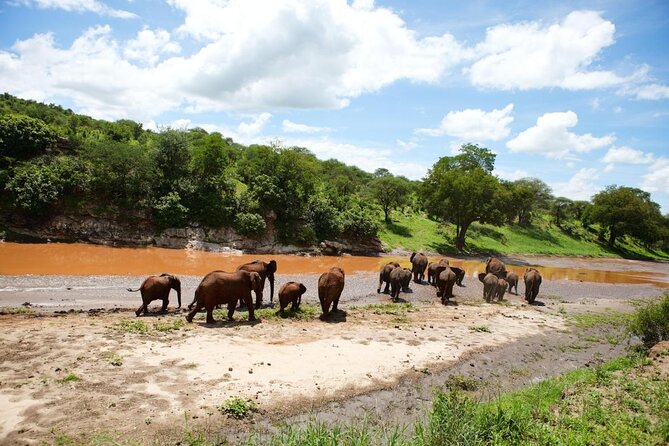
The route gives you a useful mix of scenery and wildlife. Tarangire is known for elephants and baobabs. The Serengeti offers the biggest sense of open space and the best chance to feel the scale of the plains. Ngorongoro brings you close to a dense concentration of animals in a dramatic volcanic setting. Lake Manyara adds forest, wetlands, birds, hippos, and the possibility of tree-climbing lions.
That variety is the main reason to choose this trip. You are not spending the whole week in one park hoping conditions line up. You get several habitats and several chances at memorable sightings.
The pace is brisk. This is not a stay-put safari with long mornings at one camp. It is a wide-ranging trip with substantial road time. If you want to cover Tanzania’s best-known parks on a first visit, that pace can be a fair trade.
More Wildlife Safaris in Arusha
- Big Five Luxury Safari in Tanzania
★ 5.0 · 68 reviews - 6 Day Tanzania Wildlife Mid range Safari
★ 5.0 · 54 reviews - 7-Day Midrange Tanzania Safari Adventures (Big 5)
★ 5.0 · 43 reviews
Day 1: Kilimanjaro Airport to Moshi
Your driver meets you after customs at Kilimanjaro International Airport, holding a sign with your name. The transfer to Moshi takes about 45 minutes, and the first night is at Springlands Hotel or a similar property, with breakfast included.
This arrival night is practical rather than thrilling. It gives you a place to sleep before the early start for Tarangire, instead of asking you to begin a full game-drive day immediately after a long international flight.
The airport pickup is included, which removes one common worry after landing. Still, send your flight details carefully and keep the operator’s contact information handy. The information provided does not name the driver or confirm the exact hotel if a similar property is substituted.
Day 2: Tarangire and its dependable river
You drive to Tarangire National Park in the morning, with about eight hours assigned to the park portion of the day. Tarangire River is the park’s key feature because it continues to provide water during the dry season, when animals gather around dependable sources.
The park has a different feel from the Serengeti. Expect grassy plains, swamps, hills, and large baobab trees. Elephants are a major attraction, and the mix of water, woodland, and open ground supports strong bird and animal viewing.
I especially like Tarangire as an opening park because it introduces you to safari without starting with the most famous name. The baobabs give photographs a clear sense of place, while the river helps explain why animals gather here.
The drawback is time on the road. The stated eight-hour duration is a reminder that this is a full day, not a quick outing. You should be ready for heat, dust, and stretches where the reward is simply reaching the next viewing area.
Day 3: The road to Serengeti
After breakfast, you head toward Serengeti National Park. The name comes from the Maasai language and refers to the endless plains, an apt description once the open country begins to spread around you.
The route offers two optional cultural and historical stops. You may visit a Maasai village, and you may also visit Olduvai Gorge and its museum, known for its importance in the story of human origins. Both cost extra, so confirm the price and timing before departure if either matters to you.
The day includes a game drive en route to camp. That means the transfer is not only a transfer, but you should still expect another long day, listed at about eight hours. The Serengeti is large, and reaching its wildlife areas takes time.
This is a useful point to set expectations. You may see animals before arriving at camp, but the schedule does not promise a full day of game viewing. The next day is the proper full Serengeti safari day.
More Wildlife Safaris in Tanzania
- 5 Days 4 Nights Tarangire, Serengeti , Ngorongoro & Manyara Wildlife Safari
★ 5.0 · 40 reviews - 2 days Mid Range Safari in Ngorongoro and Tarangire Big 5 Parks
★ 5.0 · 27 reviews - 4 Days Wildlife Safari and Cultural Experience in Tanzania
★ 5.0 · 23 reviews - Big Five Luxury 7 Days Safari Tour in Arusha
★ 5.0 · 20 reviews
Day 4: A full day among the Serengeti plains
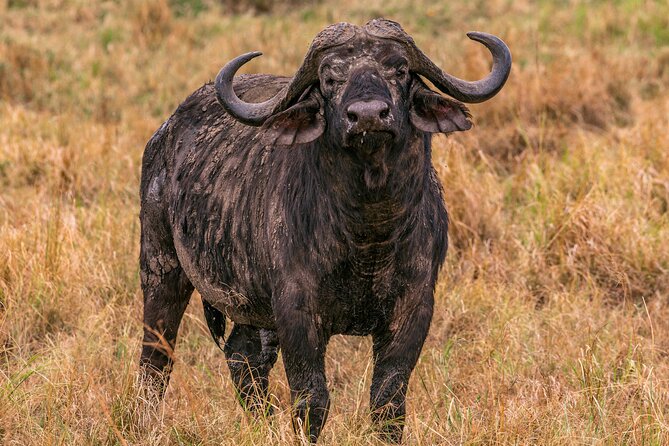
The fourth day is the wildlife centerpiece. You spend a full day on game drives in the Serengeti, a park famous for huge herds of wildebeest, zebra, and antelope, along with the predators that follow them.
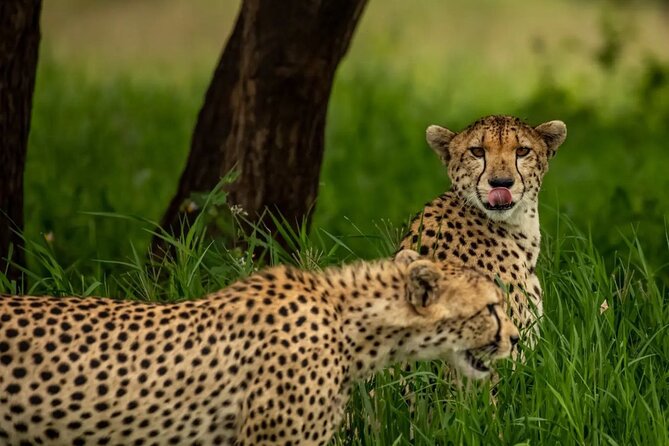
Lions and cheetahs may be found around the park’s kopjes, the rocky outcrops that break up the plains. The scenery changes as you move through open grassland, acacia-dotted savanna, wooded grassland, and darker clay areas.
The Great Wildebeest Migration is a major reason people choose the Serengeti, but animal movement is seasonal and sightings cannot be guaranteed. The park remains worthwhile outside the migration itself because the resident wildlife and varied habitats provide plenty to look for.
This is where the six-person vehicle limit matters. A crowded vehicle can make every sighting feel like a scramble for space. With no more than six people and a window seat for each person, you should have a better chance to watch, photograph, and listen without leaning across someone else.
Your guide is an important part of the day. The package includes a professional English-speaking driver and guide. One account describes the guide as well prepared and cheerful, useful qualities when you spend many hours together. No individual guide name is supplied, so you cannot request a named guide from the information available.
Day 5: Down into Ngorongoro Crater
You take a morning game drive while leaving the Serengeti area, then descend into Ngorongoro Crater. The crater is about 600 meters deep, 16 kilometers across, and roughly 265 square kilometers in area.
The crater floor can feel like a natural wildlife bowl. Open grassland supports zebra, gazelle, eland, and other grazing animals, while lions and cheetahs may be seen among them. Black rhino are one of the most important sightings here, since the crater is home to some of Tanzania’s last remaining animals of this kind.
Lake Magadi, described as Makat Soda Lake in the schedule, may attract flamingos and other birds. The crater also supports a large number of animals, with around 20,000 large animals noted in the description.
Ngorongoro delivers some of the strongest scenery on the route, but it can also be busy. Many safari vehicles head for the same well-known wildlife areas. The crater visit is scheduled as part of an eight-hour day, so your time inside is valuable. Keep your expectations flexible, since animal locations and vehicle flow change from day to day.
After the crater, you drive to your lodge for the night. This is another day when comfortable clothing, water, and patience matter more than dressing up for dinner.
Day 6: Forest, wetlands, and lake shore at Manyara
Lake Manyara National Park gives you a different setting again. It lies against the steep Rift Valley escarpment and includes groundwater forest, acacia woodland, grassy plains, a swampy fan delta, and the lake itself.
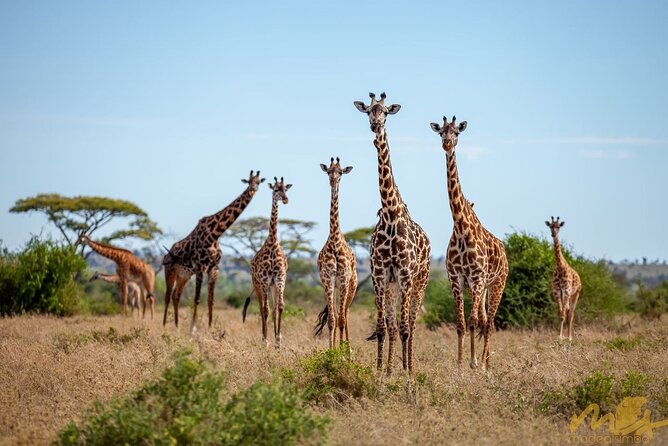
The animal list is broad. You may see buffalo, impala, giraffe, bushbuck, waterbuck, hippos, elephants, and several monkey species. Blue monkeys, velvet monkeys, and olive baboons add movement in the forest, while birds are a major part of the park’s appeal.
Lake Manyara is also associated with rare tree-climbing lions. That sighting is never assured, but it gives you something specific to watch for beyond the usual big mammals.
This final park is a good contrast after the wide Serengeti and enclosed Ngorongoro Crater. The forest can make wildlife feel less exposed, while the lake and wetland areas bring birds and hippos into the picture.
Again, the day is listed at about eight hours. By this point, you may feel the accumulated fatigue of early starts and long drives. The reward is a final full wildlife setting before the return to the Kilimanjaro area.
Day 7: A quiet finish near Kilimanjaro
The last morning is set aside for leisure before your transfer to Kilimanjaro Airport. The transfer takes about 45 minutes, and the airport service is included.
That free time is welcome after six active safari days. The schedule does not specify a final activity, so treat the morning as rest time rather than counting on another game drive or organized visit.
Check your departure time carefully. The package information gives the transfer duration, but it does not state how much time you should allow at the airport or what time the vehicle will collect you.
What the $1,785 price really covers
At $1,785 per person, the price bundles the costly parts of a safari: park entry fees, accommodation, airport transfers, meals, bottled water in the safari vehicle, and a professional English-speaking guide.
The small vehicle group improves the value. You are not paying for a private vehicle, but a maximum of six people is much more comfortable than a large bus. Having a window seat for everyone is a practical benefit during long wildlife drives.
The price is less complete than it first appears. International flights, the Tanzanian entry visa, travel and health insurance, gratuities, and optional activities are separate. The Maasai village and Olduvai Gorge visits are also extra, as is a balloon excursion.
There is also a small food detail worth checking. The package says all meals are included, while the itemized inclusions specify seven breakfasts, five dinners, and five lunches. Ask exactly which meals are provided on arrival, departure, and transfer days before you pay.
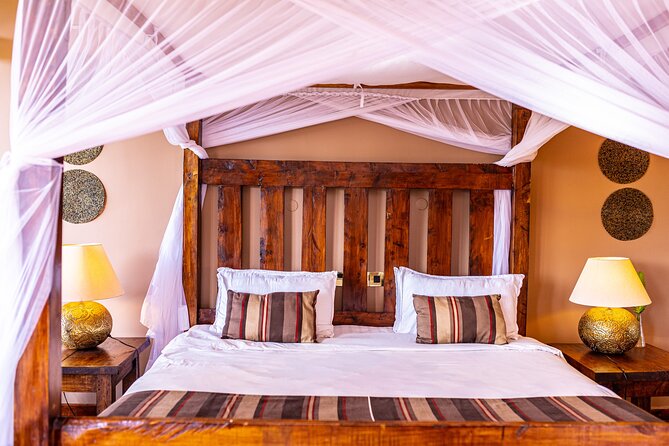
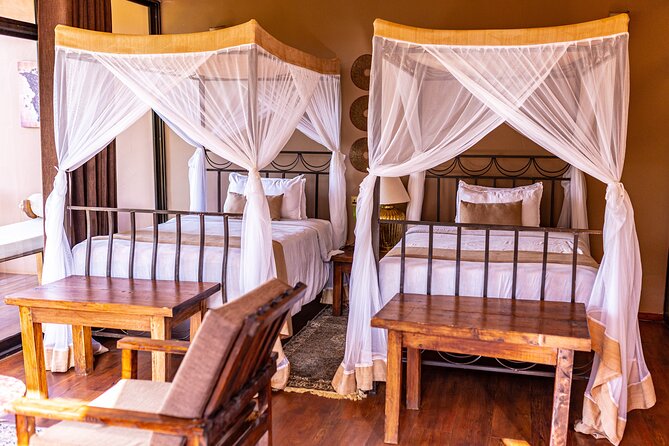
Accommodation is listed as Springlands Hotel or similar on the first night, but the other properties are not named. If the quality or setting of your lodging matters, ask for the full accommodation list. The trip is described as a luxury safari, but the available details do not let you compare the exact room standards.
Sustainability and the practical tradeoffs
The trip is presented with a sustainable travel approach, but no specific conservation policy, community payment system, vehicle standard, or lodge certification is provided. I would ask the operator how the sustainability promise works in practice before booking.
Useful questions include whether the lodges reduce single-use plastic, how waste is handled, whether the Maasai village visit is community-led, and how guides and drivers are employed. Bottled water is included in the vehicle, which is convenient, but you can still ask about refill options and bottle disposal.
A sustainable safari is also about behavior. Stay inside the vehicle unless your guide says it is safe, keep voices low near animals, and avoid asking the driver to crowd an animal for a photograph. A good guide should put wildlife welfare ahead of a perfect picture.
The moderate fitness requirement is worth taking seriously. You should be comfortable with long vehicle days, repeated early starts, and getting in and out of a safari vehicle. No difficult hiking is described, but this is not a restful resort holiday.
Who should choose this safari
I would choose this trip if you want a first classic Tanzania safari and prefer one organized package to arranging transport, parks, lodging, and meals separately. It works well for couples, friends, and small groups who want the Big Five and the major Northern Circuit parks in one week.
It also suits photographers and wildlife fans who value a window seat and a smaller vehicle. The four parks give you a broad sample of Tanzania, and the full Serengeti day gives you time to search rather than simply pass through.
I would hesitate if you dislike long road journeys or want a slow, luxury-focused holiday with several nights in each place. I would also think twice if your dates are uncertain, since the booking is non-refundable and cannot be changed after purchase.
Book early if your schedule is fixed. This safari is booked, on average, 171 days in advance, which suggests that planning ahead is sensible, especially for popular travel periods.
Should you book it?
Book this safari if your priority is maximum Northern Circuit coverage at a set price. The route is strong, the vehicle size is sensible, and the chance to see all five famous animals is real, including black rhino in Ngorongoro Crater.
Do not book it expecting an effortless luxury retreat or guaranteed Big Five sightings. You will spend long hours on the road, pay extra for several tempting additions, and need to accept a strict cancellation rule.
For a seven-day introduction to Tanzania’s best-known parks, I think the package makes a good practical choice. Before paying, confirm the lodging list, meal schedule, optional-stop prices, sustainability practices, and airport timing. Those answers will tell you whether the advertised value matches the trip you want.
FAQ
How long is the safari?
The safari lasts about seven days, including airport transfers, one night near Moshi, visits to four national parks, and the final transfer to Kilimanjaro Airport.
Which parks are included?
The route includes Tarangire National Park, Serengeti National Park, Ngorongoro Crater, and Lake Manyara National Park.
Can I see the Big Five?
The itinerary is designed around the Big Five: lion, elephant, black rhino, leopard, and Cape buffalo. Sightings are possible, but wildlife is unpredictable and no specific animal can be guaranteed.
How many people share the safari vehicle?
The overall tour has a maximum of 15 people, while each custom 4×4 safari vehicle carries no more than six people. Everyone in the vehicle has a window seat.
Is airport pickup included?
Yes. Pickup from Kilimanjaro International Airport and the return transfer to the airport are included. The airport to Moshi transfer takes about 45 minutes.
Are meals included?
Meals are included. The detailed inclusions specify seven breakfasts, five dinners, and five lunches, while the general description says all meals are included. Confirm the exact meal schedule before departure.
Do the Maasai village and Olduvai Gorge visits cost extra?
Yes. The Maasai village tour and Olduvai Gorge visit are not included in the listed price. A balloon excursion is also excluded.
Can I cancel or change the booking?
No. The experience is non-refundable and cannot be changed for any reason. The listed price also excludes international flights, a Tanzanian visa, travel and health insurance, and gratuities.
Newest safaris around Arusha
- 7 days great migration safari★ 5.0 · 77 reviews
- 4 days safari★ 5.0 · 34 reviews
- 6 days Tanzania budget safari★ 5.0 · 65 reviews
- 5 days safari, hiking & culture (Serengeti & kilimanjaro)★ 5.0 · 27 reviews
- Amazing 4 Days Tanzania Budget Camping Group Joining Safari★ 5.0 · 15 reviews
- Best 5 Days Tanzania Private Luxury Safari with luxury Lodges★ 5.0 · 12 reviews
- Serengeti & Ngorongoro fly in safari★ 5.0 · 76 reviews
- 8 Days 7 Nights Tanzania Wildlife & Culture Lodge Safari★ 5.0 · 17 reviews
Big Five & Wildlife Safaris, side by side.
Sunrise Desert Jeep Safari with Wildlife Experience
Read our review →
Addo Elephant National Park All Inclusive Full-Day Safari
Read our review →
Udawalawe National Park: Elephant Safari with Expert Guide
Read our review →
Big Five Game Reserve Wildlife Safari from Cape Town
Read our review →
Big Five Safari and Breede River Valley Guided Day Trip
Read our review →

From Stockholm: Moose & Wildlife Safari with Campfire Dinner
Read our review →
Lists this safari turns up in