
Review · GUIDED
Tanzania safari with guide in Italian, the great Migration of the Serengeti
The main draw here is the Great Migration, with days in the Serengeti’s northern sector and at the Mara River, where wildebeest and zebras may gather between July and October. I like the route because it combines the famous parks with less usual stops, especially alkaline Lake Natron and sacred Oldoinyo Lengai. I also like the small maximum of six people and the Italian-speaking guide, which can make long drives and wildlife talks much easier.
The trade-off is the pace. Eight days cover a lot of ground, and the route includes rough tracks, long safari drives, and basic travel conditions outside the lodges. The migration follows rain and grazing, not a timetable, so no operator can promise a river crossing or a particular animal sighting.
Key points to know before booking
- Mara River focus: The itinerary spends time in northern Serengeti during the usual July to October migration period.
- Small group size: The safari has a maximum of six participants in a 4×4 vehicle.
- Italian-speaking support: Guides named in past trips include Jo, Naftal, Mussa, Michael, Omari, Martini, and Kahim.
- A broad northern circuit: You visit Lake Manyara, Ngorongoro Crater, Serengeti, Lake Natron, Oldoinyo Lengai, and Tarangire.
- Full-board pricing: The $4,100 price includes meals, park fees, transfers, water, and AMREF insurance, but not flights, visas, drinks, or personal expenses.
- A real safari schedule: Expect early starts, long drives, changing scenery, and several nights in safari lodges or tented camps.
Why the Great Migration is the centerpiece
This safari is built around one of Africa’s biggest wildlife movements. About 1.5 million wildebeest, along with roughly half a million zebras, move through the Serengeti ecosystem in search of grass and water.
The northern Serengeti and Mara River section matters most from July through October. At its best, this is where herds gather before attempting a river crossing. The scene can be thrilling, but it can also be frustrating. The animals may wait for hours, cross in another place, or move on before you arrive.
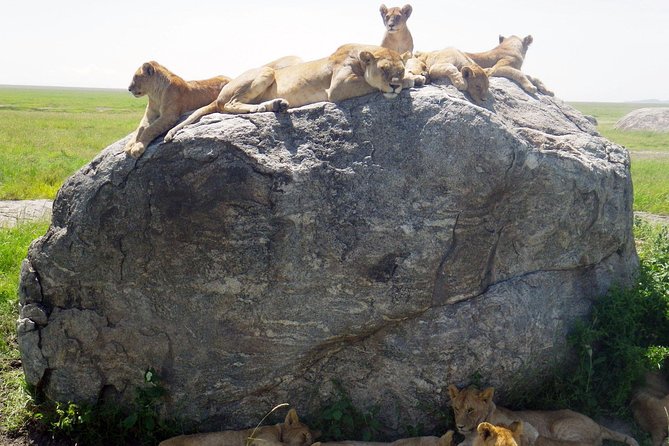
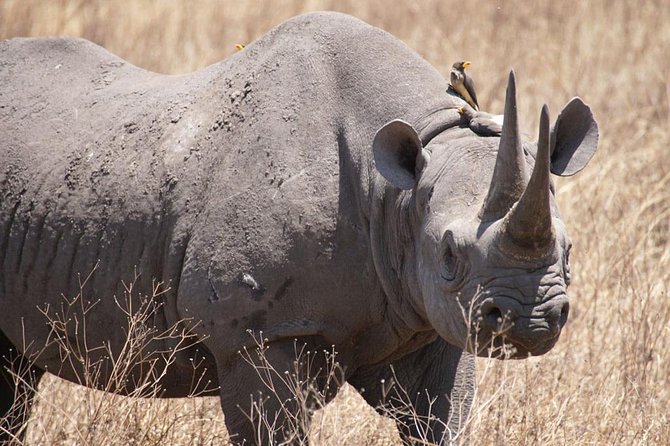
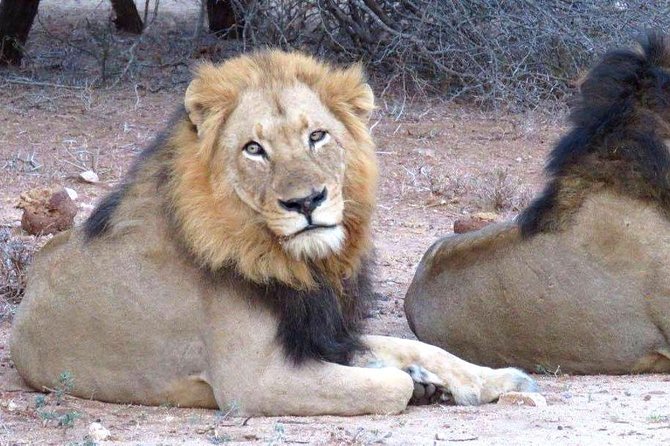
I would book this trip for the wider Serengeti experience, not only for one dramatic crossing. You may see huge herds, predators following the movement, crocodiles near waterways, and many smaller encounters along the way. The wider Serengeti supports lions, leopards, cheetahs, elephants, giraffes, ostriches, hippos, crocodiles, and more than 400 bird species.
The timing of your departure matters. The itinerary identifies July through October as the main period for the northern sector, but the exact position of the herds changes from year to year. Ask for a current migration update before paying your balance.
More guided safaris in Arusha:
- Tanzania – Arusha NP – Private Guided 4×4 Safari – Game Drive & Walking
★ 5.0 · 30 reviews - 3 Day Classic, Guided Serengeti Safari
★ 5.0 · 26 reviews - Ultimate Guide For The Best 4-Days Serengeti Safari in Tanzania
★ 5.0 · 15 reviews
Day 1: Kilimanjaro Airport to Arusha
Your first day is simple. You arrive at Kilimanjaro International Airport or Arusha Airport, complete entry formalities, meet the guide, and transfer to Arusha.
The stated transfer time is about one hour. This first night gives you a useful buffer after an international flight and lets the safari team confirm the next morning’s departure. Arrival flight details are required when you book, along with your passport information, mobile number, and departure flight details.
This is not a sightseeing day, so avoid scheduling anything ambitious. The practical value is a smooth handover from airport arrival to safari arrangements.
Day 2: Lake Manyara’s forest, marsh, and birdlife
Lake Manyara National Park is smaller than the Serengeti, but it packs several habitats into a compact area. The park covers about 330 square kilometers, with the lake taking up around 200 square kilometers.
You move from forest fed by springs at the foot of the Rift Valley escarpment to open grassland and wet areas beside the lake. Baboons and other monkeys are common subjects for photographs, and you may also see elephants, giraffes, and many bird species.
The park is especially appealing if you enjoy variety rather than only large mammals. Around 380 bird species are recorded here. Pink flamingos are associated with the lake from December to March, before moving toward Lake Natron between June and October.
The safari drive lasts about eight hours. That length is typical for a full wildlife day, but it can feel tiring after a flight and a transfer the previous day. Lake Manyara works best as an opening chapter: it introduces Tanzania’s habitats without requiring the long internal drive needed to reach the Serengeti.
Day 3: Ngorongoro Crater and a crowded natural enclosure
The Ngorongoro Crater is one of the most memorable stops in northern Tanzania. It formed when an ancient volcanic cone collapsed roughly 2.5 million years ago. The result is a broad caldera, about 16 to 20 kilometers across, surrounded by walls that rise around 600 meters above the floor.
More than 25,000 large animals live in the crater. You can expect open grassland, water, and a strong chance of seeing many of the region’s typical species in a relatively concentrated area.
Giraffes are the major exception. They do not usually enter the crater because of the steep descent and the available food. That detail helps set expectations: Ngorongoro is excellent for a concentrated wildlife drive, but it is not a complete copy of the Serengeti.
The crater rim reaches about 2,300 meters in elevation, so temperatures can feel cooler than you may expect from a Tanzanian safari. Bring a light layer for the morning. The drive lasts about seven hours, which leaves enough time for a substantial crater visit without making the day as long as some Serengeti transfers.
A few more safaris around Arusha worth a look
- Balloon Safari & Bush Breakfast in Serengeti – Miracle Experience
★ 5.0 · 1,646 reviews - 4 Days Group Camping Safari
★ 5.0 · 1,101 reviews - 5 Days Group Camping Safari
★ 5.0 · 730 reviews - 3 Days Serengeti & Ngorongoro Group Camping Safari
★ 5.0 · 574 reviews
Day 4: Entering the Serengeti through Seronera
Day four brings you into Serengeti National Park, the largest and most famous part of this route. The park covers about 15,000 square kilometers, but it is only one section of the larger Serengeti ecosystem, which also includes the Ngorongoro Plains and other connected areas.
Seronera sits in the central Serengeti and is known for wildlife viewing. The park supports more than 1.5 million wildebeest, around 300,000 zebras, and about 500,000 Thomson’s gazelles, along with large numbers of predators and birds.
Expect a full eight-hour safari day. Some of that time is wildlife viewing, and some is the unavoidable travel involved in reaching the northern part of the ecosystem. The reward is scale. The Serengeti often feels less like a single park visit and more like a vast moving system of grass, animals, water, and weather.
Your guide matters greatly here. A good driver uses radio contact, animal behavior, and recent sightings to decide where to go, while still respecting park rules. Italian-speaking guides named in past departures include Jo, Naftal, Mussa, Michael, Omari, Martini, and Kahim. You should confirm the guide assigned to your departure rather than assume one particular name.
Day 5: The Mara River and the uncertain crossing
The fifth day is devoted to the Mara River and the northern Serengeti. This is the section most closely tied to the Great Migration.
Wildebeest and zebras move north in search of fresh pasture and water. When they reach the river, they may cluster at the bank, hesitate, scatter, and gather again. A crossing can happen in a rush, with dust, water, and animals packed together. Or nothing may happen while you wait.
That uncertainty is part of the experience, but it is also the biggest reason to keep expectations realistic. You are not attending a scheduled show. The route gives you a strong chance to be in the right broad area during the right season, not a guarantee of a crossing.
The day lasts about eight hours. Carry patience as well as a camera. The wider value of the Mara River day is that you are in the northern Serengeti during the migration season, with opportunities to see far more than the river itself.
Day 6: From northern Serengeti to Lake Natron
Day six begins with a final wildlife drive in the northeastern Serengeti. You then leave the park by a rough and scenic track toward Lake Natron.
This is one of the route’s more unusual changes of mood. The Serengeti is associated with open grass and large herds. Lake Natron is an alkaline lake in a Rift Valley depression, surrounded by dry, rugged volcanic scenery. The lake is about 50 kilometers long and 25 kilometers wide.
During the dry season, especially from June through October, the lake can attract millions of pink flamingos feeding on cyanobacteria. The birds are a strong reason to include Natron, though conditions can change and the lake is not presented as a guaranteed flamingo sighting.
The Lake Natron drive takes about four hours. You also visit the area around Oldoinyo Lengai, a volcano sacred to the Maasai people. At almost 3,000 meters, it is the only volcano in the world known for natro-carbonatitic lava.
The itinerary does not include a climb to the summit. The path became far more difficult after the 2007 to 2008 eruption, and organized ascents are no longer offered here. Instead, there is a walking excursion in the Engare area. This is a good distinction to understand before booking: you get volcanic scenery and a walk, not a summit trek.
Day 7: Walking at Natron, then Tarangire
You begin with another walk near Lake Natron through dry, volcanic country. The route follows a scenic track through a valley edged by volcanic peaks before heading toward Mto wa Mbu and Tarangire National Park.
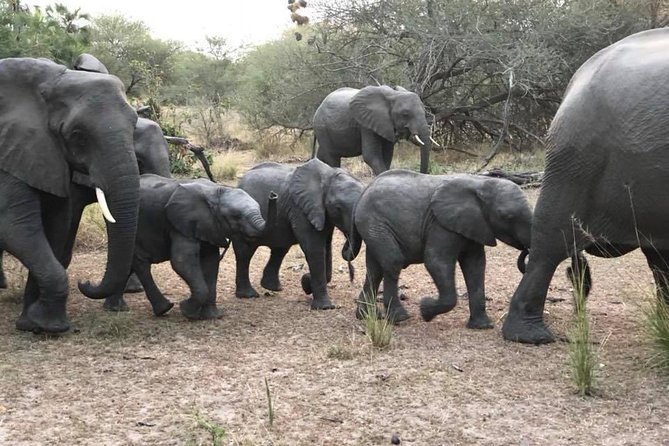
Tarangire feels different from the Serengeti. It covers about 2,600 square kilometers and is known for enormous baobabs, elephants, and the Tarangire River. During the dry season, the river and the Silale Marsh can become vital water sources, drawing animals from a wide area.
This park is often especially rewarding for elephant sightings. You may also see lions, leopards, buffaloes, antelopes, gazelles, wildebeest, zebras, and about 500 bird species.
The afternoon game drive lasts about four hours. That shorter session is welcome after the Natron transfer, and the change in scenery keeps the final part of the safari from feeling like a repeat of the Serengeti.
Day 8: Final Tarangire drive and return to Arusha
The last morning starts with an early game drive in Tarangire. Early hours are useful for wildlife activity and cooler conditions, though the precise sightings depend on the day.
After the drive, you return to Arusha for lunch and transfer to the airport. The stated activity time is about four hours, but you should still provide your departure flight information carefully so the operator can match the return transfer to your schedule.
Do not plan a tight same-hour connection without checking the timing. Safari roads and park exits can take longer than expected, and the tour covers a large distance before you reach the airport.
What the $4,100 price covers
At $4,100 per person, this is not a budget safari. It is also more than a simple vehicle-and-park-fee package. The price includes a 4×4 safari circuit, full board, park fees, transfers, water in the vehicle, AMREF insurance, taxes, and an Italian-speaking guide for a group of no more than six.
That bundle matters. Park fees and transport across several major parks can make up a large share of a northern Tanzania safari budget. Full board also reduces the daily decisions that can become tiring during a route with long drives.
The price excludes international and local flights, the Tanzanian entry visa, drinks at the lodges, and personal expenses. Add those costs before comparing this trip with another quote.
The strongest value comes from the range of places covered and the small group size. You are not paying only for the Serengeti. You are also getting Ngorongoro, Manyara, Natron, Oldoinyo Lengai, and Tarangire, plus the logistics between them.
Lodging, meals, and the small-group setup
The exact lodges and camps are not specified in the supplied details, so ask for the accommodation list before booking. Past departures have included lodges and tented camps, with food and accommodation receiving strong praise.
Full board means breakfast, lunch, and dinner are included for the safari days. Water is provided on board, while lodge drinks cost extra. If you have dietary needs, state them when you reserve rather than waiting until arrival.
A maximum of six people is a useful middle ground. You get a social trip without the size of a large safari bus, and a smaller group can make it easier to hear the guide and share wildlife-viewing decisions. It is still a shared safari, so you will need to accept other people’s preferred pace and interests.
Who will enjoy this safari most
I would recommend this route to you if you want the classic northern Tanzania parks but also care about unusual scenery and a guide who can explain the experience in Italian.
It suits couples, families, and small groups. Past departures included children as young as nine and 11, as well as a 20-year-old, so the format can work across ages. Most people can participate, but you should be comfortable with long drives, early starts, rough tracks, and walking excursions.
It is less suitable if you want a slow luxury holiday with few transfers. The route is ambitious, and the move from Serengeti to Natron is particularly demanding. It is also not the right choice if your entire trip depends on seeing one river crossing.
Booking confirmation is normally issued within 48 hours, subject to availability. The experience requires a minimum number of participants, so a departure could be changed or refunded if that number is not met. Cancellation terms are strict close to departure: a full refund requires cancellation at least six full days before the start time, while cancellations less than two days before departure receive no refund.
Should you book the Italian-guided Serengeti safari?
Book it if you want a broad northern Tanzania circuit, a small group, full-board arrangements, and the chance to follow the migration in Italian. The best parts are the variety of parks, the serious time in the Serengeti, and the added visit to Lake Natron, which many standard routes leave out.
Think twice if you want guaranteed migration action, a relaxed schedule, or a short transfer pattern. Nature decides the crossing, and this itinerary asks you to cover a lot of Tanzania in eight days.
Before paying, confirm the travel dates, assigned Italian-speaking guide, accommodation names, flight timing, and current migration position. If those details fit your priorities, the $4,100 package offers a well-rounded safari rather than a one-note hunt for a single famous photograph.
FAQ
How long is the safari?
The safari lasts approximately eight days, beginning with arrival in Arusha and ending with a return transfer to the airport on day eight.
What places are included?
The route includes Lake Manyara, Ngorongoro Crater, Serengeti National Park, the Mara River, Lake Natron, Oldoinyo Lengai, and Tarangire National Park.
Is the guide Italian-speaking?
Yes. The safari includes an Italian-speaking guide. Guides named on past departures include Jo, Naftal, Mussa, Michael, Omari, Martini, and Kahim, but you should confirm who is assigned to your dates.
How large is the group?
The safari is limited to a maximum of six participants.
Is the Great Migration guaranteed?
No. The itinerary focuses on the northern Serengeti and Mara River, where the migration usually reaches the area between July and October, but animal movements depend on rain, pasture, and water.
What is included in the $4,100 price?
The price includes the 4×4 safari circuit, full board, park fees, transfers, AMREF insurance, water on board, taxes, breakfast, lunch, and dinner. Flights, the entry visa, lodge drinks, and personal expenses are not included.
Can I cancel for a full refund?
You can receive a full refund if you cancel at least six full days before the experience start time. Cancellations made two to six full days before the start may receive a 50 percent refund, while cancellations less than two full days before the start are not refunded.
Newest safaris around Arusha
- 7 days great migration safari★ 5.0 · 77 reviews
- 4 days safari★ 5.0 · 34 reviews
- 6 days Tanzania budget safari★ 5.0 · 65 reviews
- Amazing 4 Days Tanzania Budget Camping Group Joining Safari★ 5.0 · 15 reviews
- 5 days safari, hiking & culture (Serengeti & kilimanjaro)★ 5.0 · 27 reviews
- Best 5 Days Tanzania Private Luxury Safari with luxury Lodges★ 5.0 · 12 reviews
- Serengeti & Ngorongoro fly in safari★ 5.0 · 76 reviews
- 8 Days 7 Nights Tanzania Wildlife & Culture Lodge Safari★ 5.0 · 17 reviews
Guided, side by side.

Dubai Desert Trail: Guided Quad/Polaris and Red Dunes Safari
Read our review →
Salou: Off-Road Guided Quad Safari with Hotel Pickup
Read our review →
Udawalawe National Park: Elephant Safari with Expert Guide
Read our review →
Big Five Safari and Breede River Valley Guided Day Trip
Read our review →
Yogyakarta: Mount Merapi Guided Jeep Safari with Pickup
Read our review →
Guided Desert Safari with Dinner and Quad Biking in Dubai
Read our review →Lists this safari turns up in