
Review · 3-DAY EXPERIENCES
3 Days Tanzania Safari
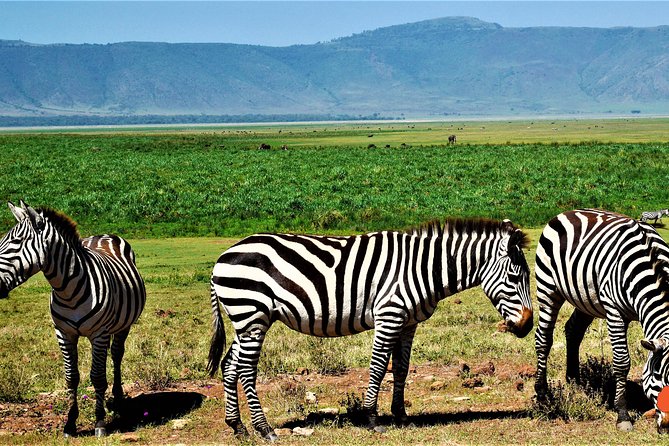
Tarangire’s giant baobabs and elephant herds, Ngorongoro’s steep crater walls, and Lake Manyara’s flamingo-lined shore give you three very different safari days in a compact trip. The route is a fine introduction to northern Tanzania, especially if you want major wildlife areas without spending a full week on safari.
I like the practical setup: park fees, meals, camping, bottled water, and emergency evacuation insurance are included, and the pop-up roof gives you a clear view without leaving the vehicle. I also like the small, personal feel of a private group, with guides such as Roger, Alan, Joshua, Edwin, Francis, and Rashid associated with the company’s safari service.
The trade-off is the pace. You cover a lot of ground in three days, and each day includes long hours in the vehicle. Camping keeps the price reasonable, but you should be comfortable with basic conditions and an early start, especially for the Ngorongoro crater descent.
Key points at a glance
- Three classic parks in three days: Visit Tarangire, Ngorongoro Conservation Area, and Lake Manyara on Tanzania’s Northern Circuit.
- A private group experience: Only your own group participates, rather than joining a large shared departure.
- A proper safari vehicle: Travel in a 4×4 with a pop-up roof, unlimited mileage, binoculars, and an animal field guide.
- Strong inclusions for the price: Park fees, two nights of accommodation, meals, bottled water, taxes, guide service, and evacuation insurance are covered.
- Best for active first-time safari visitors: The schedule suits people who want major wildlife areas and do not mind early mornings and long drives.
- Useful camera advice: Bring a camera with a strong optical zoom, and pack DEET for mosquitoes and flies.
Why this three-day route works
At about $1,038.47 per person, this is not a bargain-basement outing, but the price covers many of the costly parts of a Tanzanian safari. National park fees alone can add a serious amount to a short trip. Here, you also get a professional guide, a private 4×4, two nights of accommodation, meals, water, taxes, and emergency evacuation insurance.
That makes the price easier to judge. You are paying for a tightly arranged safari rather than simply buying transport into a park. The value is strongest if you use the included vehicle time well, ask questions, and take advantage of the guide’s animal knowledge.
The private format is another useful feature. Your group controls the social setting, even if the day’s route and park rules limit what the vehicle can do. It is a good arrangement for a couple, a family, or a small group of friends who want to share a vehicle rather than be mixed with strangers.
The schedule is full. Day one is listed at about seven hours, day two at about seven hours, and day three at about six hours. Those figures describe the planned stops, not necessarily every minute from hotel pickup to final drop-off. Expect road time, park gates, meals, wildlife sightings, and the return drive to shape each day.
More three-day safaris in Arusha:
- 3 Days Serengeti & Ngorongoro Group Camping Safari
★ 5.0 · 574 reviews - 3-Day Classic Serengeti Safari
★ 5.0 · 263 reviews - 3 Day Serengeti National Park & Ngorongoro Crater Camping Safari
★ 5.0 · 142 reviews
Day one: elephants and baobabs in Tarangire
Your safari begins with pickup from Mount Meru Hotel in Arusha and a drive to Tarangire National Park. The first impression is often the vegetation: open, dry country broken by large baobab trees. These trees give Tarangire a look unlike the other parks on this route.
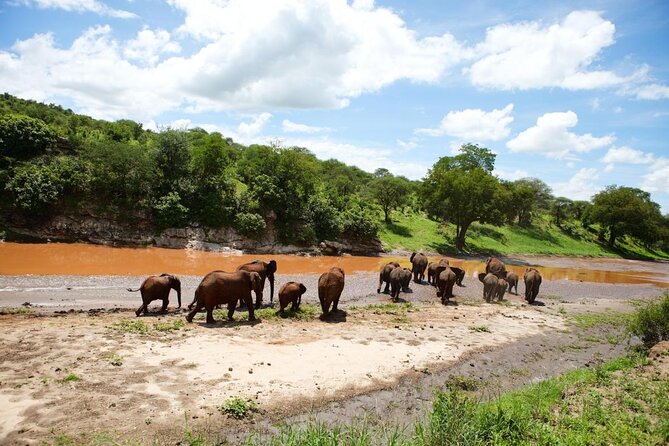
Tarangire is particularly appealing for elephant watching. Large herds can gather around water sources, and the park is known for elephants searching for underground streams in dry riverbeds. The description of groups reaching up to 300 animals gives you a sense of the scale possible here, though wildlife sightings are never guaranteed.
You may also see wildebeest, zebra, and buffalo near shrinking lagoons. The animals are not simply decorative scenery. Their movement changes with water and season, so a good guide can help you understand why one area is busy while another looks empty.
The planned game drive takes place in the afternoon and includes a picnic lunch. That timing gives you a useful first safari day without trying to cram in a dawn departure after arriving from overseas. It also means you should keep your eyes open from the moment you enter the park. The drive itself is part of the viewing time.
Tarangire is a strong choice for a first stop because it quickly gives you the classic safari mix: large mammals, open country, unusual trees, and a feeling of wilderness. The drawback is that the drive from Arusha and the park circuit can leave you tired by evening. Keep your first day expectations sensible. You may see a lot, but you will also spend much of the day seated in the vehicle.
Night one: what camping adds to the trip
This is a camping safari, with two nights of accommodation included. The supplied information does not specify the exact campsite, tent type, or bathroom arrangements, so confirm those details before paying if comfort matters to you.
Camping can be part of the appeal. It keeps you closer to the setting and usually costs less than a lodge-based itinerary. It also fits the straightforward spirit of the trip: spend the day looking for animals, eat the provided meals, and keep moving through the Northern Circuit.
Do not treat camping as a hotel substitute. Pack for simple conditions, bring a warm layer for cooler evenings, and keep personal items organized. The safari includes coffee or tea, bottled water, breakfast, lunch, and dinner according to the planned schedule. Vegetarian food is available if you request it when booking.
There is a small detail worth checking. The inclusion list refers to four lunches, three dinners, and four breakfasts, while the tour lasts three days and two nights. That may reflect the operator’s meal schedule or a template used for several safari lengths. Ask for the exact meal plan so you know what is served on the final day.
Day two: descending into the Ngorongoro Crater
Day two begins early. You descend roughly 600 meters from the crater rim to the floor of Ngorongoro, entering one of Africa’s most remarkable wildlife settings. The steep walls are not just a dramatic view. They help create a contained area where many animals can be seen in a relatively compact outing.
Ngorongoro is a UNESCO World Heritage Site and one of the best places on this route to search for a broad mix of wildlife. The itinerary specifically highlights the chance to see the endangered black rhino. That sighting is never promised, but the possibility adds real weight to the crater visit.
The crater is especially effective for people with limited safari time. You are not relying only on long searches across open country. The setting concentrates much of the wildlife experience into one striking natural bowl, although animals can still be distant or hidden.
The early start matters. You get cooler conditions and more time for the crater floor before the return drive. It also makes day two the most demanding morning of the trip. If you had a late night at camp, the early departure may feel rough.
Bring patience. A safari is not a parade, and the vehicle may stop for long periods while the guide watches animal behavior or waits for a better view. This is where the included binoculars and field guide become genuinely useful. You can study animals at a distance instead of depending on your phone camera to do all the work.
The crater is also the day most likely to create high expectations. You may see an impressive range of wildlife, but no responsible operator can guarantee the Big Five or a rhino sighting. The company’s past safari service has included guides such as Roger, Alan, Joshua, Edwin, and Rashid, with the strongest praise focused on patient driving, animal knowledge, and a willingness to explain the surroundings. Your actual guide will shape how much you learn from the day, so introduce yourself, explain what interests you, and ask questions.
A few more safaris around Arusha worth a look
- Balloon Safari & Bush Breakfast in Serengeti – Miracle Experience
★ 5.0 · 1,646 reviews - 4 Days Group Camping Safari
★ 5.0 · 1,101 reviews - 5 Days Group Camping Safari
★ 5.0 · 730 reviews - 7-Day Premium Luxury Tanzania Safari All-Inclusive
★ 5.0 · 426 reviews
Day three: Lake Manyara and the Rift Valley
The final park is Lake Manyara National Park, set within the Great Rift Valley. The setting changes again. Instead of Tarangire’s dry open feel or Ngorongoro’s enclosed crater, you get a park organized around woodland, water, and the soda-ash lake.
Lake Manyara is famous for tree-climbing lions. Seeing one in a tree is not guaranteed, but the possibility gives this stop a distinct identity. The park is also a good introduction to Tanzanian birdlife, with more than 400 recorded species mentioned in the tour details.
Pink flamingos gather along the lake shore, and many other birds use the water and surrounding areas. This makes Lake Manyara especially worthwhile if you enjoy birdwatching or want more than a large-mammal checklist. Keep your binoculars handy, and let your guide know if birds interest you. You may find that a short stop becomes one of the more memorable parts of the morning.
The park visit is planned for the morning, followed by an afternoon drive back to Arusha, Moshi, or Kilimanjaro Airport. That finish gives you useful flexibility, but you should not assume a precise airport connection without confirming the timing. A game drive can run late, road conditions can vary, and the itinerary covers several hours before the final drop-off.
Lake Manyara is also the part of the route most affected by expectations. People often picture a lake covered in flamingos, but water levels, season, and animal movement change the view. Go for the mix of forest, lake, mammals, and birds, rather than for one guaranteed photograph.
Guides, vehicle, and the daily rhythm
The vehicle is a 4×4 with a pop-up roof and unlimited mileage. That roof is important. You can stand or sit high enough to see over grass and shrubs, and you get a much better view than you would through a closed side window.
The guide is central to the experience. A good safari guide does more than locate animals. You want someone who can explain tracks, behavior, vegetation, bird calls, and park rules while keeping the vehicle in a good position. The company’s guides named in past bookings include Roger, Alan, Joshua, Edwin, Francis, Ian, Godfrey, Richard Moshi, and Rashid.
Godfrey has also been associated with cooking duties, while several guides have been praised for combining driving with explanations about wildlife and the environment. These names should not be taken as a promise that one particular person will lead your departure. Ask who is assigned to your group and what role the cook will have.
The vehicle’s mileage allowance is useful because safari routes can change with sightings. You are not boxed into a fixed number of driving miles. Still, more driving does not always mean better wildlife viewing. Sometimes the best choice is to stay in one area and watch what unfolds.
A typical day can feel long: road transfer, park entry, game drive, lunch, more game viewing, and a return to camp or town. Wear comfortable clothes, protect yourself from sun, and keep water close. The operator supplies bottled water, but a reusable bottle can help you manage your own supply.
What to pack for three camping days
Pack light, but do not pack carelessly. Soft luggage is easier to manage in a safari vehicle than a large hard case.
Useful items include:
- Neutral, comfortable clothing
- A warm layer for early mornings and evenings
- Sun protection and a hat
- DEET for mosquitoes and flies
- A camera with a strong optical zoom
- Spare batteries or a power bank
- Binoculars, if you prefer your own pair
- Personal toiletries and any required medication
The operator provides binoculars and a bird and animal field guide, which is a helpful touch. You can still bring a camera with at least a 60x optical zoom if wildlife photography matters to you. Digital zoom may help with framing, but it will not replace a good optical lens.
The physical demand is moderate rather than extreme. You do not need to hike long distances as part of the listed program, but you should be comfortable getting in and out of a 4×4 and sitting for several hours at a time. The early crater departure can be tiring, and camping may not suit you if you need hotel-style comforts.
What is included, and what costs extra
The package includes two nights of accommodation, national park fees, emergency evacuation insurance, bottled water, meals listed in the schedule, a professional guide, hotel pickup and drop-off, the 4×4, unlimited mileage, a field guide, binoculars, government taxes, and coffee or tea.
That is a solid list. Park fees and transport are often the least visible parts of safari pricing, yet they account for much of the real cost. Including them makes budgeting easier and reduces the chance of a cheap-looking tour becoming expensive through add-ons.
You still need to budget for personal items, alcoholic drinks, cameras, visas, and travel insurance. Gratuities are not included. The stated industry recommendation is $15 per day for the cook and $20 per day for the guide, divided among everyone in the vehicle.
Pre- and post-safari accommodation and airport transfers are also extra, though they can be arranged on request. Visa arrangements are your responsibility, with the provided information stating that a visa must be obtained at the border or airport. Check current entry rules before departure because visa requirements can depend on nationality.
Free cancellation is available if you cancel at least 24 hours before the experience begins. Changes or cancellations made inside that period are not accepted for a refund.
Who should book this safari?
I would choose this trip if you have three days, want the major Northern Circuit highlights, and prefer a private group to a large shared vehicle. It suits first-time safari visitors who want elephants, big open views, crater wildlife, and a strong birding stop without adding a longer itinerary.
It is also a good fit for families, based on the company’s experience with a group traveling with three children. The private setup can make family travel easier because your group does not have to match the pace or interests of strangers.
I would think twice if you want slow mornings, luxury lodging, or long stays in one park. Three days gives you variety, not deep time in each location. The route is rewarding because it changes quickly, but that same pace can feel rushed.
Should you book the three-day route?
Book it if your priority is seeing three famous parks with the major logistics handled in advance. The mix is hard to beat for a short trip: Tarangire for elephants and baobabs, Ngorongoro for a concentrated wildlife day, and Lake Manyara for birds, flamingos, and the chance of tree-climbing lions.
Before booking, confirm the exact campsites, meal schedule, assigned guide, pickup point, and final drop-off time. If those details suit you, the $1,038.47 price offers a practical way to experience Tanzania’s Northern Circuit without arranging each fee and transfer yourself.
FAQ
How long is the safari?
The safari lasts approximately three days. The listed daily activities take about seven hours on day one, seven hours on day two, and six hours on day three, not necessarily counting every transfer and pickup detail.
Which national parks are included?
The route includes Tarangire National Park, the Ngorongoro Conservation Area, and Lake Manyara National Park.
Is this a private safari?
Yes. Only your own group participates in the private tour activity.
Where does pickup take place?
Pickup is offered from Mount Meru Hotel in Arusha at the start of the itinerary. Hotel pickup and drop-off are included, while pre- and post-safari accommodation and airport transfers can be booked separately on request.
Are meals included?
Yes. Meals are included according to the itinerary, along with bottled water and coffee or tea. A vegetarian option is available if you request it when booking.
Is camping included?
Yes. Two nights of accommodation are included as part of the camping safari. The supplied details do not specify the exact campsite or facilities, so confirm those arrangements before booking.
Can I cancel for a full refund?
You can receive a full refund if you cancel at least 24 hours before the experience start time. Cancellations or changes made less than 24 hours before the start time are not accepted for a refund.
Newest safaris around Arusha
- 7 days great migration safari★ 5.0 · 77 reviews
- 4 days safari★ 5.0 · 34 reviews
- 6 days Tanzania budget safari★ 5.0 · 65 reviews
- Amazing 4 Days Tanzania Budget Camping Group Joining Safari★ 5.0 · 15 reviews
- 5 days safari, hiking & culture (Serengeti & kilimanjaro)★ 5.0 · 27 reviews
- Best 5 Days Tanzania Private Luxury Safari with luxury Lodges★ 5.0 · 12 reviews
- Serengeti & Ngorongoro fly in safari★ 5.0 · 76 reviews
- 8 Days 7 Nights Tanzania Wildlife & Culture Lodge Safari★ 5.0 · 17 reviews
3-Day Experiences, side by side.
3 Days Serengeti & Ngorongoro Group Camping Safari
Read our review →
3 Day Garden Route’s Best Highlights with Safari from Cape Town
Read our review →
3-Day Chitwan National Park Jungle Safari Tour Package with Pick Up
Read our review →
3 days group joining safari to Maasai Mara with a Land Cruiser Jeep
Read our review →Lists this safari turns up in