
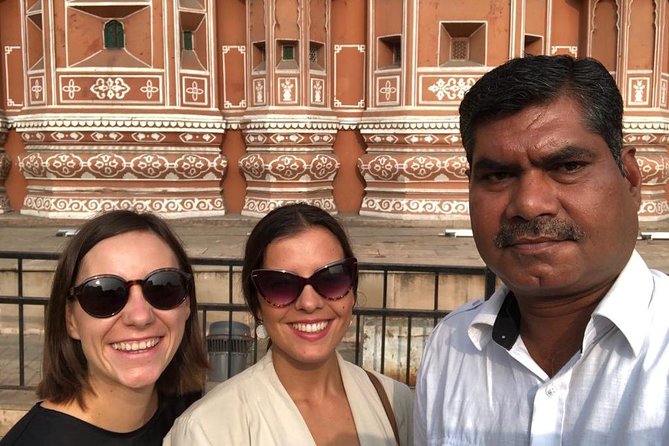
Review · NEW DELHI SAFARIS
4 Day Golden Triangle with Ranthambore Tiger Safari Tour from Delhi
The most thrilling part of this four-day route is the mix of Taj Mahal sunrise and Ranthambore tiger safari. One morning puts you before a marble monument glowing in the early light; the next takes you into dry forest and old fort country, listening for alarm calls. I like the private car and driver, which remove much of the hassle from Indian roads, and I like having a different local guide in each major city. The catch is simple: this is a packed trip with long drives and very early starts.
I also like the personal care built into the plan. Drivers such as Madan, Rajesh, Manu, Paramjeet, and Shyam have been praised for safe driving, cold bottled water, local restaurant advice, and quick help when plans need adjusting. You should still check the hotel category, monument fees, and safari vehicle before booking, since the advertised price does not include the ₹5,000 monument entrance cost and the safari may use a larger shared canter instead of a jeep.
Key points to know before booking
- Taj Mahal at sunrise: An early start gives you cooler air, softer light, and two hours at Agra’s main sight.
- Private road transport: Your car and driver remain with your group, with sedans, SUVs, or vans matched to party size.
- Tiger safari is never guaranteed: Zones are assigned by the government, and sightings depend on luck, season, and animal behavior.
- Four cities in four days: Delhi, Agra, Ranthambore, and Jaipur make this a high-speed introduction rather than a relaxed holiday.
- Local guides add depth: City specialists lead visits in Delhi, Agra, and Jaipur, with English-speaking safari staff at the park.
- Good solo-trip support: Airport or hotel pickup, WhatsApp contact, private touring, and an attentive driver make this practical for solo visitors and families.
A fast route through India’s biggest sights
This tour is designed for people who have only four days and want a strong first look at northern India. You move from Delhi’s monuments to Mughal Agra, then south to Ranthambore and on to Jaipur before returning to Delhi late on the fourth day.
The price is listed at $289.58 per person, but the final value depends on the option you select. Three nights of lodging, daily breakfast, transport, guides, taxes, and some meals are included when you book the hotel package. Monument tickets are extra, listed at ₹5,000 per person, so add that to your budget. The tour can also be booked without hotels, useful if you already have rooms arranged.
I see this as a convenience purchase rather than a slow, independent journey. You are paying for a driver, coordinated transfers, local guides, and someone to handle the route while you look out the window. That matters in India, where traffic, distances, and station or airport transfers can consume a surprising amount of time.
More four-day safaris in India:
- Private 4-Day Golden Triangle Tour with Ranthambore Tiger Safari
★ 5.0 · 248 reviews - From Delhi: 4-Day Golden Triangle & Ranthambore Tiger Safari
★ 4.8 · 47 reviews - 4 Days Group Camping Safari
★ 5.0 · 1,101 reviews
Day 1: Delhi’s monuments, then the road to Agra
Pickup is available from a Delhi, Noida, or Gurugram hotel, the airport, or another agreed location. The exact order can shift with traffic and opening days, but the first day covers several of Delhi’s most recognizable sights before a long drive to Agra.
Qutub Minar is the day’s major historic stop. The soaring minaret and surrounding ruins introduce you to the early Islamic architecture of Delhi, with carved stonework and layers of history across the complex. Plan on about an hour, and remember that the entrance fee is not included.
At the Lotus Temple, you get a shorter visit and a change of mood. Its white petal-shaped design is striking from outside, while the Bahá’í House of Worship is intended as a quiet place open to people of all faiths. The temple closes on Mondays, so check your start day carefully.
India Gate, Parliament House, and Rashtrapati Bhavan are mainly viewed during a short stop or drive-by section. India Gate is a war memorial in the center of New Delhi; the government buildings nearby give you a sense of the capital’s planned avenues and grand scale. This part is less about entering buildings and more about seeing the political heart of the city from the road.
Agrasen Ki Baoli gives the day a more intimate stop. This old stepwell drops below street level through a geometric flight of steps and arched openings. You need only about half an hour here, but it is a useful contrast to Delhi’s broad boulevards and oversized monuments.
After lunch, expect roughly three hours on the Yamuna Expressway toward Agra. The drive is part of the experience, but it is not short. A private vehicle gives you room to rest, stop for water, and travel at your group’s pace. Drivers have helped make these road sections easier by choosing dependable lunch stops and sharing small observations about crops, towns, and places along the way.
You arrive in Agra for check-in and an overnight stay. If you book the hotel option, accommodation and breakfast are included, though the exact property depends on the package selected. The first day is full, so do not count on much free time after reaching Agra.
Day 2: Taj Mahal light and Mughal power
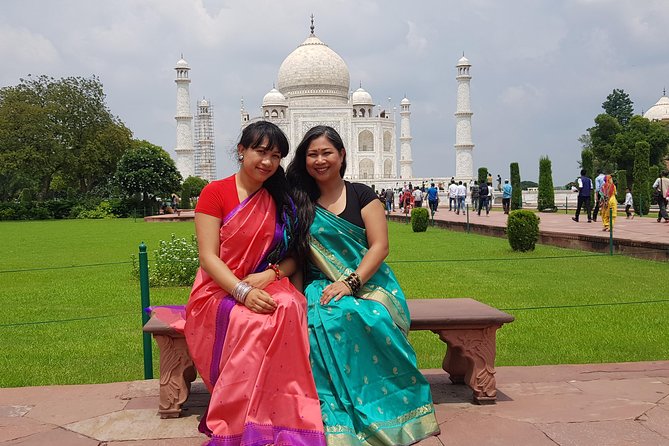
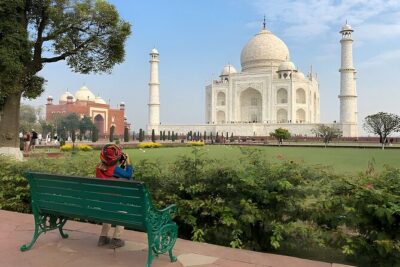
The early alarm is worth it. You head to the Taj Mahal around sunrise, when the air is cooler and the white marble changes color as daylight grows. The visit lasts about two hours and includes a guide, but the monument entrance fee remains extra.
A battery bus carries you from the parking area to the monument, saving some walking and keeping the arrival orderly. The Taj is more than a photo stop. Your guide can explain the mausoleum’s Mughal design, its use as a memorial, and the details that are easy to miss when you are focused on getting the perfect picture. Agra guides such as Narendra, Rishabh, and Manog have been praised for clear explanations and for knowing good photo positions.
The early timing also helps with heat. If you visit outside the cooler months, the stone courtyard and long approach can become tiring. Comfortable shoes, water, and a hat are sensible, even though bottled water is supplied during the road journeys. Some visitors have also arranged an optional photography service at the Taj, but that is not part of the stated package.
Next comes Agra Fort, usually for about an hour. This red sandstone fortress is where you see the political side of Mughal power: courtyards, audience halls, palace rooms, and views toward the Taj. The guide matters here because the complex can feel like a maze of handsome buildings without context.
Itmad-ud-Daula, often called the Baby Taj, is a smaller mausoleum with fine inlay work and a calmer scale. The stop lasts around 30 minutes and is worthwhile after the larger monuments because you can focus on decoration rather than sheer size. Its entrance fee is also extra.
After Agra sightseeing, you drive about four hours to Ranthambore. This is one of the less glamorous parts of the trip, but it is what makes the safari possible. You check into your Ranthambore hotel, have the included hotel dinner, and prepare for another early start.
The hotel choice can make a real difference here. The Ama Ghati Wildlife Resort has received especially warm praise for its rooms, grounds, food, spa, staff, and evening program. Do not assume every booking includes that exact resort, so confirm the property before paying if accommodation quality is a major reason for booking.
Day 3: Ranthambore’s uncertain tiger hunt
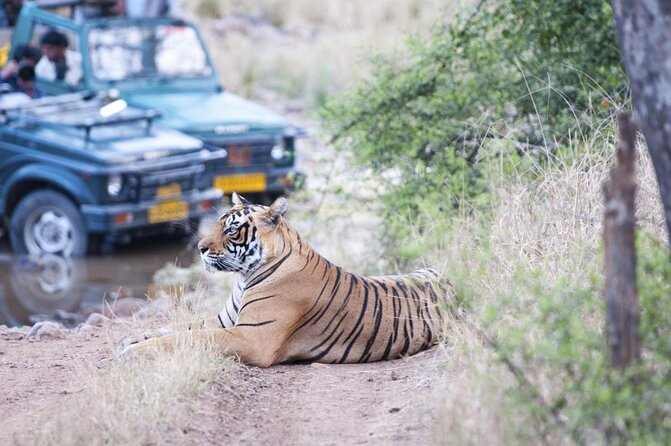
The safari begins early, often around sunrise, and lasts about three hours. You enter Ranthambore National Park in a shared jeep or shared canter with a government-appointed guide. The operator tries to secure a jeep, but availability is limited. If none is available, you ride in a larger canter, which feels more like an open bus than a small wildlife vehicle.
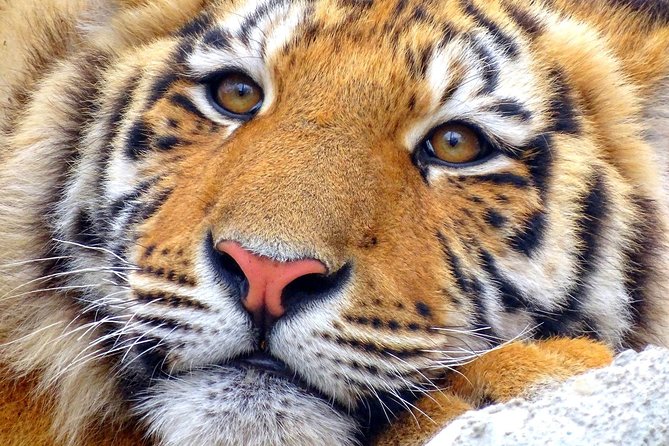
Ranthambore is not a zoo visit. The park assigns safari zones based on availability, so you do not choose the area with the best recent sightings. Some people see a tiger close to the vehicle; others see deer, monkeys, crocodiles, birds, or even a sloth bear or leopard but no tiger at all. A tiger sighting is a bonus, not a promise.
The English level of the safari guide can vary. Local government guides know the park and its wildlife, but fluent English is not always available. This is different from the city visits, where the supplied local guides are described as fluent English speakers. Keep expectations realistic and focus on the forest, ruins, birds, and animal signs as well as the headline species.
Cold weather can make an open safari vehicle uncomfortable, especially in January. Bring a warm layer even if the afternoon becomes hot. In warmer months, sun protection is more important. The open sides are useful for viewing and photography, but they offer little shelter from wind or cold.
After the safari, you travel toward Jaipur, with the drive taking around four hours. The rest of the afternoon is free after check-in. This is one of the few chances to slow down, but hotel location matters. If your hotel is about 30 minutes from central Jaipur, going out on your own may require arranging transport. The driver is available during the tour, so ask in advance if you want help using this free time.
A few more safaris around India worth a look
- Non-Touristic overnight Camel Safari
★ 5.0 · 526 reviews - Overnight Camel Safari – Sleeping under the Stars
★ 5.0 · 390 reviews - Adventure non touristic camel safari
★ 5.0 · 300 reviews - Overnight Desert Safari Tour Package
★ 5.0 · 255 reviews
Day 4: Jaipur’s forts, palaces, and stepwell
Jaipur sightseeing starts after breakfast with Panna Meena ka Kund, a geometric stepwell near Amer. It is a quick 15-minute photo and viewing stop, but the repeated flights of stairs create a memorable pattern. The visit is short, so do not expect a long exploration.
Amer Palace gets the biggest block of time, about two hours. Set in the hills outside Jaipur, the complex combines Rajput and Mughal design with courtyards, painted rooms, gates, and broad views. A guide helps you understand how the palace worked as a royal residence rather than seeing it as just another ornate building.
Some itineraries or adjustments may include an elephant experience, but that is not listed as a standard inclusion here. Do not book expecting an elephant ride unless the operator confirms it in writing.
Jal Mahal is a short roadside viewing stop. The palace appears to float in Man Sagar Lake, and you generally admire it from the shore rather than enter. It is a quick pause, useful for photographs and a change of pace after Amer.
The City Palace takes about two hours and brings you back into Jaipur’s royal center. You see decorated courtyards, palace buildings, and a blend of Rajput and Mughal styles. The entrance charge is extra, so keep your monument budget in mind.
Jantar Mantar is next, with about an hour among the enormous stone instruments built for astronomical observation. It is one of Jaipur’s most distinctive sights, but it makes more sense with a guide who can explain how the instruments measure time and celestial positions. Its admission fee is also not included.
Hawa Mahal is a drive-by stop lasting around 30 minutes. The honeycomb-like front is one of Jaipur’s signature images, designed with small windows that allowed royal women to watch street life without being seen. Since you do not spend a long period inside, treat it as a facade and photography stop.
Gaitore Ki Chhatriyan finishes the city tour with carved marble and sandstone royal cenotaphs. It is quieter than the City Palace and gives you a look at Jaipur’s memorial architecture. The stop lasts about half an hour.
From Jaipur, the drive back to Delhi takes roughly five hours. Arrival can be around 9 p.m., depending on traffic and your final drop-off. You can instead finish in Jaipur if that suits your onward plans, but make the arrangement before the final day.
The driver is the backbone of the trip
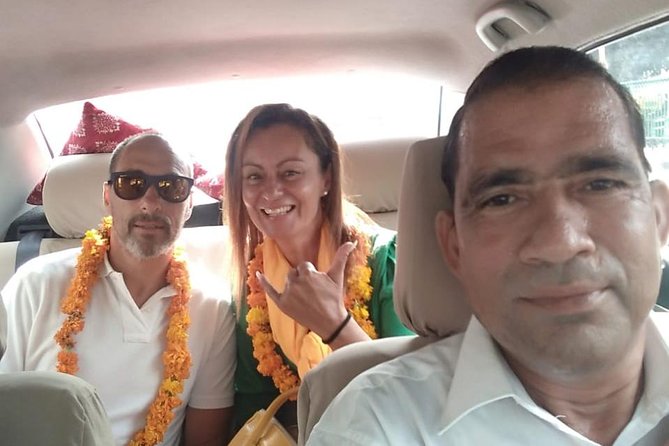
The private driver may be the most important person on this itinerary. Your vehicle size is matched to the group: a four-seat sedan for one or two people, a six-seat SUV for three or four, and a ten-seat van for five to ten.
That matters because you spend many hours on the road. Drivers including Madan, Rajesh, Manu, Paramjeet, Ashock, Sohan, Rakesh, and Sucha Singh have been praised for punctuality, safe driving, friendly conversation, luggage care, and local suggestions. The strongest reports describe the driver as someone who stays with the car, keeps water available, and helps adjust the day when heat, traffic, or personal interests call for a change.
The car is air-conditioned, but road conditions can still make the journey tiring. Some people sleep through the long transfers; others enjoy watching villages, animals, fields, and roadside life. I would treat the drive time as a built-in part of the trip rather than an unfortunate surprise.
What the $289.58 price really covers
At the listed starting price, this can be strong value if you want private transport and hotel coordination across four destinations. The package includes three nights of accommodation if you choose the hotel option, breakfast on all three mornings, one dinner in Ranthambore, local guides, bottled water during journeys, taxes, the Taj battery bus, and the safari.
The main extra is monument admission, listed at ₹5,000 per person for all monuments. Tips, personal purchases, and any optional activities are also outside the stated inclusions. Since hotel standards and properties can vary, look closely at the exact accommodation category before booking. Several experiences describe excellent five-star properties, while others found a Jaipur hotel below the expected standard.
The no-hotel option gives you more control, and the operator still provides pickup and drop-off in each city. That can suit an independent solo visitor who already has rooms booked. The hotel package is easier for most first-time visitors because it keeps the route together.
Who should book this four-day route
I would choose this tour if you want the classic northern India sights but have limited time. It is especially useful for first-time visitors, couples, families, solo visitors, and small groups who prefer a private car over public transport.
It also works well if you want support without giving up all flexibility. The itinerary can be adjusted, and past arrangements have included textile printing, elephant-related visits, and schedule changes when guests had a particular interest. Contact through WhatsApp, phone, or email is part of the support system, so install WhatsApp before arrival if you plan to use it.
I would not choose it for a slow cultural holiday. Four days means early mornings, long road transfers, quick stops, and limited time to simply sit in Jaipur or Agra. The safari also needs a realistic attitude. If the main purpose is a guaranteed tiger sighting, no responsible operator can promise that.
FAQ
Is the tour private?
Yes. Your road transport and city sightseeing are private for your group. The Ranthambore safari is shared, using a government-operated jeep or canter.
Are hotels included in the price?
Three nights of accommodation are included only when you select the hotel package. You can also book without hotels and arrange your own rooms.
Are monument entrance fees included?
No. Entrance fees for the monuments are listed separately at ₹5,000 per person. Guides can assist with buying tickets and help you avoid the ticket queues.
Can I see a tiger in Ranthambore?
You might, but a sighting is not guaranteed. The government assigns the safari zone, and wildlife sightings depend on luck, season, and animal behavior.
What type of safari vehicle will I use?
The operator aims to book a shared jeep. If a jeep is unavailable, you will use a shared canter, which is a larger vehicle with an open-sided design.
When does the tour return to Delhi?
On the fourth day, the drive from Jaipur to Delhi takes about five hours, and arrival may be around 9 p.m. You can request an earlier or later arrival, or finish in Jaipur instead.
Should you book it?
Book this tour if you want to pack the Taj Mahal, Jaipur’s palaces, Delhi’s major sights, and a wildlife safari into one tightly managed route. The best parts are the private driver, strong local guides, early Taj visit, and the chance to add a rare tiger sighting to a classic Golden Triangle trip.
Skip it if you dislike long drives, early alarms, or uncertain wildlife results. Before paying, confirm the hotel names, the monument fee, the safari vehicle, and your final drop-off. With those points clear, the $289.58 starting price can be a practical way to see a remarkable amount of India in four demanding but rewarding days.
Newest safaris around India
- Wild Life Jeep Safari Tour at Bannerghatta with Private Transfer★ 5.0 · 24 reviews
- Explore Bangalore’s Wild Side – An Exclusive Bannerghatta Safari!★ 5.0 · 10 reviews
- Sariska Tiger Reserve Assistance for Gypsy Private Safari Tickets★ 4.0 · 13 reviews
- Chambal River Safari★ 5.0 · 75 reviews
- Sanjay Gandhi National Park + Kenheri Caves + Lion Safari★ 4.4 · 19 reviews
- Sawai Madhopur: Ranthambore National Park Guided Jeep Safari★ 4.4 · 23 reviews
- Ranthambore National Park: Safari Ticket with Pickup Option★ 4.5 · 32 reviews
- Peeps Billions of Star Experience with Desert & Camel Safari★ 4.8 · 18 reviews
New Delhi Safaris, side by side.
Private 4-Day Golden Triangle Tour with Ranthambore Tiger Safari
Read our review →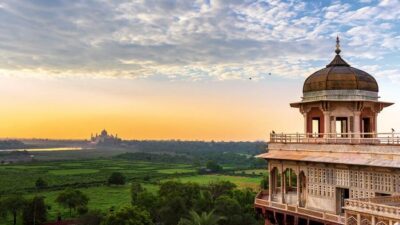
Delhi Agra Jaipur Golden Triangle Multiday Trip with Safari
Read our review →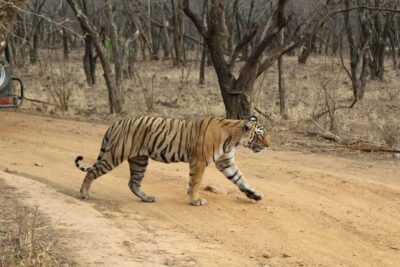
4-Day Golden Triangle & Ranthambore Tiger Safari
Read our review →
5 Day Golden Triangle, Safari, & Bird Sanctuary
Read our review →Lists this safari turns up in