
Review · BIG FIVE & WILDLIFE SAFARIS
Grand Teton Wildlife Safari in a Enclosed or Open-Air Vehicle (season dependent)
The best part of this safari is the chance to see Grand Teton at dawn or dusk, when elk, moose, deer, and other animals are often on the move. You cover paved roads and rougher dirt routes with a guide who can explain what you are seeing instead of leaving you to scan the roadside alone.
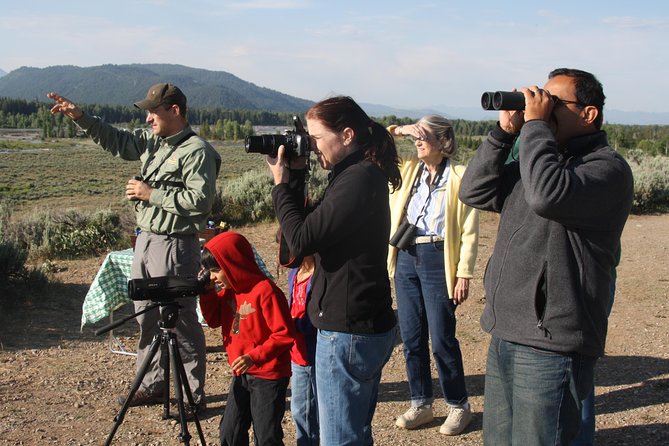
I like the small group size of up to 12 and the included binoculars and spotting scope. Guides such as Kyle, Kelsey, Anthony, Allie, and Neil are often praised for finding animals, explaining the park, and taking photos. The tradeoff is simple: wildlife is never promised, and one four-hour trip can produce bears and wolves or only a distant moose and a few pronghorn.
Key points at a glance
- Dawn and dusk timing: These are the main safari times, chosen for better animal activity and softer light.
- Seasonal vehicles: Ride in an open-air safari vehicle from June through mid-September, weather permitting, or use a heated, enclosed vehicle from mid-September through May.
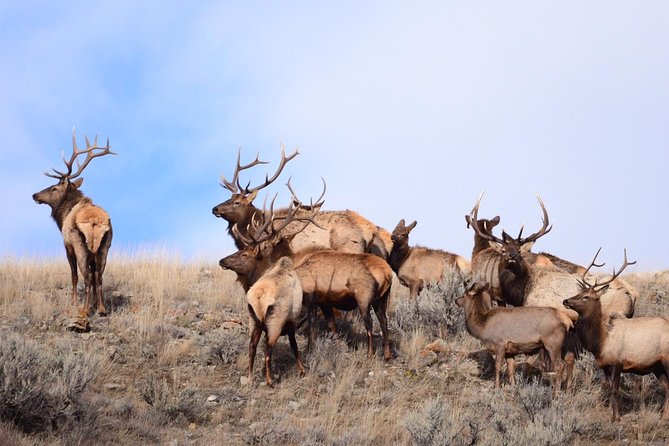
- Wildlife range: You may see elk, moose, mule deer, pronghorn, bison, bighorn sheep, bears, wolves, eagles, cranes, hawks, owls, and osprey.
- Useful equipment included: Binoculars, a spotting scope, snacks, bottled water, soda, and sometimes blankets are provided.
- Mormon Row in warmer months: March through November tours stop near the famous barns, but snow removes this stop from December through February trips.
- A real wildlife gamble: Guides work hard to find animals, but the park is large, sightings vary by season, and some creatures may be far away.
Why this four-hour safari works so well
Grand Teton National Park covers about 310,000 acres, and the animals do not arrange themselves beside the road for your convenience. That is the central reason to consider this trip. A local naturalist gives you a trained set of eyes, handles the driving, and adds context about animal behavior, geology, ecology, local culture, and settlement.
You are not simply riding around looking for large mammals. The guide may point out a bald eagle overhead, an osprey near water, a hawk perched in the distance, or small signs of animal activity that are easy to miss from your own car. The best guides also keep the trip lively during quiet stretches. Cameron, for example, was praised for telling stories between sightings, while Kevin was noted for combining animal facts with good storytelling.
The small group matters. With a maximum of 12 people, the guide has a better chance of helping everyone use the binoculars or scope, and you are less likely to feel lost in a crowd. Kelsey was specifically praised for helping children see through the equipment, while other guides took time to make sure everyone had a turn when an animal appeared.
The experience begins at 210 North Cache Street in Jackson, with the tour ending back at the same meeting point. Hotel pickup is available in the approved Jackson Hole area from November through mid-May. Summer pickup and drop-off are not included, so plan on reaching the meeting point yourself during the warmer season.
More Wildlife Safaris in the USA
- Half-Day Wildlife Safari Tour in Grand Teton National Park
★ 5.0 · 341 reviews - Half Day Grand Teton Wildlife Safari Tour
★ 5.0 · 259 reviews - Yellowstone Wildlife Safari from Bozeman – Private Tour
★ 5.0 · 140 reviews
Open-air summer rides and heated winter vehicles
From June through roughly mid-September, the safari uses a customized open-air vehicle when weather allows. This gives you a broad view of the mountains and woods, and it makes the ride feel more like a traditional safari than a standard park shuttle.
It also exposes you to the weather. Bring a jacket and long pants even in summer. One of the most useful bits of advice from the experience is that sunrise and sunset can feel cold, even when the afternoon forecast looks mild. Sturdy walking shoes are recommended because stops may involve standing or walking near roads and viewpoints.
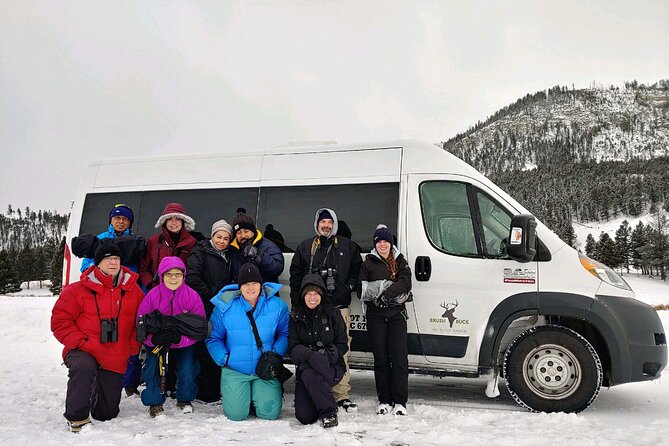
From mid-September through May, the vehicle is enclosed and heated, with air conditioning available when needed. The warmer cabin is a major benefit during early morning winter outings. You should still dress in proper snow gear, including winter boots, snow pants or bibs, a winter jacket, gloves, a beanie, and a scarf.
The enclosed vehicle offers more protection, but it changes the feel of the trip. You lose some of the open-air sensation and may have less direct access to the surrounding sounds and cold air. In return, you gain comfort during the long, chilly stretches when simply standing still to watch a distant animal can become tiring.
Searching Grand Teton for animals
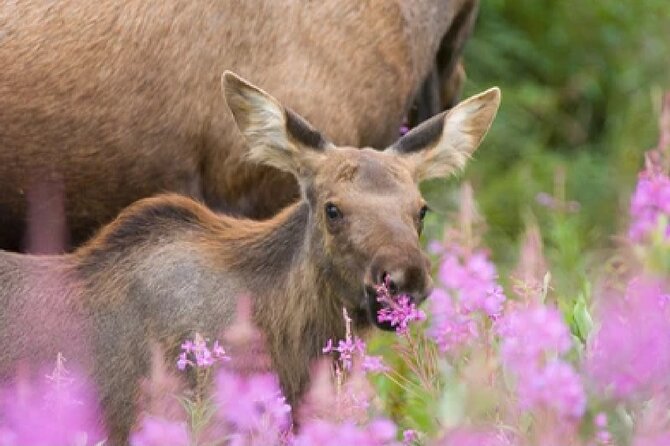
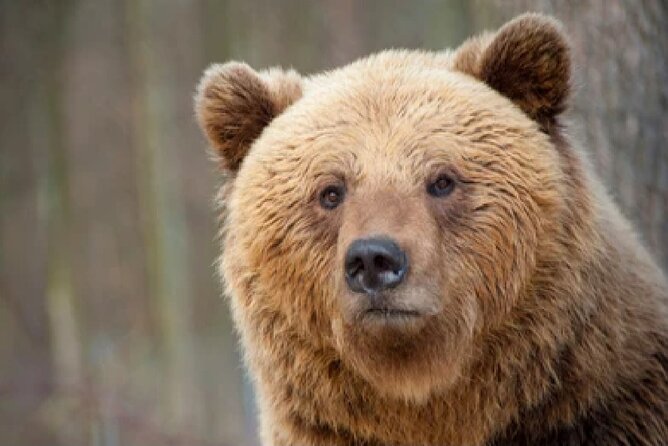
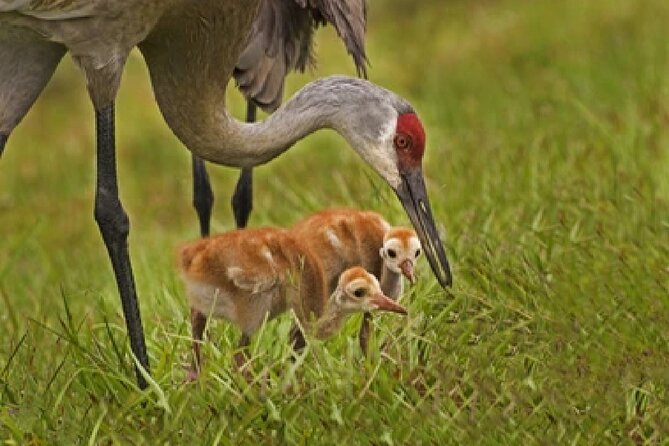
The wildlife portion covers a large part of the park, not one fixed viewing spot. Your guide may search for elk, moose, mule deer, pronghorn, bison, bighorn sheep, black bears, grizzly bears, and wolves. Birdlife adds another layer, especially during spring and summer, with bald and golden eagles, sandhill cranes, osprey, hawks, and owls possible.
Season matters a great deal. Animal locations change as temperatures, food, migration, and snow conditions shift. That means a spring outing is not simply the same tour as a winter outing with different clothing. You may find different species in different areas, and the route may change as the guide responds to current conditions.
The strongest wildlife stories from this safari include moose with a calf, bison herds, black bears, grizzlies with cubs, wolves, elk, pronghorn, and large numbers of water-loving moose. One group even saw a wolf, which is an uncommon sighting. Another watched a pack of wolves through a large spotting scope.
You should set your expectations carefully. An animal can be partly hidden in trees or far across a field. One person reported seeing only part of a moose and some pronghorn during four hours, while another saw the same general amount of wildlife from a private car. That is not a flaw unique to this tour. It is the basic uncertainty of wildlife watching.
The guide and equipment do improve your odds of seeing what is already in the area. A scope can turn a distant dark shape into a bear, wolf, or moose. Binoculars are supplied, so you do not need to bring your own. Still, the trip cannot control animal movements, and no honest guide can guarantee a particular species.
What the guide adds beyond a self-drive
You can drive Grand Teton on your own, and that may be enough if you already know the park roads and carry good binoculars. The paid safari earns its price through interpretation, searching, and convenience rather than guaranteed access to wildlife.
A good guide watches the road while also reading the tree line and open fields. Allie was praised for spotting animals while driving, and several guides were credited with finding bears, moose, and elk that were not obvious at first glance. That skill can save you from passing a small group of stopped cars without knowing what they are watching.
The guides also explain the park as a connected place. You hear about geology, the Snake River, animal migration, early settlers, local culture, and the forces that shaped the mountains. That makes the scenery easier to understand. Instead of seeing the Tetons as a dramatic backdrop, you begin to see how rock, water, weather, and wildlife fit together.
Photo help is another practical advantage. Guides often stop at scenic points and wildlife locations, and several have taken photos or videos for the group. Do not treat this as a guaranteed professional photography service, but it can be a welcome bonus when you want to remember the sighting without spending the entire time looking through a camera.
There is one equipment concern worth keeping in mind. One outing had a problem with the onboard speaker system, making commentary difficult to hear while the vehicle was moving. The guide tried to compensate during stops, but this shows why it is worth speaking up immediately if you cannot hear. The educational side is a major part of the price, so a sound problem matters.
Same region, a very different drive:
- Miami: Everglades Safari Park Airboat Tour
★ 4.4 · 1,267 reviews - Everglades Airboat Safari Adventure with Transportation
★ 3.0 · 956 reviews - 3 Hour Off-Road Sunset Safari to Grand Canyon with Entrance Gate Detour
★ 5.0 · 904 reviews - Off the Beaten Path Ketchikan Photo Safari – 3 hr.
★ 5.0 · 901 reviews
Mormon Row and the famous barns
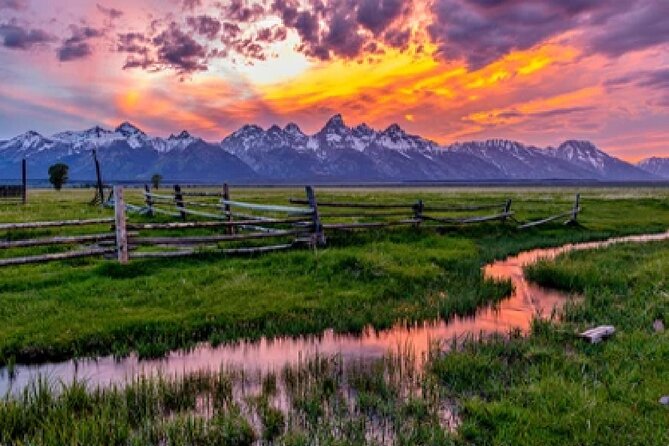
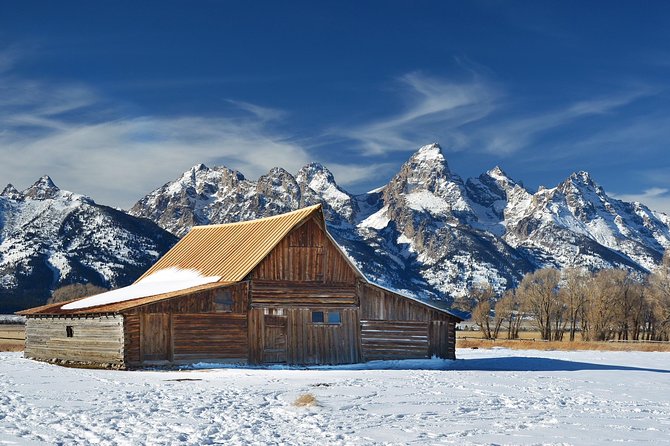
From March through November, the route includes the Mormon Row Historic District. You get about 20 minutes for photos near one of the most photographed barns in America, along with views of the old homesteading area and the Teton range behind it.
This is one of the tour’s most recognizable photo stops. The barns are not just scenic props. They connect the park to the families who settled Jackson Hole and worked the land before the area became a national park destination.
The tour stops at either the T. A. Moulton Barn or the John Moulton Barn. You should not expect to visit both. The stop is free, but the national park entrance fee is not included in the tour price.
Snow coverage removes Mormon Row from the December through February route. That is a reasonable winter adjustment, but it means you should not book a cold-season safari expecting the classic barn photo. The park’s winter conditions can make those roads inaccessible or impractical.
Snake River scenery and geology
The safari also includes views connected with the Snake River and the sharp mountain peaks. Grand Teton is not only about spotting mammals. The geology is one of the reasons the park feels so dramatic, and the guide explains how the mountains and surrounding terrain developed.
A four-hour outing gives the guide room to stop at scenic points instead of rushing past everything. You may pause for a photo of the peaks, watch birds over open water, or scan a wooded edge for moose. The route mixes paved highways with dirt roads, so the ride has some variety.
The open-air vehicle makes this section especially memorable in summer, with a direct view upward toward Grand Teton, the park’s tallest mountain. The same exposure can be tiring on a cold sunrise or sunset trip, which is why the seasonal vehicle change is practical rather than cosmetic.
Is $159 a fair price?
At $159 per person, this is not the cheapest way to see Grand Teton. A self-drive costs less if you already have a vehicle, park access, binoculars, and the patience to search on your own.
The price becomes easier to justify for a first visit, a short stay, or anyone who does not want to spend half a day studying maps and roadside pullouts. You receive transportation, a guide, binoculars, access to a spotting scope, snacks, bottled water, soda, and a focused four-hour search. You also avoid driving while trying to identify animals at a distance.
For a family, the value depends on how much your group uses the guide’s expertise. Children who need help with binoculars may get more from this than from a solo drive. The small group helps, though children five and younger are not allowed.
Photography-minded visitors should weigh the price differently. You may get excellent opportunities, and guides sometimes share photos or videos, but this is not presented as a dedicated photography workshop. If you need total control of timing, position, and equipment, a private arrangement may suit you better.
A 10 to 15 percent tip is suggested but optional. The park entrance fee is extra, and summer hotel pickup is not included. Average bookings occur about 33 days ahead, so I would not leave this until the last minute if your schedule is tight.
Who should book this safari?
I would choose this trip if you want a guided introduction to Grand Teton and care about understanding what you see. It is especially useful for first-time visitors, families, couples without binoculars, and anyone who prefers to let someone else handle the roads.
It also suits people who enjoy both animals and scenery. The tour is not a nonstop animal parade. Quiet stretches are part of the deal, and the guide fills them with information about the park, settlement, geology, and birds.
You may want to skip it if you already know the park well, have your own car and strong optics, or dislike fixed group schedules. The sunrise outing can be cold, and the open-air summer vehicle is not recommended for people with back problems. The ride includes rugged terrain, so comfort should be part of your decision.
Book the morning or evening time that fits your priorities. Dawn gives you early activity and quiet light, but can be colder and harder to reach. Sunset brings warm evening color and may be more comfortable in summer. In either case, bring clothing for a real change in temperature.
Booking details worth knowing before you go
The experience is offered in English and uses a mobile ticket. Confirmation normally arrives at booking, though a reservation made within one day of departure is confirmed as soon as possible and depends on availability.
Children five and younger cannot join. Service animals are allowed, the meeting point is near public transportation, and most people can participate. Summer tours run June 15 through August 31 according to the seasonal schedule, while fall and winter operations run September 1 through June 14. The separate vehicle notes identify open-air service as June through mid-September, weather permitting, so check the exact date when booking.
The tour is non-refundable and cannot be changed for personal reasons. If poor weather cancels it, you are offered another date or a full refund. If the minimum number of participants is not met, you are offered another date or experience, or a full refund.
Should you book the Grand Teton Wildlife Safari?
I would book it if wildlife is high on your Jackson Hole list and you want a guide to explain the park while searching. The strongest value comes from the small group, supplied optics, seasonal timing, and the chance to learn from guides such as Kyle, Kelsey, Anthony, Allie, Neil, and Cameron.
I would not book it expecting guaranteed bears, wolves, or close-up animals. The more realistic promise is four focused hours in a spectacular park, with a better chance of spotting wildlife and understanding the place than you may have on a quick drive alone. Bring warm layers, accept the uncertainty, and this can be one of the most useful half-days of a Jackson Hole visit.
FAQ
How long is the Grand Teton wildlife safari?
The tour lasts approximately four hours and returns to the original meeting point at 210 North Cache Street in Jackson.
What vehicle is used for the safari?
From June through mid-September, tours use an open-air safari vehicle when weather permits. From mid-September through May, transportation is in an enclosed vehicle with heat and air conditioning.
What animals might I see?
Possible sightings include elk, moose, mule deer, pronghorn, bison, bighorn sheep, black bears, grizzly bears, and wolves. Birds may include bald and golden eagles, sandhill cranes, osprey, hawks, and owls.
Are binoculars provided?
Yes. Binoculars and a spotting scope are available for use during the tour.
Is food or drink included?
Yes. Snacks, bottled water, and soda are included.
Does the tour visit Mormon Row?
Tours from March through November stop at the Mormon Row Historic District and one of the Moulton barns. Tours running from December through February do not make this stop because of snow coverage.
Is hotel pickup available?
Hotel pickup in the approved Jackson Hole area is available from November through mid-May upon request. Summer hotel pickup and drop-off are not included.
Are children allowed on the tour?
Children five years old and younger are not allowed. The maximum group size is 12 people.
What happens if bad weather cancels the tour?
If poor weather causes the cancellation, you are offered another date or a full refund. The same options apply if the minimum number of participants is not met.
Newest safaris around the USA
- 3 Hour See Crystal River Wildlife Safari Boat Cruise★ 4.5 · 25 reviews
- Northern Yellowstone Safari from Cody, WY★ 4.5 · 24 reviews
- Red Canyon Wild Mustang Tours And Safaris In Cody Wyoming★ 5.0 · 27 reviews
- Wetlands Safari Eco-Cruise in Cape May (Osprey Birding By Boat)★ 5.0 · 113 reviews
- Yellowstone Wildlife Safari from Bozeman – Private Tour★ 5.0 · 140 reviews
- Yellowstone Winter Wildlife Safari from Bozeman★ 5.0 · 42 reviews
- Yellowstone Snowshoe Safari from Bozeman – Private Tour★ 5.0 · 18 reviews
- Yellowstone Wildlife Safari in Lamar Valley from Bozeman★ 5.0 · 35 reviews
Big Five & Wildlife Safaris, side by side.
Sunrise Desert Jeep Safari with Wildlife Experience
Read our review →
Addo Elephant National Park All Inclusive Full-Day Safari
Read our review →
Udawalawe National Park: Elephant Safari with Expert Guide
Read our review →
Big Five Game Reserve Wildlife Safari from Cape Town
Read our review →
Big Five Safari and Breede River Valley Guided Day Trip
Read our review →
From Stockholm: Moose & Wildlife Safari with Campfire Dinner
Read our review →
Lists this safari turns up in