
Review · BIG FIVE & WILDLIFE SAFARIS
Yellowstone Winter Wildlife Safari from Bozeman
Yellowstone’s northern range is at its best when wildlife is the main event. This full-day safari takes you from Bozeman through Paradise Valley and into the park’s north entrance, with time to scan for wolves, bison, elk, moose, coyotes, foxes, eagles, and other animals. The small group of no more than eight matters here: you get room for questions, better access to the guide’s spotting scope, and less of the shuffle found on a large bus.
I like two things in particular. First, the guides do more than point at animals. They explain geology, park history, animal behavior, and the changing winter conditions. Second, the tour handles the day’s practical needs well, with UHD binoculars, spotting scopes, a substantial picnic lunch, local snacks, and drinks. The main consideration is the long day and the extra $20 Yellowstone entrance fee. Wildlife is never guaranteed, and even an excellent guide cannot order a bear or wolf onto the road.
Key points to know before booking
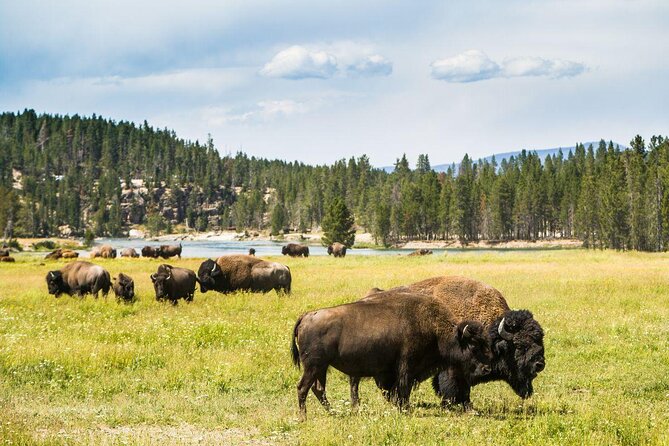
- Wildlife is the focus: Lamar Valley, Slough Creek, the Yellowstone River, and Paradise Valley receive the most searching time.
- A guide makes the difference: Gary, Gabrielle, Zak, Elizabeth, Grant, Kelsey, Alan, Adam, Nate, Elaina, and others have led days praised for sharp animal spotting and strong park knowledge.
- You get serious viewing gear: Binoculars and spotting scopes help you see animals that are far beyond the road.
- Food is covered: Expect a locally sourced seasonal picnic, organic snacks when possible, and non-alcoholic drinks.
- The group stays small: The maximum is eight people, a useful size for a day built around observation.
- Plan for a cold, early start: Meet at Café M, 777 E Main Street in Bozeman, at 7:00 a.m., then return there after roughly 10 to 11 hours.
Why Yellowstone’s winter north country is worth the long day
This is not a quick scenic drive with a few wildlife stops added on. The day is built around looking carefully and waiting for something to appear. In winter, the northern section of Yellowstone is especially suited to that style of outing because the route brings together open valleys, river habitat, forested slopes, thermal features, and historic sites.
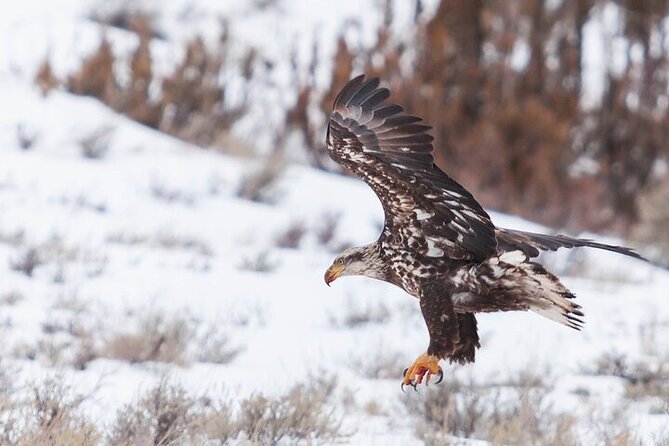
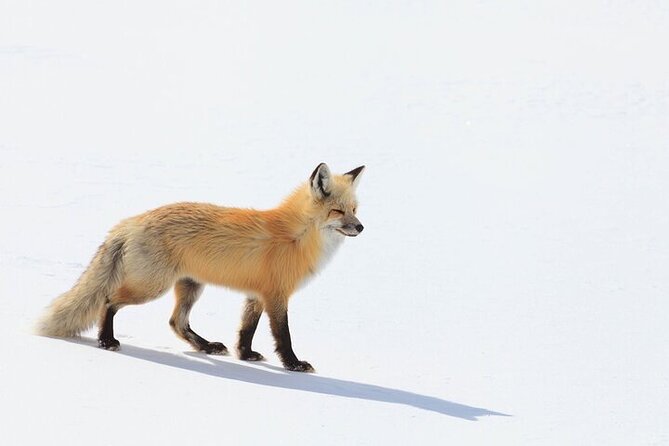
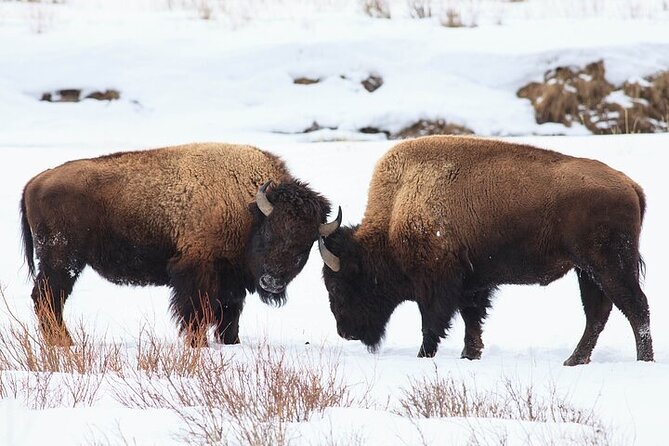
You will spend much of the day in a vehicle, but the pace is not simply point-to-point transportation. The guide may stop, set up a scope, explain what you are seeing, and give you time to watch. Several experiences have included wolves viewed through a scope, along with bison, moose, coyotes, foxes, elk, mule deer, pronghorn, bighorn sheep, bald eagles, and bears.
That list is not a promise. It is a reminder of the range of wildlife that can appear in the Greater Yellowstone ecosystem. One strong day included nine moose, two wolves, three coyotes, many bison and elk, a bear den, and wolves howling in another area. Another included a grizzly mother with two cubs outside the park. Those are lucky sightings, not a standard schedule.
The guides seem to understand that well. Adam, for example, made the most of a day with limited wildlife by explaining each sighting and helping the group search the habitat. That is the right attitude for Yellowstone. You are paying for skilled searching, context, and access to equipment, not a guaranteed animal checklist.
More Wildlife Safaris in the USA
- Grand Teton Wildlife Safari in a Enclosed or Open-Air Vehicle (season dependent)
★ 5.0 · 1,212 reviews - Half-Day Wildlife Safari Tour in Grand Teton National Park
★ 5.0 · 341 reviews - Half Day Grand Teton Wildlife Safari Tour
★ 5.0 · 259 reviews
From Bozeman through Paradise Valley at 7:00 a.m.
The meeting point is Café M at 777 E Main Street in Bozeman. The safari begins at 7:00 a.m. and ends back at the same place. Hotel pickup and drop-off are not included, so you need to arrange your own way to the café.
The early start is practical. It gives you a full day in the park and leaves time for several wildlife-searching areas. The total outing lasts about 10 to 11 hours, so you should be comfortable with a long day that mixes driving, roadside stops, short walks, and periods of quiet observation.
The first and last parts of the route pass through Paradise Valley, a broad corridor between Livingston and Gardiner. The valley runs beside the Yellowstone River and is framed by the Gallatin and Absaroka ranges. It is also a place to begin scanning before you reach the park entrance.
You might find wildlife here, but the value is not limited to animal sightings. Your guide can explain how the river, mountains, open ground, and seasonal conditions shape the area. The return through Paradise Valley also gives you a final chance to watch for animals after a full day in Yellowstone.
Mammoth Hot Springs: terraces, color, and park history
Mammoth Hot Springs is the first major park stop. Its travertine terraces form when mineral-rich water deposits calcium carbonate over time. The terraces change as water flow shifts, and algae in the pools can create brown and reddish tones.
This is one of the tour’s useful contrasts. You are not only looking for fur and feathers. Yellowstone’s wildlife depends on a volcanic system that also produces hot springs, mineral terraces, and other geothermal features. At Mammoth, your guide connects the visible formations to the park’s geology and history.
The stop is scheduled for about an hour. That gives you time to see the terraces and listen without making this a full geology excursion. If your main goal is wildlife, Mammoth may feel like a slower opening to the day. If you want a fuller understanding of Yellowstone, it gives the safari a strong start.
Roosevelt Arch and the north entrance
The Roosevelt Arch at Gardiner is a short history lesson in stone. Built in 1903 from hexagonal blocks of columnar basalt, the arch rises 52 feet at the original north entrance to Yellowstone.
The arch was intended to provide a grand arrival to the world’s first national park. Later changes moved the official entrance south of Gardiner, but the arch remains a notable landmark and is listed on the National Register of Historic Places.
The scheduled stop is about an hour, which lets the guide explain the park’s early visitor experience and the role of the north entrance. The park entrance itself is listed separately, and the $20 Yellowstone entrance fee is not included in the tour price. Budget for that extra charge when comparing the total cost.
Same region, a very different drive:
- Miami: Everglades Safari Park Airboat Tour
★ 4.4 · 1,267 reviews - Everglades Airboat Safari Adventure with Transportation
★ 3.0 · 956 reviews - 3 Hour Off-Road Sunset Safari to Grand Canyon with Entrance Gate Detour
★ 5.0 · 904 reviews - Off the Beaten Path Ketchikan Photo Safari – 3 hr.
★ 5.0 · 901 reviews
Petrified Tree and Tower Fall
The petrified redwood is a reminder that present-day Yellowstone has changed dramatically over geological time. A redwood seems unlikely in this setting, but the fossilized tree is a relic of an older volcanic past.
You will spend about 30 minutes here. It is a compact stop, but it adds useful scale to the day. Yellowstone is not only a place of current geothermal activity and living wildlife. Its rocks and fossil trees preserve evidence of environments that existed millions of years ago.
Tower Fall brings the route back to scenery shaped by erosion. The waterfall drops beside distinctive rock pinnacles, which give the feature its name. Erosion is slowly moving the falls upriver, though not at a pace you will see during a visit.
This is another 30-minute stop. It is a good place for photographs and a break from wildlife scanning, though the short timing means you should not expect an extended hike or a long stay away from the vehicle.
Following the Yellowstone River for wildlife
The Yellowstone River begins in the Absaroka Range at the Continental Divide, flows through the park and Paradise Valley, and continues across Montana toward the Missouri River. It is a large river with several tributaries and strong trout habitat.
For this safari, the river matters because it supports many species. Water, open banks, and nearby cover can draw animals, making the stop more than a scenic pause. Your guide helps you search the river corridor and explains the connections between the waterway and the wider ecosystem.
The scheduled stop is about 30 minutes, but the exact amount of searching may depend on what is happening that day. You could see birds of prey, elk, deer, or other animals, but sightings vary. The spotting scopes are particularly useful when wildlife is on the far side of the river or high on a distant slope.
Slough Creek and Lamar Valley, the heart of the safari
Slough Creek is a tributary of the Lamar River, rising in the Absaroka Range. Its watershed supports varied plant and animal life, and the safari makes multiple stops in the area to track and spot wildlife.
This is where a guide’s field skills become especially valuable. A casual glance can miss a wolf, fox, or moose that blends into the distance. Your guide may notice movement, tracks, a change in the behavior of other animals, or a cluster of vehicles that points to something worth investigating. The key is not simply having binoculars. It is knowing where and how to look.
Lamar Valley gets about two hours, the longest single stop on the route. It is often called the Serengeti of North America because of its concentration of wildlife and broad open views. The valley is a prime place to search for bison, wolves, coyotes, elk, pronghorn, moose, foxes, and birds.
Do not expect two hours of constant action. Wildlife watching includes quiet stretches. That is part of the experience, especially when the group is waiting for a distant animal to move or trying to identify a shape through the scope.
Grant’s guiding was especially useful for wolf viewing, with the scope set up so the group could watch animals at a distance. Zak also used a scope to record wolves and share the footage later. If you value close views but understand that the animals remain wild and far away, this equipment can make the difference between a vague dot and a memorable sighting.
Albright Visitor Center and the park’s human story
The Albright Visitor Center occupies a historic building that once served as quarters for cavalry troops who protected Yellowstone before the National Park Service existed. The stop lasts about an hour.
This adds a welcome human chapter to a day dominated by wildlife and geology. The park was not always managed in its present form, and the cavalry played an early role in protecting its resources. Your guide can put the building and the north region into that larger story.
It is also a useful indoor pause during a winter outing. The exact experience may vary with conditions and operations, but the scheduled stop gives you time away from the road and a chance to absorb the park’s history.
Food, equipment, and the value of a small group
The $350 price is not cheap, but the included services make it easier to judge. You receive a professional naturalist guide, UHD binoculars, spotting scopes, a locally sourced picnic lunch with seasonal ingredients, local snacks, and non-alcoholic drinks.
The food matters more than it may sound. A 10 to 11-hour day can become tiring when every meal is your responsibility. Here, the lunch is packaged with recyclable and compostable materials, and snacks are sourced locally and organically when possible. Dietary needs were accommodated for at least one family, but you should confirm your own needs when booking rather than assume.
A private car rental would give you control, but it would not automatically give you a guide who can identify distant animals, set up a scope, explain the park, and adjust the day around wildlife. The small group also makes the price easier to defend. With no more than eight people, you have a better chance to ask questions and receive help finding what the guide has spotted.
The tradeoff is that you still share the vehicle and the day’s rhythm with other people. If you want complete control over every stop, a private outing would be a different product. This safari suits you better if you value expert direction and a social, compact group.
What the guides add to the experience
The guide can make or break a wildlife day. The strongest guide feedback centers on patience, enthusiasm, sharp eyes, and a willingness to explain more than the basic name of an animal.
Gary has led days with moose, wolves, coyotes, bison, elk, deer, and a bear den. Gabrielle has been praised for making the day personal and for sharing genuine enthusiasm, including a rare sighting of a grizzly mother with two cubs. Elizabeth handled rainy conditions with energy and made the park’s wildlife, geology, and history understandable.
Zak has been especially good at balancing different abilities within one group. One outing included an elderly parent who needed a gentler pace, while another family member still wanted a short hike to a viewpoint. That flexibility is useful because not everyone in a family has the same stamina.
You may also receive scope photographs or short video clips after the trip. This is not presented as a guaranteed inclusion for every departure, but it has been part of several outings. Ask your guide about it if recording a distant wolf or other animal would be valuable to you.
Who should book this Yellowstone safari?
I would choose this tour if wildlife is a top priority and you have only one full day for Yellowstone’s northern section. It is also a strong fit for families with children age eight or older, couples, solo visitors, and older adults who want guidance rather than a self-drive day.
You should be ready for an early start, changing weather, long periods in a vehicle, and the possibility of limited sightings. Bring warm clothing and any child booster or car seat you need, since those are not supplied.
The tour requires good weather and a minimum number of participants. If poor weather or low enrollment cancels the outing, you receive the choice of another date or experience, or a full refund. You can cancel for a full refund up to 24 hours before the start time, but changes or cancellations inside that window are not refunded.
FAQ
How long does the Yellowstone Winter Wildlife Safari last?
The safari lasts approximately 10 to 11 hours, beginning at 7:00 a.m. and ending back at the meeting point in Bozeman.
Where does the tour begin?
Meet at Café M, 777 E Main Street, Bozeman, Montana 59715. Hotel pickup and drop-off are not included.
What is included in the $350 price?
The price includes the winter wildlife safari, a professional naturalist guide, UHD binoculars, spotting scopes, a locally sourced picnic lunch, local snacks, and non-alcoholic beverages.
Is the Yellowstone entrance fee included?
No. The Yellowstone National Park entrance fee is listed as $20 per person and is paid separately.
How many people can join the safari?
The group has a maximum of eight participants.
Can children participate?
Children age eight and older may participate. If your child needs a booster seat or car seat, you must bring it with you.
What happens if the tour is canceled?
If poor weather or an insufficient number of participants causes cancellation, you are offered a different date or experience, or a full refund. You can also cancel at least 24 hours before the start time for a full refund.
Should you book it?
Book this safari if you want a well-organized day focused on Yellowstone wildlife and would rather have a skilled guide do the searching and driving. The strongest value comes from the small group, viewing equipment, park interpretation, and food included in a very long day.
Skip it if you want a cheap scenic transfer, complete control over the schedule, or guaranteed animal sightings. For most people with one winter day in the north country, though, the combination of Lamar Valley, Slough Creek, the Yellowstone River, and an experienced guide makes the $350 price reasonable, especially when the guide turns a distant shape into a wolf, moose, or eagle you would have missed alone.
More Winter Trips in the USA
- Private Yellowstone Winter Wolf Watching and Wildlife Safari
★ 5.0 · 26 reviews - Yellowstone Winter Wildlife & Snowshoe Tour | PRIVATE
★ 5.0 · 19 reviews - Yellowstone Snowshoe Safari from Bozeman – Private Tour
★ 5.0 · 18 reviews - Ottawa: Private Parc Omega Wildlife Safari – Winter Magic
★ 5.0 · 64 reviews
Newest safaris around the USA
- 3 Hour See Crystal River Wildlife Safari Boat Cruise★ 4.5 · 25 reviews
- Northern Yellowstone Safari from Cody, WY★ 4.5 · 24 reviews
- Red Canyon Wild Mustang Tours And Safaris In Cody Wyoming★ 5.0 · 27 reviews
- Wetlands Safari Eco-Cruise in Cape May (Osprey Birding By Boat)★ 5.0 · 113 reviews
- Yellowstone Wildlife Safari from Bozeman – Private Tour★ 5.0 · 140 reviews
- Yellowstone Snowshoe Safari from Bozeman – Private Tour★ 5.0 · 18 reviews
- Yellowstone Wildlife Safari in Lamar Valley from Bozeman★ 5.0 · 35 reviews
- Yellowstone Winter Wildlife & Snowshoe Tour | PRIVATE★ 5.0 · 19 reviews
Big Five & Wildlife Safaris, side by side.
Sunrise Desert Jeep Safari with Wildlife Experience
Read our review →
Addo Elephant National Park All Inclusive Full-Day Safari
Read our review →
Udawalawe National Park: Elephant Safari with Expert Guide
Read our review →
Big Five Game Reserve Wildlife Safari from Cape Town
Read our review →
Big Five Safari and Breede River Valley Guided Day Trip
Read our review →
From Stockholm: Moose & Wildlife Safari with Campfire Dinner
Read our review →
Lists this safari turns up in